
Ski resort altitude and season timing: when peaks stay snowy
📅 2026-10-11
Why Elevation Is the Real Snow Forecast in Japan
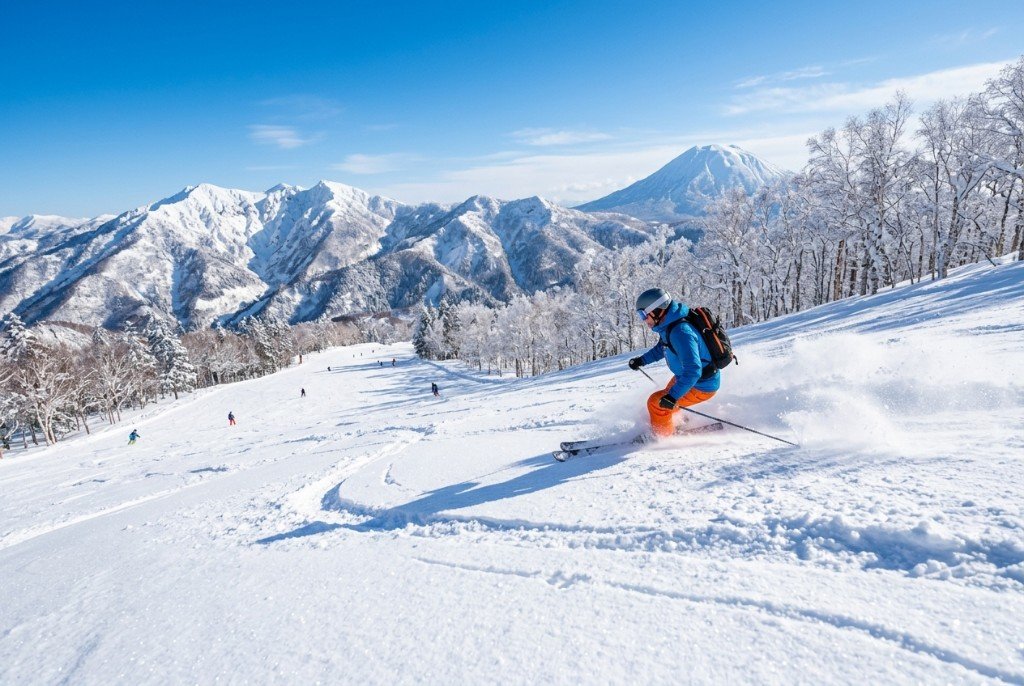
Most visitors assume Hokkaido is automatically the snowiest place in Japan and leave it there. That's only half true. Niseko and Rusutsu get astonishing snowfall because of a Siberian-cold-front-meets-warm-Sea-of-Japan effect, not because the mountains are especially tall — their summits sit around 1,100–1,300m. Compare that to Shiga Kogen in Nagano, Japan's highest-elevation ski area, where lifts run up past 2,180m and the Yakebitaiyama peak touches 2,307m. Or Zao Onsen in Yamagata, where the upper slopes at 1,600–1,840m stay cold enough, long enough, to grow the famous "snow monsters" (juhyo) — conifers encased in wind-driven rime ice that only form where elevation and persistent sub-zero temperatures overlap for weeks at a time.
This guide is for skiers and boarders who are past the "just book Niseko" stage and want to understand why some Japanese resorts hold snow into April while others are grass by mid-March. That answer is almost always a combination of three things: base elevation, summit elevation (and therefore the vertical band you're actually skiing), and slope aspect relative to the sun and prevailing wind. If you're chasing late-season turns, shoulder-season value, or just want to stop guessing which resort will still have conditions worth the flight, altitude is the variable to track — more reliable than a single snow depth number on a resort's homepage.
It's also for anyone planning a season around more than one trip. Understanding the altitude-and-timing relationship lets you sequence a Japan ski trip logically: low-elevation Hokkaido coastal resorts for deep, dry powder in January, then Nagano's mid-to-high-elevation valleys in February, then the true high-altitude zones — Shiga Kogen, Norikura, parts of Hakuba's upper lift network — for corn snow and spring skiing into late April or even May on favorable years.
Reading the Mountain: Elevation Bands, Slope Aspect, and Snow Conditions
Japanese resorts are usually built across a vertical range rather than a single plateau, and the conditions at the base rarely match the conditions at the top. A practical way to read any resort is to split it into three bands:
Base/village elevation (typically 600–1,100m): This is where lodges, onsen, and beginner slopes sit. It's also the first zone to go slushy on a warm front, since village-level snow is more exposed to daytime thaw-refreeze cycles. If you're checking a resort's live snow report, always ask whether the number quoted is base-level or summit-level — they can differ by 50cm or more in soft years.
Mid-mountain (1,100–1,700m): This band holds the bulk of groomed cruising runs and tends to be the most consistent zone through the core season (late December–February). Tree density here also matters: thick cedar and birch forest at this elevation traps powder and blocks wind, which is why Japan's famous tree-run reputation (Niseko's Strobe Course area, Hakuba's Happo-one gladed runs) concentrates in this band rather than above the treeline.
Upper mountain / alpine zone (1,700m+): Above this line, wind exposure increases sharply, visibility drops in storms, and lift operation gets weather-dependent — but this is also where snow lingers latest into spring because daytime sun has less effect on temperature at altitude. Shiga Kogen's upper gondola terrain, Zao's Jizo summit area, and the top sections of Norikura (whose access road itself sits above 2,700m, making it one of the highest paved routes in Japan) are built almost entirely in this zone.
Aspect compounds elevation. A north-facing slope at 1,200m can outlast a south-facing slope at 1,600m in late-season sun, because it never gets direct solar loading. When you're choosing runs in March or April, favor north- and east-facing pitches regardless of the listed altitude — local guides at Hakuba and Nozawa Onsen plan their late-season routes this way as a matter of course.
Season Timing and Access: When to Go and How to Get There
Core season (mid-December–late February): This is the reliable window across nearly every major region — Hokkaido (Niseko, Rusutsu, Furano), Nagano/Hakuba Valley, Niigata (Gala Yuzawa, Naeba), and Yamagata (Zao). Snow quality is most consistent at mid-mountain elevation during this stretch, and this is when to book if light, dry powder is the priority.
Shoulder season (early March–April): This is where altitude starts doing the deciding. Low-elevation resorts (base under 700m) frequently close or thin out by mid-March. High-altitude zones keep going: Shiga Kogen typically runs into early May, Norikura's Hakuba-side lift areas and Gassan in Yamagata (a legendary spring/summer ski destination on a dormant volcano) can offer skiing into June on their highest snowfields. If your trip dates are fixed and fall in late March or April, choose resorts by summit elevation first, not by brand recognition.
Access from real hubs:
- Hakuba Valley (Nagano): ~2.5–3 hours by direct bus from Tokyo (Shinjuku/Tokyo Station), or take the Hokuriku Shinkansen to Nagano Station (about 1h20m from Tokyo) then a 70-minute connecting bus. No direct train to Hakuba itself — bus or rental car from Nagano is standard.
- Zao Onsen (Yamagata): Take the Yamagata Shinkansen from Tokyo to Yamagata Station (around 2.5 hours), then a 40-minute bus to the resort.
- Shiga Kogen (Nagano): Shinkansen to Nagano Station, then roughly 70–90 minutes by bus up the access road — allow extra time in storm conditions since the road climbs continuously to the highest base elevation of any major Japanese resort.
- Niseko/Rusutsu (Hokkaido): Fly into New Chitose Airport (Sapporo), then 2–2.5 hours by resort shuttle or rental car.
Build your itinerary around this: fly or shinkansen into the hub, then treat the final leg (bus or car up to altitude) as its own weather-dependent segment, especially late in the day when mountain roads ice over as temperature drops with elevation.
Booking, Gear, and Etiquette for Altitude-Driven Trips
Booking: If your trip spans the shoulder season, book lift passes and lodging with flexible cancellation where possible — conditions at a given elevation can shift in a week. For high-altitude resorts like Shiga Kogen or Norikura, check specific lift/gondola operating status rather than a resort-wide snow report, since upper lifts close independently in high wind even when base facilities stay open.
Gear: Pack for a bigger temperature swing than you would at a single-elevation resort elsewhere — a base-village morning at 2°C can mean -10°C and wind chill at the summit an hour later. Layering and wind-shell outerwear matter more in Japan's high-alpine zones than raw insulation. Goggles with a low-light lens are worth carrying separately from your sunny-day lens, since Shiga Kogen and Zao's upper zones frequently sit in cloud even on clear valley days.
Etiquette and culture: Many of these resorts carry onsen and shrine traditions tied directly to the mountain's altitude and winter conditions. Zao's juhyo "snow monsters" are protected as both a tourist attraction and part of local seasonal identity — stay on marked paths near them, as the terrain is uneven under the ice formations. Gassan and Mount Ontake (also used for spring turns) are sites of mountain-worship traditions (Shugendo); visitors are generally welcome but should be mindful around any shrine structures or ritual markers encountered on-slope. After a high-altitude day, onsen culture isn't just a nice-to-have — many Japanese skiers treat the post-ski bath as essential recovery from the colder, drier conditions found at elevation, and most resort towns are built around at least one communal bath for exactly this reason.
Food and stay: At altitude-focused resorts, eat heartier and earlier — kitchens at higher-elevation lodges often have shorter operating windows due to supply logistics, and some upper-mountain restaurants close before mid-afternoon in shoulder season regardless of posted hours. Confirm dinner options at your accommodation before heading up for a full day on the higher slopes.
Let me know if you'd like me to adjust length, tone, or swap in different resorts — and separately, if that pipeline script at the end of your message was intentional, I'd want you to run it yourself (or explicitly direct me to) rather than me executing an unfamiliar admin-path script on your behalf.
Was this page helpful?
Your feedback helps us improve our guides