
Introduction to backcountry skiing in Japan: gear and safety
📅 2026-10-11
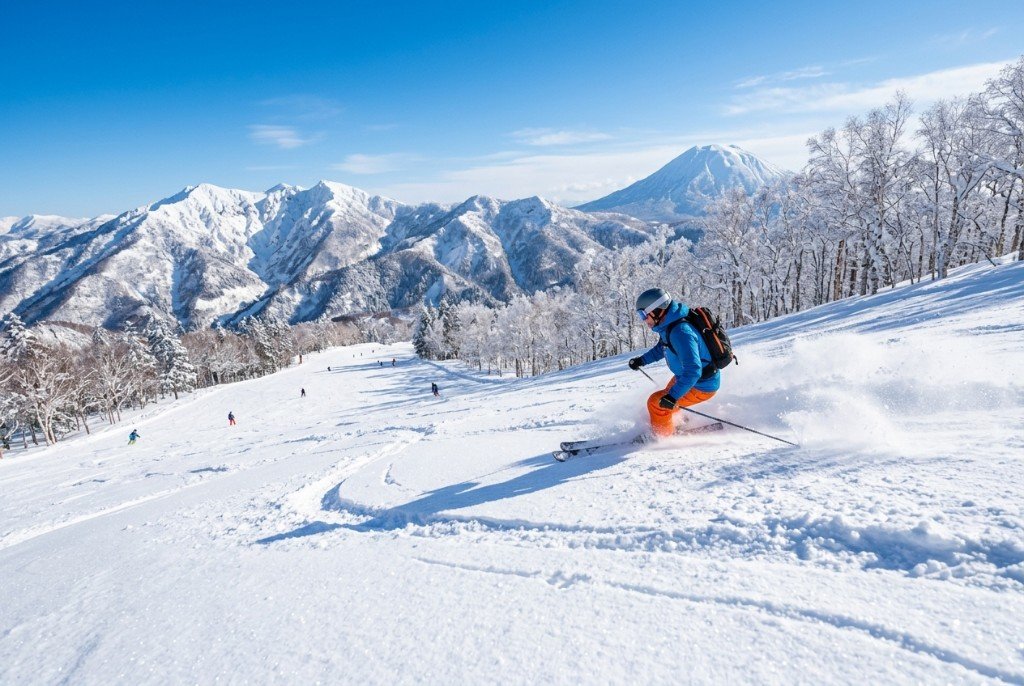
Japan's resorts are famous for deep, dry, almost absurdly consistent snowfall, but the groomed runs are only the warm-up. Beyond the rope lines and gate closures, a vast network of bowls, tree runs, and ridgelines opens up to skiers and snowboarders willing to earn their turns — or at least pay a local guide to show them where the good snow actually is. Backcountry and off-piste skiing in Japan is a different sport from resort skiing: it demands avalanche awareness, the right gear, and respect for terrain that doesn't care how good you look on a blue run. This guide covers who backcountry skiing in Japan is really for, how to read the conditions, when and where to go, and what belongs in your pack.
Who This Is For and Why Japan's Backcountry Is Different
Backcountry skiing in Japan isn't an extension of a strong resort run — it's a separate skill set layered on top of one. If you're a confident intermediate-to-advanced skier or rider who's never ventured off-piste, Japan is actually a forgiving place to start, provided you go with a certified guide rather than alone. The terrain tends to be lower-angle and tree-sheltered compared to the high-alpine lines of the European Alps or North America's Rockies, and the snow is typically light, dry, and forgiving even when it's deep.
What makes Japan distinct is the sheer volume and reliability of the snowfall — Siberian cold fronts pick up moisture over the Sea of Japan and dump it on the mountains of Hokkaido and Honshu in a near-daily cycle through midwinter, producing snow that's famously light ("JAPOW") rather than the dense, wind-packed snow common elsewhere. That reliability means backcountry zones refill overnight even after a weekend of traffic, so route-finding and avalanche conditions reset constantly — which cuts both ways: fresh snow is abundant, but so is fresh avalanche loading on slopes that were stable the day before.
There's also a cultural layer worth knowing. Many of today's backcountry access gates sit on land historically used by local hunters and foresters, and ski patrol boundary ropes in Japan are generally treated as hard legal and safety lines, not suggestions — ducking a rope at a resort like Niseko or Hakuba can mean a pulled pass, because patrol has had to recover unprepared skiers from closed terrain in the past. The culture of respecting those boundaries, and of hiring a licensed guide to access terrain properly through designated gates, isn't bureaucracy for its own sake — it's a direct response to real accidents.
Conditions: Reading Terrain, Snowpack, and Avalanche Risk
Understanding Japan's backcountry conditions starts with its snow climate. Hokkaido (Niseko, Rusutsu, Furano, Asahidake) gets the lightest, driest snow because of its northern latitude and proximity to the cold Siberian air mass, while Honshu's ranges (Hakuba, Nozawa Onsen, Myoko, Zao) sit closer to warmer moisture sources and can see heavier, wetter snow loads, especially later in the season. That difference matters for avalanche risk: Hokkaido's drier snowpack is prone to persistent weak layers and surface hoar that can fail with little warning, while Honshu's denser snow can produce large wet-slab or storm-slab avalanches after heavy loading events.
Before any off-piste or backcountry descent, check Japan's regional avalanche advisories where available (resorts like Niseko and Hakuba Valley publish daily backcountry conditions and gate status), and always carry and know how to use a transceiver, probe, and shovel — not as a formality, but because companion rescue is the only realistic rescue option in the first critical minutes. A guide will assess slope angle (most dangerous avalanche terrain sits between roughly 30 and 45 degrees), recent snowfall and wind-loading, and whether a slope has already been skied and stabilized before dropping in.
Tree-run etiquette in Japan's backcountry also has a practical safety dimension: "tree wells" — deep pockets of unconsolidated snow around the base of trees — can trap and suffocate a fallen skier who ends up head-down in powder, a real and underreported hazard in Hokkaido's dense birch and larch forests. Skiing with a partner who keeps you in sight, and never skiing alone in deep tree powder, matters as much as avalanche gear here.
Season and Access: When to Go and How to Get There
The core backcountry season runs from late December through early March, with January and February offering the most consistent snowfall and the most stable mid-winter base. Early season (December) can have thinner coverage over rocks and stumps, while late season (March into early April) brings warmer, wetter snow and higher wet-slide risk, though it can still deliver excellent spring touring on corn snow in clear weather.
For Hokkaido's backcountry hubs — Niseko, Rusutsu, and Asahidake — fly into New Chitose Airport (CTS) near Sapporo. From there, Niseko is roughly a 2.5-hour drive or bus ride; direct ski-season shuttle buses run from the airport in winter, which is the easiest option if you're not renting a car in snow conditions. Asahidake, known for some of Japan's most dramatic alpine backcountry terrain via ropeway access, is about a 2-hour drive from Sapporo or CTS.
For Honshu's backcountry zones, fly into Tokyo (Haneda or Narita) and take the Hokuriku Shinkansen to Nagano Station (around 80-100 minutes), then a local bus or transfer to Hakuba (about an hour) or Nozawa Onsen (around 25 minutes). Myoko Kogen is reachable via the Hokuriku Shinkansen to Joetsu-Myoko Station, then a short bus transfer. If you're driving from Tokyo, winter tires or chains and a 3-4 hour drive are standard for the Hakuba Valley; mountain roads can close during heavy storms, so build in flexibility.
Gear, Booking, and Etiquette for Your First Backcountry Day
A proper backcountry kit starts with avalanche safety equipment: a digital transceiver, a collapsible probe, and a metal shovel, carried by every member of the group — not just the guide. Add an avalanche airbag pack if you're skiing more committing terrain, a helmet, and goggles rated for flat-light visibility, since whiteout conditions are common during active snowfall. For touring beyond lift-served off-piste, skins and a splitboard or alpine touring setup with tech bindings let you access terrain lifts don't reach, though most first-timers in Japan do lift-served off-piste with a guide rather than full backcountry touring.
Book a certified guide through a local operator in advance, especially during peak season (late December through Chinese New Year, and school holiday weeks) — reputable Niseko and Hakuba guiding outfits fill up fast, and going with a guide is the single most important safety decision you'll make, since they carry current avalanche bulletins, know which gates are open, and can read terrain you haven't seen before. Many resorts require a transceiver check at designated gates before allowing entry to off-piste zones; don't try to bypass this.
On etiquette: respect rope closures and gate hours without exception, don't ski terrain a guide has flagged as unstable just because it looks fun, and pack out anything you bring in. After a long powder day, most backcountry hubs sit near classic onsen towns — Nozawa Onsen and Hakuba's village baths are a genuine part of the regional culture, not just a tourist add-on, and soaking after a cold, high-exertion day is both the local custom and good recovery practice. Pair that with a hearty bowl of local soba or a hot pot dinner, and you've got the full rhythm of a Japanese ski town: early powder lines, respected boundaries, and a slow soak before the next storm cycle rolls in.
Was this page helpful?
Your feedback helps us improve our guides