
Meal planning and cooking techniques for camping
📅 2026-10-11
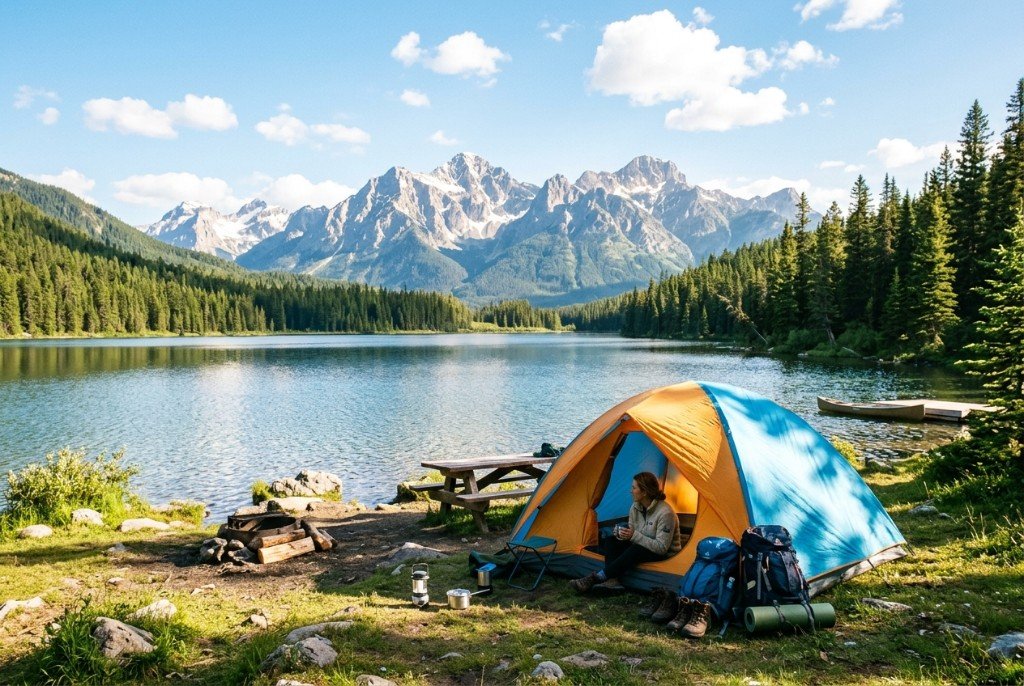
Why Japanese Campsites Need Their Own Meal Planning Logic
Camping in Japan is not the same game as camping in North America or Europe, and your meal planning should reflect that. Most designated campgrounds (kyanpujo) are compact, close to a village or ski town, and sit within a 10–20 minute drive of a convenience store or a small supermarket. That changes the entire calculus of camp cooking: instead of packing seven days of freeze-dried meals, most Japan-based campers build a rotating resupply plan around konbini runs, roadside michi-no-eki stops, and local produce stands.
This matters whether you're car-camping in the Japanese Alps, basing out of a ski-town campsite in Hakuba for a few nights before lift tickets open, pitching a tent near a surf break on the Shonan coast, or camping between dive days on a subtropical island like Okinawa or the Kerama chain. Each context shifts what "camping meals" should look like: ski campers want hot, fast, high-calorie food after cold days on the mountain; surf and dive campers want light, quick-prep meals that don't compete with early tide or boat schedules; pure hiking/car campers have the most flexibility and can lean into slow-cooked, communal cooking.
The cultural backdrop helps explain why Japanese camp cooking culture looks the way it does. School and scout groups have long taught hangō sui-han — cooking rice in a mess tin (hangō) over an open fire, a near-universal childhood memory for many Japanese campers. That tradition shows up today in how campground shops sell rice, charcoal, and basic vegetables rather than full dehydrated meal kits, and why rice cookers, mess tins, and compact grills dominate rental gear lists. In Hokkaido, communal lamb-and-vegetable grilling (jingisukan) is practically a camping rite of passage; in many coastal areas, campers grill freshly bought seafood on binchotan charcoal rather than pack proteins in. Understanding this helps you plan lighter and buy local instead of overpacking.
Camp Layout, Fire Rules, and the How-To of Cooking On Site
Japanese campgrounds are tightly organized, and that structure should shape your meal planning before you even arrive.
- Fire pits and grill stands are usually fixed and assigned. Most sites provide a concrete or metal fire base (kamado or BBQ stand) per pitch; open ground fires are rarely allowed, and many campgrounds explicitly ban them to protect grass and soil. Plan your camp cooking around tabletop or raised grills, not a dug fire pit.
- Charcoal is the default fuel, not wood. Binchotan or standard BBQ charcoal is sold at nearly every campground shop or the nearest konbini. It burns longer and more evenly than firewood, which makes it ideal for slow items like grilled fish, skewers, or foil-wrapped vegetables — build your camping meals around grill-and-simmer dishes rather than high, fast flames.
- Water access varies by site tier. Mountain and ski-adjacent campgrounds often have a single shared tap per block; beach and dive-coast sites may have better plumbing but saltier air that corrodes cheap gear fast. Plan your cooking gear's cleanup needs accordingly — a collapsible basin and biodegradable soap go further than you'd think.
- Noise and odor etiquette are taken seriously. Strong-smelling cooking (certain curries, grilled mackerel) is fine but should be done early or mid-day, not right before quiet hours, which are strictly enforced (often 9–10 PM) at family-oriented sites.
- Wildlife matters more in the north. On Hokkaido and parts of Tohoku, bear-aware food storage is non-negotiable — seal camping meals and trash in bear-resistant containers or lock them in the car overnight, never in the tent vestibule.
A practical how-to: on arrival, scout the shop (most sites have one), check what charcoal, rice, and fresh vegetables are sold on-site, and build your meal plan backward from what's actually available, supplementing with one grocery run rather than carrying a week of packed food.
Season and Access: When to Go and How to Get There
Season window: Camp cooking conditions shift a lot by season. Peak camping runs late April through early November, with July–August being hot, humid, and mosquito-heavy — plan lighter, faster-cooking camping meals and more hydration. Shoulder seasons (late April–May, September–October) bring cooler nights, better for slow-simmered one-pot dishes like nabe (hot pot), and align well with ski-prep trips to Hakuba/Niseko or late-season surf camps on the Shonan and Shikoku coasts. Winter camping is possible at a handful of snow-country sites near ski resorts but requires serious insulated cooking gear (pressurized stoves rated for sub-zero use, since butane canisters lose pressure in the cold).
Access from a real hub: Most campgrounds cluster within reach of a major transit hub:
- From Tokyo, Shonan-coast surf campsites (Enoshima/Chigasaki area) are 60–90 minutes by train or car; Fuji Five Lakes camp-and-ski combo sites are roughly 2 hours by car or highway bus from Shinjuku.
- From Sapporo (New Chitose Airport), Hokkaido backcountry and jingisukan-camp areas near Niseko or Daisetsuzan are 1.5–3 hours by rental car; a car is strongly recommended since grocery runs are part of the daily rhythm.
- From Naha (Okinawa), dive-and-camp combinations on Kerama or Amami-adjacent islands require a ferry connection of 1–2 hours plus local transport; pack a compact single-burner stove since island general stores have limited gear stock.
- From Nagoya or Osaka, Gujo/Hakuba-area ski-camp bases are 2–3 hours by car, with rental cars the most practical choice for carrying cooking gear and coolers.
Book campsite reservations early for July–August weekends and for ski-season shoulder dates tied to resort opening days — popular sites near Hakuba and Niseko fill a month or more out.
Practical Tips: Booking, Gear, and Camping Meals That Actually Work
Booking: Reserve campsite pitches online through the campground's own portal or aggregator sites 2–4 weeks ahead for peak season; many sites also rent out basic cooking gear (grills, mess tins, kettles) by the day, which is worth doing if you're flying in rather than road-tripping with a car full of equipment.
Cooking gear priorities, in order:
- A compact single or twin-burner stove (butane-canister systems are sold everywhere in Japan, including convenience stores, so you don't need to fly with fuel).
- A rice cooker insert or simple pot — rice is the backbone of most Japanese camping meals, and a basic pot handles both rice and one-pot nabe dishes.
- A grill grate or portable BBQ stand if your site doesn't provide one, plus a bag of binchotan.
- A sharp compact knife and cutting board — fresh produce and fish from local markets are cheap and central to Japanese camp cooking, and pre-cut convenience ingredients are limited compared to Western grocery stores.
- Insulated mugs and a kettle for the instant coffee/tea culture that dominates Japanese campsite mornings.
Meal planning strategy: Plan two or three flexible "frameworks" rather than fixed daily menus — a nabe hot pot base (broth, whatever vegetables/protein are locally available), a grill night (charcoal, skewers, foil-wrapped vegetables), and a rice-plus-one-dish breakfast. This keeps packing light, leans on the konbini/local-market resupply model Japanese campsites are built around, and adapts easily whether you're fueling up for a dawn surf session, a ski morning, or a dive day.
Etiquette reminders: Pack out all food waste (most sites have minimal trash service), keep grills off bare grass where prohibited, and always ask shop staff about same-day fresh fish or vegetables — it's often the best and cheapest protein option near coastal and mountain campgrounds alike.
Was this page helpful?
Your feedback helps us improve our guides