
Cooking and facilities at Japanese campgrounds
📅 2026-10-11
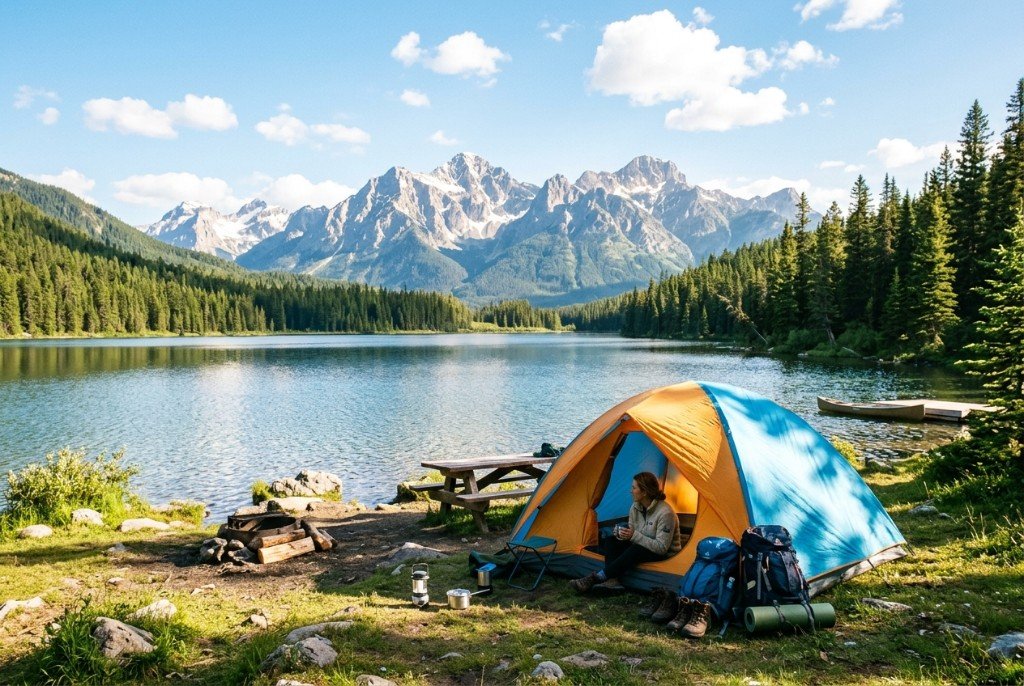
Japan's campgrounds (キャンプ場, kyanpu-jo) split roughly into two cultures: fully managed sites with rental cabins, communal kitchens, and coin-laundry-style conveniences, and rustic "free site" (フリーサイト) pitches where you bring everything, including your own water filtration if the tap is seasonal. Understanding which type you've booked — and what cooking infrastructure it actually has — matters more than almost any other planning decision, because unlike US or European campgrounds, on-site shops are rare and many sites close their office (and gas/charcoal sales) by 17:00.
Who Cooking-Focused Campers Actually Are, and Why Japan Is Different
This guide is for travelers who plan a trip around the cooking, not just the sleeping — groups doing a proper BBQ night, families who want a real kitchen instead of a single burner, and solo campers who care whether there's a sink with hot water before they book. Japan's campground culture rewards this kind of planner because facilities vary enormously by region and operator, and the gap between a ¥500/night riverside clearing and a ¥6,000/night "auto camp" with an induction-equipped kitchen hut is huge.
What makes Japan distinct from Western camping is the prevalence of shared, managed cooking infrastructure rather than per-site hookups. Big-name sites like PICA Fujiyama (Yamanashi), Nasu Highland Park Camping Ground (Tochigi), and Sotoasobi Field Shonan (Kanagawa) all run centralized kitchen facilities — covered pavilions with multiple gas burners, stainless sinks, and sometimes refrigerated lockers — rather than letting every site free-burn on open ground. This is partly fire-safety regulation (many prefectures ban direct-ground fires outside permitted BBQ pits) and partly a cultural preference for tidy, shared equipment over individual sprawl. If you've camped in the US expecting a fire ring at every site, recalibrate: Japan's model is closer to "communal outdoor kitchen + your own grill on a raised stand."
Conditions: How the Kitchen, BBQ, and Equipment Layout Actually Works
Centralized kitchen huts. At managed auto-campgrounds, expect a dedicated building called a kuriya (炊事棟) with 4–12 gas-ring stations, concrete or stainless sinks, and overhead lighting for night cooking. Water is almost always potable, but check signage (飲用可 = drinkable) since some rural sites only guarantee it for washing. Bring your own detergent and a sponge — these are rarely supplied. Some sites like those run by Nasu Shuzenji or the PICA chain charge a flat facility-use fee (¥300–¥800 per stay) that covers kitchen access separately from the pitch fee.
BBQ areas and grill rental. Direct wood fires on bare ground are restricted at most official sites, so BBQ happens on raised grills — either a rented steel frame (レンタルBBQセット, typically ¥1,500–¥3,000 including grill, tongs, and a tarp) or your own folding grill set on a stand, never placed directly on grass. Charcoal (炭) is sold at site offices for roughly ¥500–¥1,000 per bag; buy it on arrival rather than hunting for a konbini nearby, because many campgrounds sit 15–30 minutes from the nearest convenience store. Disposal matters: most sites require charcoal ash to be fully extinguished and left in a designated ash bin (灰捨て場), not packed out or dumped on the ground — staff will check before you leave.
Equipment you can rent vs. must bring. Larger operations (PICA, Snow Peak-affiliated "Snow Peak Field" sites, and most ski-adjacent camps) rent full kits: tents, sleeping bags, stoves, cookware sets, and BBQ grills, which is the easiest path if you're flying into Japan without gear. Smaller municipal or free sites rent nothing — you need your own stove, fuel canister (CB/OD gas, sold at outdoor shops like Mont-bell, WILD-1, or Kojitsu Sanso, not always at the campsite), and cookware. A useful rule: if the campground's website has an English page and a "レンタル" (rental) tab, assume full equipment support; if it's a one-page municipal PDF, assume bring-everything.
Power and refrigeration. Facility-grade sites increasingly offer an "electric site" (電源サイト) upgrade for ¥1,000–¥2,500/night extra, giving you a 15A outlet for an electric cooler or induction plate. Communal kitchens occasionally have a shared refrigerator, but space is limited and shared — don't rely on it for raw meat storage overnight; a hard cooler with ice (bagged ice sold at the office, ¥300–¥500) is the safer plan for a weekend BBQ.
Season and Access: When to Go and How to Get There
Season window. Golden Week (late April–May 5) and the Obon period (mid-August) are the two peak crunches — kitchen huts get genuinely crowded, with lines for burners at dinner hour, and BBQ grill rentals sell out by midday. The sweet spot for cooking-focused camping is late September through early November (cooler air, stable weather, fewer bugs) or May after Golden Week ends. Winter camping at lower-elevation sites (e.g., near ski regions like Hakuba or Niseko) is possible and some kuriya huts stay open with heated taps, but check each site's 冬季休業 (winter closure) dates — many close kitchen facilities from December through March even if the campground itself stays technically open.
Access from real hubs. For Kanto-area sites like Sotoasobi Field Shonan or Nasu Highland, the hub is Tokyo: Shinjuku or Tokyo Station by rental car is roughly 1.5–2.5 hours via the Tomei or Tohoku Expressway; without a car, take the JR line to the nearest station (e.g., Nasu-Shiobara on the Tohoku Shinkansen, about 70 minutes from Tokyo) and arrange a taxi or site shuttle for the final 20–30 minutes — public transit rarely reaches the gate directly. For Yamanashi sites near Fuji Five Lakes, Shinjuku to Kawaguchiko by direct highway bus takes about 1 hour 45 minutes, then a local bus or taxi to the campground. For Kansai-based campers, Kyoto or Osaka to sites in Shiga or Hyogo is typically under 90 minutes by car. If you're combining camping with skiing, diving, or surfing on the same trip, build in a half-day buffer for the drive — gear-heavy campgrounds are almost never walkable from a train station.
Booking windows. Reserve kitchen-equipped sites 4–8 weeks ahead for regular weekends and 2–3 months ahead for Golden Week or Obon; many popular sites open reservations exactly 3 months prior at a fixed hour (check the site's own rules page), and slots for electric or kitchen-adjacent pitches go first.
Practical Tips: Booking, Gear, Etiquette, and Food Logistics
- Book the facility, not just the pitch. On reservation sites like なっぷ (nap-camp.com) or ハレのいえ (harenoyea.com), filter specifically for "炊事場あり" (has cooking area) and "BBQ可" (BBQ permitted) — not every pitch at a campground includes kitchen access, and some premium pitches bundle a private sink.
- Pack a folding table and headlamp. Communal kitchens often lack individual counter space at peak hours; a portable table lets you prep off-site and just use the hut for the burner and sink.
- Bring your own gas canister adapter. Japanese CB (red can, common convenience-store size) and OD (screw-type, outdoor-shop size) canisters are not interchangeable with North American or European stove threads — rent a stove locally if you're flying in rather than hoping your home equipment matches.
- Separate your trash into at least 4 streams. Most sites enforce strict sorting (burnable, plastic, cans/bottles, and sometimes a separate charcoal-ash bin); non-compliant bags are often refused at checkout, which can delay your departure.
- Quiet hours affect cooking too. Many sites enforce a 22:00 or 21:00 noise curfew that includes generator use and loud prep — plan your BBQ to wrap grilling by then and shift to quiet cleanup.
- Buy perishables en route, not at the site. Supermarkets (Gyomu Super, Seiyu, local chains) near the highway exit before the final rural stretch are almost always cheaper and better stocked than anything at the campground office; after that point, assume no fresh food is for sale.
- If pairing with diving, surfing, or skiing, rinse before you cook. Coastal and ski-adjacent campgrounds often have separate outdoor rinse stations for wetsuits or boots — use those, not the kitchen sink, since site rules frequently prohibit washing gear in the cooking area for hygiene reasons.
- Tip for groups: a shared facility fee is usually per-site, not per-person, so splitting a larger pitch with a full kitchen hut access across 4–6 people is often cheaper per head than two smaller bring-your-own-stove pitches.
Plan the kitchen logistics with the same care as the tent pitch, and a Japanese campground cooking trip runs smoothly — the infrastructure is there, it's just communal, regulated, and seasonal in ways that reward a little homework before you drive out.
Was this page helpful?
Your feedback helps us improve our guides