
Hokkaido powder season timing: when to plan your trip
📅 2026-10-11
Who Hokkaido Powder Season Is Really For
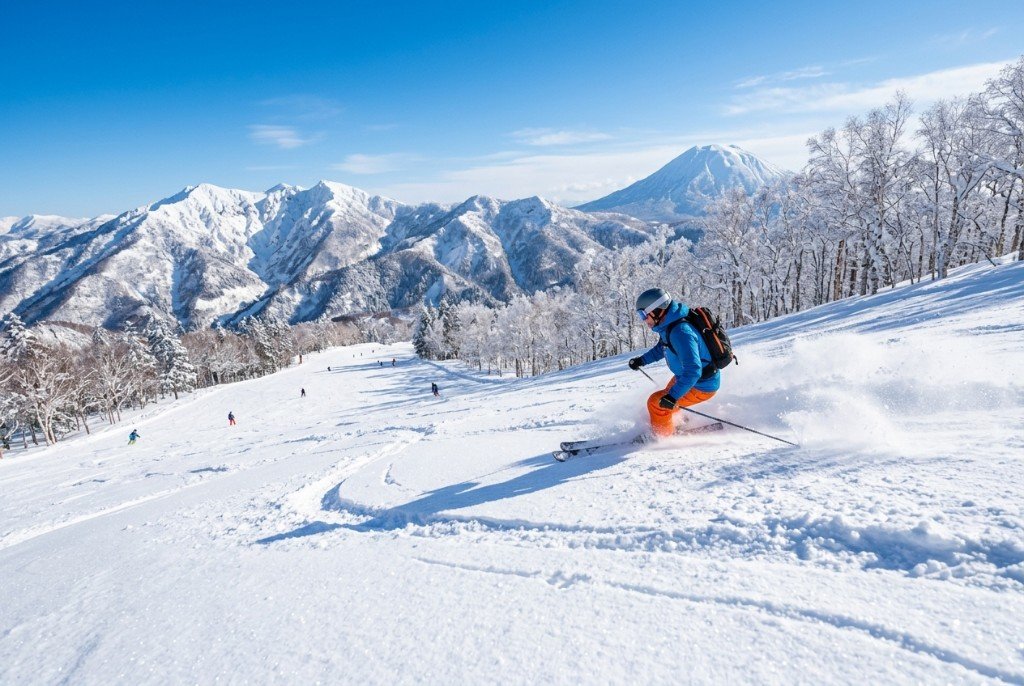
Hokkaido isn't a resort you stumble into on a whim — it's a destination you plan around a weather pattern. The island sits directly in the path of Siberian cold fronts that cross the Sea of Japan, pick up moisture, and dump it as some of the lightest, driest snow on the planet. That's the whole reason skiers and riders fly past Honshu's bigger cities to land in Sapporo: the powder here is famously dry because the air arriving from Siberia has already lost most of its moisture over the continent, then regains it as snow-grade humidity over the relatively warm sea — producing low-density flakes that pile up fast and ski light.
This guide is for intermediate-to-advanced skiers and riders who already know how to handle deep snow and want to time a trip around actual conditions rather than just picking "winter" and hoping. It's less useful if you're a beginner chasing groomed runs — Niseko and Furano have plenty of blue terrain, but the appeal that justifies the flight and the planning is the powder, and powder rewards people who know what to do with it. Families and first-timers can still have a great trip here, just with different expectations and probably a shorter, more flexible window.
Historically, this region was settled late by mainland Japan — Hokkaido was Indigenous Ainu territory until the Meiji government pushed colonization in the late 1800s — and a lot of the ski towns you'll visit (Niseko, Furano, Rusutsu) grew out of small agricultural and timber communities before skiing became the economic engine in the 1980s-90s, followed by a second wave of Australian and now broader international investment from the 2000s onward. That history explains why some towns feel like resort towns built around one mountain (Niseko) while others, like Furano, still feel like working farm towns with a ski hill attached — worth knowing if you're choosing a base.
Reading Conditions: What Actually Changes Week to Week
"Powder season" isn't one uniform stretch — conditions shift noticeably across the winter, and the differences matter for trip planning:
- Early season (late November–mid December): Base coverage is often thin and inconsistent. You'll get powder days, but off-piste terrain may not be fully open and rocks/stumps can still be close to the surface. Good for budget travel and avoiding crowds, risky if snow is your only goal.
- Peak powder (late December–February): This is the core window. Snowfall is frequent, temperatures stay cold enough that snow doesn't degrade between storms, and resorts like Niseko United, Rusutsu, and Furano are running full terrain including tree runs and backcountry gates. Storm cycles tend to run in multi-day pulses — a few feet over 2-3 days, then a clear, cold gap, then another pulse. Watching the 7-10 day pattern (not just tomorrow's forecast) tells you more than a single-day snow report.
- Late season (March): Snowpack is deep but the character changes — warmer days create a heavier, sometimes wetter top layer, especially at lower elevations. Mornings can still be excellent before the sun softens things. This is a good window if you want fewer crowds and don't mind more variable snow quality day to day.
On conditions specifically: Hokkaido's snow is driven by sea-effect moisture rather than the orographic lift systems that shape Honshu resorts, which is why storms here tend to be more consistent and less dependent on a single mountain range catching a front. Local operators talk about "JPN" (Japan Powder Nirvana) days almost as a running joke, but the underlying pattern — cold air over open water producing light, frequent snow — is real and is the single biggest reason this island outperforms expectations compared to ski destinations at similar latitudes elsewhere.
Season and Access: Hub Cities, Flights, and the Timing Window
New Chitose Airport (CTS), outside Sapporo, is the real hub for almost every Hokkaido ski trip. It has direct international flights from several Asian hubs and frequent domestic connections from Tokyo (Haneda/Narita) — the Tokyo-to-Sapporo flight is roughly 1.5 hours, making a long-weekend trip from mainland Japan genuinely feasible even without extending a broader Japan itinerary.
From New Chitose:
- To Niseko: roughly 2.5–3 hours by private transfer or shuttle bus; there's no direct train, so most visitors book a resort shuttle or hire a car. In heavy snow, budget extra time — roads can slow considerably during active storms.
- To Furano: around 2.5 hours by car, or a combination of train (via Sapporo/Takikawa) plus local bus if you're not driving.
- To Rusutsu: about 2 hours by shuttle or car.
- To Sapporo city resorts (Teine, Moiwa): 45 minutes to just over an hour, making Sapporo a good base if you want a mix of city nightlife and day-trip skiing rather than committing to one mountain town.
On timing the trip itself: book flights and accommodation for late December through February if powder quality is the priority — this is also when prices peak and popular lodges in Niseko sell out months ahead, so reserve 3-6 months out if you want central locations near the Hirafu or Village areas. If budget and crowd avoidance matter more than guaranteed deep snow, aim for the first half of December or March; you'll trade some consistency for availability and lower rates.
Practical Tips: Booking, Gear, and Etiquette on the Mountain
Booking: Reserve lodging well before the season starts, especially anything within walking distance of Niseko's Hirafu Village lifts — that inventory moves fast once Australian and increasingly broader international school holidays overlap with peak powder weeks (roughly mid-December through late January). If you're flexible, weekday arrivals and shoulder-week stays (first week of December, or mid-to-late March) are considerably easier to book and noticeably cheaper.
Gear: Bring or rent a wider powder-oriented ski or board if you're planning to spend serious time off-piste — rental shops in Niseko and Furano stock Japan-specific powder setups, so you don't need to fly with your widest boards. A full-face layering system matters more here than at drier, colder resorts elsewhere, since Hokkaido's snow often comes with higher humidity than people expect from "light powder" — waterproof outer layers, not just windproof, are worth the extra weight in your bag.
On-mountain etiquette: Backcountry gates into tree runs are common at Niseko and Rusutsu, but they're often avalanche-controlled access points, not open invitations — check posted conditions and closures daily, and don't duck a closed rope just because the snow looks good from the lift. Hiring a local guide for your first day or two of off-piste terrain is standard practice even among experienced skiers, both for safety and because local guides read storm-to-storm snow changes far better than a forecast alone.
Food and stay: Base towns like Furano and the area around Lake Shikotsu are worth a night even if you're mainly skiing Niseko — both offer excellent onsen (hot spring) culture, which matters more in Hokkaido than almost anywhere else in Japan given how cold and dry the air gets after a powder day. Soaking in an outdoor rotenburo with snow actively falling is, for a lot of repeat visitors, as memorable as the skiing itself.
Bottom line on timing: if you can only pick one lever to pull, pick the calendar. Mid-January through mid-February is as close to a guaranteed powder window as exists anywhere in the world, and everything else — which town, which gear, which guide — is easier to get right once the dates are locked to the season that actually delivers.
Was this page helpful?
Your feedback helps us improve our guides