
Hokkaido Powder Week: How to Time Niseko and Beyond for the Deepest Snow
📅 2026-09-28
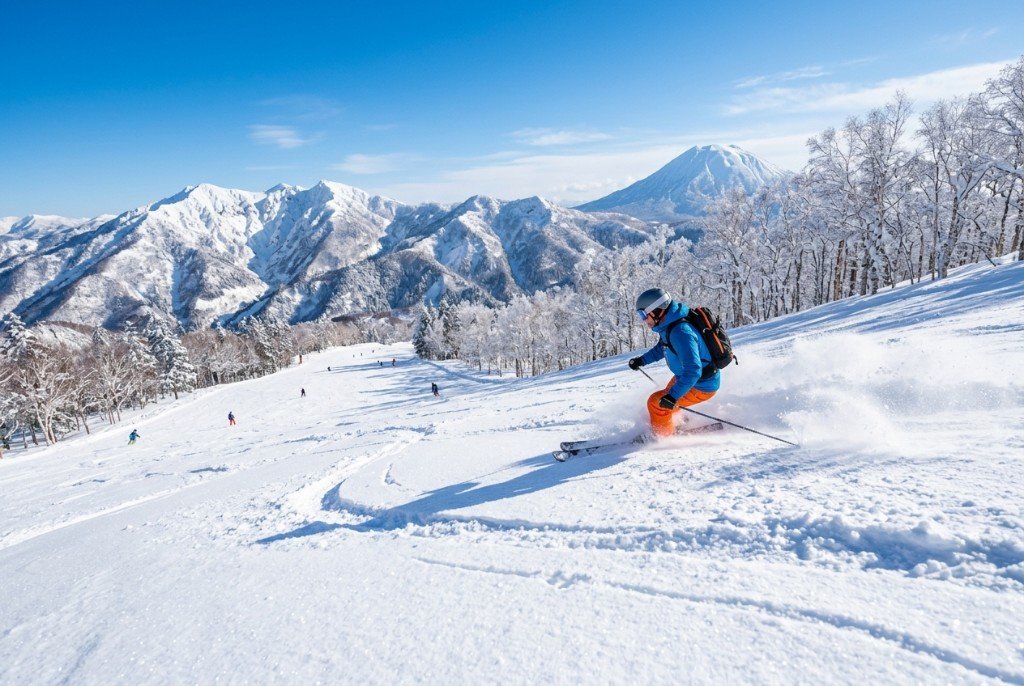
Why Hokkaido Powder Weeks Are Worth Planning Around
Hokkaido's reputation as one of the world's premier powder destinations isn't hype — it's geography. Cold, dry Siberian air masses cross the Sea of Japan, pick up moisture, and slam into the island's coastal mountains, dumping consistent, light, low-density snow that rarely turns to ice mid-week the way it does in the Alps or Rockies. This is the phenomenon locals and long-time visitors call "Japow," and nowhere concentrates it more reliably than the Niseko United area on the western side of the island.
A "powder week" trip is different from a generic ski holiday: it's built around chasing a specific weather window rather than locking in fixed dates a year out. That means the planning process looks more like a surf trip than a resort booking — you're watching synoptic patterns, not just a calendar. This guide is for intermediate-to-advanced skiers and snowboarders who want fresh snow most days of a 5–7 night stay, plus a realistic sense of which base town — Niseko, Rusutsu, or a quieter satellite — fits their pace, budget, and appetite for backcountry access. Beginners and families can absolutely enjoy Hokkaido too, but the timing advice below is aimed at people who care whether they get 10cm or 40cm overnight.
Culturally, it's worth knowing Niseko's transformation is recent. Through the 1990s it was a modest regional ski area serving Sapporo day-trippers; Australian investment from the early 2000s onward turned Hirafu into an international village with English-language menus, ski-in/ski-out condos, and direct flights feeding through New Chitose. That history matters practically — it's why Niseko has mature English-speaking infrastructure that other excellent Hokkaido resorts (Furano, Kiroro, Rusutsu, Asahidake) still lack, which shifts the calculus for first-time visitors versus repeat riders chasing solitude.
Reading the Forecast: How to Actually Predict a Powder Week
Hokkaido's snow comes from a specific setup: a strong Siberian high-pressure system pushes cold air east across the relatively warm Sea of Japan, generating "JPCZ" (Japan Sea Convergence Zone) snow bands. These bands are narrow, so a resort 40km apart can have wildly different totals on the same day. This is the single most important thing to understand before booking — averages hide the reality that some weeks deliver snow almost daily and others go five days with barely a dusting.
Practical forecast reading for a trip 1–3 weeks out:
- Check the Siberian High strength, not just the local forecast. Sites like the Japan Meteorological Agency (JMA) surface pressure charts and windy.com's pressure/precipitation overlay show whether a strong high is building over Siberia — that's your leading indicator 5–10 days out.
- Watch wind direction, not just temperature. Northwesterly flow off the Sea of Japan is the money direction for Niseko and the west coast. A shift to northerly or easterly flow often starves the JPCZ bands and can leave western resorts dry while Sapporo or the Daisetsuzan range further east/inland picks up snow instead.
- Use local snow-report aggregators (Niseko's official snow reports, SnowJapan, and resort webcams) for the last 24–48 hours of actual accumulation rather than relying purely on app forecasts, which tend to underestimate JPCZ-driven totals.
- Don't fixate on a single "best" week. Historically, mid-January through mid-February is the most snow-reliable stretch, but individual years vary — some seasons peak in late December, others in early March. Booking a flexible week within that window and adjusting activity plans day-to-day (powder days vs. onsen/rest days) beats betting everything on one calendar date.
If you can only watch one number, watch cumulative snowfall over the prior 72 hours combined with a forecasted cold snap — that combination is what produces the dry, bottomless snow Hokkaido is known for, as opposed to wetter, heavier dumps.
Season Timing and Getting to Base Town
Season window: Hokkaido resorts typically open late November and run through early April, but the core "powder week" season — where storm frequency and snow quality both peak — runs from late December through late February. Early season (late Nov–mid Dec) has thinner base coverage and more rock risk off-piste; late season (March) brings warmer, occasionally heavier snow and longer daylight, appealing to riders who prioritize spring corn and fewer crowds over pure powder volume. New Year's week itself is popular but crowded and pricier — many repeat visitors deliberately book the two weeks surrounding it instead.
Getting there: The hub for essentially all Hokkaido ski trips is New Chitose Airport (CTS), near Sapporo, served by direct international flights from Australia, Hong Kong, Singapore, Taiwan, and seasonal routes from other Asian cities, plus frequent domestic connections from Tokyo (Haneda/Narita) and Osaka (about 1.5–2 hours flight time).
From New Chitose to base towns:
- Niseko (Hirafu/Annupuri/Hanazono): ~2.5–3 hours by direct shuttle bus (widely available in winter, book ahead) or private transfer; roughly 3–3.5 hours by train via Otaru with a transfer, plus taxi/shuttle from Kutchan Station. Renting a car is possible but winter driving on the Hokkaido Expressway and mountain roads requires studded/winter tires and experience with snow driving — many first-timers prefer the shuttle.
- Rusutsu: ~2–2.5 hours by direct resort shuttle bus, slightly closer than Niseko and often less crowded.
- Furano: ~2 hours via JR train through Sapporo with a transfer, a good option for those wanting a more local, less internationalized base with excellent tree skiing.
- Sapporo city resorts (Teine, Kokusai, Moiwa): 30–60 minutes from New Chitose or from Sapporo Station, ideal for a day-trip add-on if you're based in the city for non-ski reasons.
Book domestic transfers and rental cars well ahead of the January–February peak; Niseko's shuttle seats and Kutchan taxis sell out on fresh-snow weekends.
Booking, Gear, and On-Mountain Etiquette
Booking timeline: For peak late-December through February dates, reserve accommodation 6–9 months out — Niseko condos and Rusutsu's on-mountain hotel fill early, especially around New Year and Lunar New Year (dates shift yearly; check against the Chinese/Lunar calendar since Hong Kong, Singapore, and Taiwan visitor volume spikes then). Lift passes for Niseko United can be bought day-of but multi-day passes are cheaper booked online in advance. If you're chasing a forecast window, look for accommodation with flexible cancellation inside 2–3 weeks rather than fully non-refundable rates, since your ability to shift dates based on the Siberian High's behavior is your main edge.
Gear notes specific to Hokkaido conditions:
- Bring or rent a wider, more rockered powder ski or board — the snow is deep and light enough that narrower all-mountain gear underperforms.
- Pack for real cold: base-town temperatures regularly sit between -5°C and -15°C, and windchill on exposed lifts (especially Hanazono and Hirafu Gondola) is sharper. Layer with a proper insulating mid-layer, not just a shell.
- Goggle lens choice matters more here than in drier climates — flat light days are common during heavy snowfall, so a low-light or rose/yellow lens earns its keep.
- If venturing into sidecountry or backcountry gates (common at Niseko and Asahidake), carry a beacon, shovel, and probe, and check avalanche advisories through the Japan Avalanche Network — Hokkaido's snowpack can be unstable after rapid loading events.
Etiquette and local practicalities:
- Niseko and most Hokkaido resorts operate ungroomed powder zones through marked backcountry gates rather than fully open-boundary policies common in North America — respect gate closures, which are safety-driven, not arbitrary.
- Queue discipline at lifts is taken seriously; single-file lines are the norm even in powder-day scrums.
- After a powder day, onsen (hot spring bathing) is both a genuine local custom and the best recovery tool available — most base towns have public or ryokan-attached onsen, and tattoo policies vary, so check ahead if relevant.
- Food-wise, base towns balance international après-ski dining with genuinely excellent regional Japanese food — Hokkaido is known for fresh seafood, dairy, and ramen, so it's worth budgeting at least a few dinners away from Western-style restaurants to experience it.
A well-timed Hokkaido powder week rewards flexibility more than perfect planning: pick a base town that matches your skiing style, book a window rather than a single date, and let the Siberian High tell you which days to prioritize the mountain over the onsen.
Was this page helpful?
Your feedback helps us improve our guides