
Campground Etiquette in Japan: The Unwritten Rules Every Camper Should Know
📅 2026-10-11
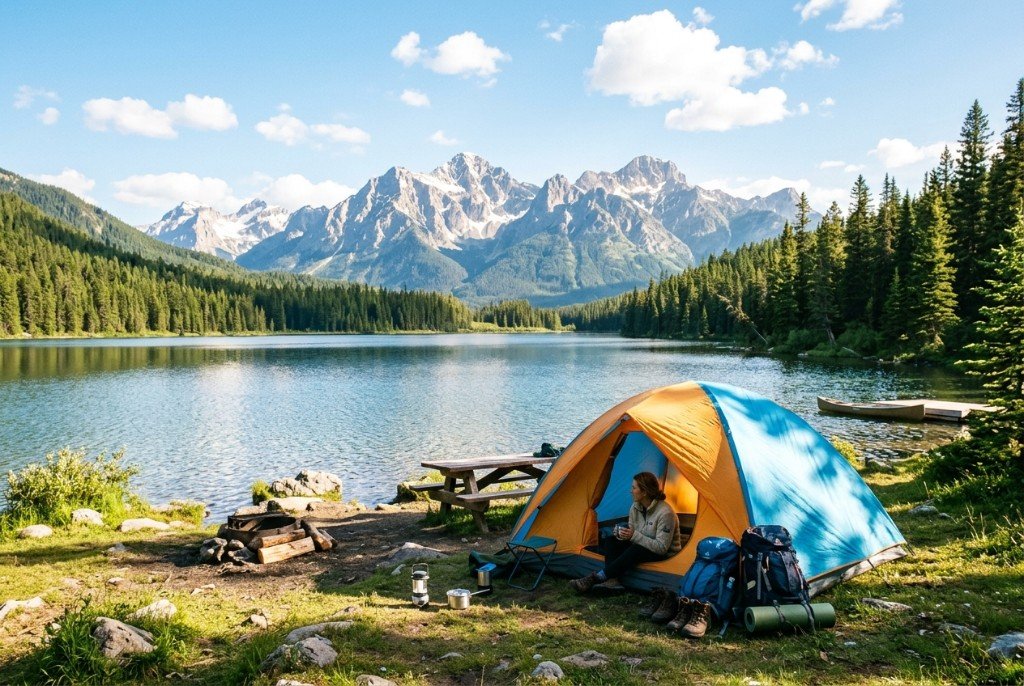
Japan has quietly become one of the best countries in the world for camping, but the experience is shaped as much by social norms as by the landscape itself. Understanding campground etiquette and the practical rules specific to Japan will make the difference between a trip that feels effortless and one where you accidentally become "that camper" everyone remembers for the wrong reasons. This guide walks through who should read it, what the actual campsites look and feel like, when and how to get to them, and the cultural rules that govern everything from where you park your car to how loudly you laugh after dark.
Who This Guide Is For and Why Japan's Campgrounds Feel Different
This guide is for first-time visitors planning a camping trip in Japan, van-lifers road-tripping between Hokkaido and Kyushu, and anyone combining camping with other outdoor pursuits like surfing in Shikoku, diving in Okinawa, or backcountry skiing access in Nagano. It's also useful for experienced campers from North America, Europe, or Australia who assume "camping is camping everywhere" — in Japan, that assumption causes more friction than any gear mistake ever will.
What makes Japanese campgrounds distinct is the degree of structure layered onto nature. Unlike the laissez-faire dispersed camping common in the US, almost all camping in Japan happens at designated, managed sites (キャンプ場, kyanpu-jō), many run by local municipalities, families, or small businesses that have operated the land for generations. Wild camping is technically restricted in most areas — national parks, private forestry land, and even many beaches are off-limits without permission — so the culture that has developed is one of dense courtesy within tightly defined boundaries. This traces back to a broader Japanese cultural principle called meiwaku, the idea of avoiding being a nuisance to others. On a crowded archipelago where land is scarce and neighbors are close, every camper is implicitly agreeing to manage their own noise, smoke, trash, and footprint so the next group — and the site's long-term relationship with the surrounding community — isn't damaged.
Campsite Conditions, Layout, and the Shared Rulebook
Japanese campgrounds generally fall into three categories, and each comes with its own expectations. Auto-campsites (オートキャンプ場) let you park directly beside your tent and are the most common for families and beginners; they usually have gravel or grass pitches, shared water points, coin-operated showers, and a reception office that checks you in at a fixed time, often 1:00–2:00 PM, with checkout by 10:00–11:00 AM. Freesite areas (フリーサイト) let you choose your own pitch within a marked field, first-come-first-served, and tend to fill fast on weekends near Tokyo, Osaka, and Nagoya. Cabin or glamping-style sites (グランピング) are increasingly popular at resort-adjacent locations, especially near ski areas in Nagano and Niigata or dive hubs in Okinawa, and come with rules closer to a hotel: no outside alcohol in some cases, strict quiet hours, and barbecue grills that must be elevated off the grass on provided stands to avoid scorching it.
Almost every site posts a laminated rules sheet at check-in, usually only in Japanese, covering four recurring points: quiet hours (often 9 or 10 PM to 7 AM, enforced strictly — generators and loud music are frequently banned outright), fire rules (open fires directly on the ground are almost universally forbidden; you must use a fire pit, fire stand, or scorch-proof sheet to protect the grass), trash separation (burnables, non-burnables, PET bottles, and cans are sorted into separate bins, and many sites require you to take trash back out with you if there's no on-site collection), and car rules (vehicles typically stay on gravel access roads and designated parking tabs, never driven onto the grass pitch area itself even at auto-campsites, unless the pitch is specifically marked for it). If you're combining the stay with diving, surfing, or skiing, expect additional site-specific rules: wetsuit and gear rinsing stations are often separate from dishwashing sinks, surfboards are not allowed to lean against shared walls or trees, and ski/snowboard waxing is typically banned anywhere near the tent pitches because of the chemical runoff.
Best Season and How to Reach Japan's Campgrounds
Camping season varies sharply by region. Honshu's main season runs late April through early November, with July–August being hot, humid, and the most crowded due to Japanese summer holidays (mid-July to early September) and the Obon holiday week in mid-August, when sites book out weeks in advance. Spring (April–May) offers cherry blossoms and cooler nights; autumn (late September–November) brings foliage camping, especially in Nagano, Yamanashi, and Tohoku, and is considered by many locals the best season for comfort and scenery. Hokkaido's season is shorter, roughly June to September, with camping tied to the snow-free window. Okinawa and the southern islands allow near year-round camping, which pairs naturally with diving trips, though summer typhoon season (roughly June–October) requires flexible dates and a close eye on JMA typhoon advisories.
Access depends heavily on the region. From Tokyo, popular car-camping areas in Yamanashi (near Mt. Fuji) and Nagano are 1.5–3 hours by rental car via the Chuo Expressway, making a car the most practical option since many sites are 20–40 minutes from the nearest train station with no public transit onward. From Osaka, the Kansai region's camping areas around Lake Biwa or Wakayama's coast are similarly car-dependent, roughly 1–2 hours out. For Hokkaido, flying into New Chitose Airport near Sapporo and renting a car is standard, since campgrounds there are often rural and spread out. For Okinawa dive-and-camp combinations, fly into Naha, then drive or bus north to the Motobu Peninsula or outer islands like Ishigaki, where campsites sit a short walk from dive shops. If you don't want to rent a car, look for campgrounds explicitly marketed as "station-accessible" (駅から徒歩/バス) — they exist, but they narrow your options considerably, especially outside Honshu's main tourist corridors.
Practical Etiquette, Booking, and Gear Tips for a Smooth Stay
Book ahead whenever possible, ideally through Japanese booking platforms like なっぷ (nap-camp.com) or directly via a site's website; English-language booking is improving but still limited, and phone reservations are common for smaller, family-run sites — a hotel concierge or guesthouse host can often call on your behalf. Payment is frequently cash-only at rural sites, so carry yen.
On etiquette specifically: greet your camp neighbors with a small nod or "konnichiwa," especially if your pitch is close to theirs — Japanese camping culture leans toward quiet, self-contained enjoyment rather than the communal campfire-hopping common elsewhere. Keep voices low even during the day; families often camp specifically to enjoy a near-silent forest, and sound carries further than you expect across open fields. Smoking is typically restricted to designated areas, not pitches. Bathing matters too: many campgrounds are near or include an onsen or sentō (public bath), and the rules there are non-negotiable — wash thoroughly before entering the communal bath, never let a towel touch the water, and know that visible tattoos may require a cover sticker or a private bath slot at some traditional establishments, a holdover from historical associations between tattoos and organized crime that is slowly easing but still enforced at many rural facilities.
Gear-wise, bring a tarp or ground sheet for fire stands even where fire pits are provided, since campground staff will ask you to use one to protect the grass; pack out what you pack in if there's no trash service; and separate recyclables as instructed even if it feels excessive — it reflects a broader cultural emphasis on collective upkeep of shared space. If you're staging a dawn surf session, ski tour, or dive, check the site's rules about early departures, since gates or barriers at some campgrounds don't open until a set hour. Respecting these small rules is really the entire philosophy of Japanese outdoor culture in miniature: nature here is treated as something borrowed, maintained carefully, and handed back a little cleaner than you found it.
Was this page helpful?
Your feedback helps us improve our guides