
Kerama Islands liveaboard scuba diving options from Naha
📅 2026-10-11
Why a Kerama Liveaboard Beats a Day Trip from Naha
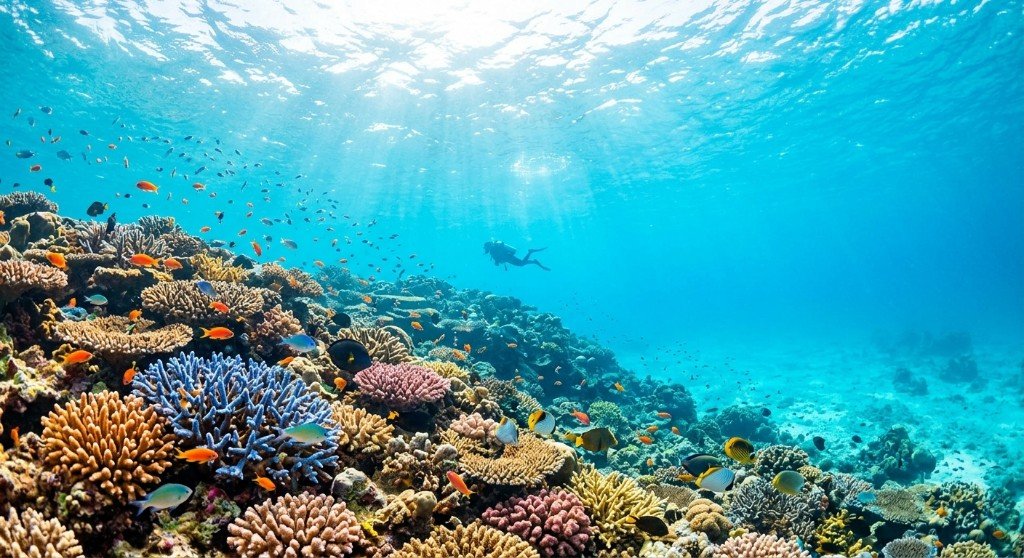
Most visitors to Okinawa dive the Kerama Islands on a day boat: wake up early in Naha, ride 40–90 minutes out, do two tanks, ride back, repeat. It works, but it wastes the single best thing about Kerama — the water clarity, which regularly hits 30 meters of visibility and gave the surrounding sea its nickname, the "Kerama Blue." A liveaboard based out of Naha solves the real limitation of day-tripping: travel time eats your bottom time, and the best sites (outer reef walls, current-swept channels, the drop-offs around Zamami and Tokashiki) are only comfortably diveable with a full day of slack-tide windows, not a rushed afternoon slot.
This guide is for divers who already have an Advanced certification (or at least 20+ logged dives) and want more than a souvenir two-tank outing — people chasing hammerhead season, wanting night dives on the same reef they explored at noon, or simply tired of packing and unpacking gear every single morning. It's not for total beginners: liveaboard operators in Kerama typically require open-water certification at minimum, and several of the better sites (current-exposed points, turtle cleaning stations past 20m) are genuinely better suited to divers comfortable with drift conditions. If that's not you yet, do two or three guided day trips from Naha first and come back for the liveaboard once you're ready to commit to a multi-day dive schedule.
The historical backdrop matters here too: the Kerama Islands sit inside Japan's oldest marine national park designation efforts, formalized as Kerama Shoto National Park in 2014, specifically because the reef health survived decades of fishing pressure better than much of mainland Okinawa's coast. Locals on Zamami and Tokashiki still run small-scale fishing alongside the dive economy, and a lot of liveaboard operators are family businesses that have been running boats out of Naha or Tomari Port for two generations. Respecting that — slow approaches to the villages, buying from the handful of local shops instead of treating the islands as a pure dive backdrop — is part of being a decent guest here.
What's Actually Underwater: Sites, Depths, and Conditions
A typical Kerama liveaboard itinerary out of Naha covers a rotating list of sites across the Zamami, Tokashiki, and Aka island group, chosen each morning based on wind and current rather than a fixed schedule — this flexibility is the other major advantage over day boats, which often can't afford to change plans mid-trip.
- Outer reef walls (Zamami side): Depths from 5m down past 30m, with steep drop-offs and regular current. Good visibility almost year-round, but current can run strong on spring tides — expect drift diving technique to be used here, not just finning against it.
- Tokashiki channel sites: Calmer, more sheltered, good for second and third dives of the day when currents elsewhere are too strong. Hard coral coverage here is some of the healthiest in the region.
- Aka Island shallows: Shallower coral gardens, 5–15m, often used for check dives at the start of a multi-day trip and for night dives later on — bioluminescence and reef squid activity pick up noticeably after dark.
- Seasonal hammerhead and manta approach points: Not guaranteed, but liveaboards running longer trips (3+ days) have meaningfully better odds simply because they can wait for the right conditions instead of diving a fixed site on a fixed day.
Water temperature swings from around 23°C in winter to 29–30°C in summer, so a liveaboard operator will usually ask your wetsuit thickness preference before departure — 3mm in summer, 5mm with a hooded vest from December through March is typical. Surface conditions matter more on a liveaboard than a day boat because you're living on the water: swell above 1.5–2m can cancel surface activities (snorkel breaks, topside breakfast on deck) even if the dive sites themselves stay calm in sheltered channels.
Season and Access: When to Go and How to Get There from Naha
Season: Diving runs essentially year-round, but the practical windows are:
- April–June: Shoulder season, fewer boats, visibility already excellent, water still cool (23–25°C). Good value, lower crowds.
- July–September: Peak season, warmest water, busiest harbor, but also typhoon risk — a multi-day liveaboard booked in this window should have flexible cancellation terms built in, because operators will cancel or reroute around storms without much notice.
- October–December: My pick for most divers — settled weather, visibility still strong, water still swimmable at 26–28°C in October tapering to low 20s by December, and typhoon risk has mostly passed.
- January–March: Coolest water and occasional whale sightings (humpbacks pass near Okinawa this time of year), but liveaboard schedules thin out and you'll want the thicker wetsuit.
Access: Naha is the hub for essentially all Kerama liveaboard departures, and getting there is simple:
- By air: Naha Airport (OKA) has direct flights from Tokyo (Haneda/Narita, ~2.5–3 hours), Osaka (~2 hours), and several other mainland cities, plus a growing set of international direct routes. This is almost certainly how you'll arrive.
- From the airport to the harbor: Most liveaboards depart from Tomari Port (Tomarin) or nearby marinas, roughly a 15–20 minute taxi or monorail-plus-walk from Naha Airport. The Okinawa Urban Monorail (Yui Rail) runs from the airport to Miebashi or Asahibashi stations, both within a 10-minute walk of Tomari Port.
- No rental car needed for the boat portion: Once aboard, you won't need a vehicle — gear, meals, and transit between sites are all handled by the boat. A car only makes sense if you're extending your trip with mainland Okinawa sightseeing before or after.
- Travel time to the islands: Zamami and Tokashiki sit roughly 25–40km west of Naha by sea; a liveaboard typically reaches the first dive site within 1.5–2 hours of departure, then stays in the island chain for the remainder of the trip rather than returning to Naha each night — the entire point of going liveaboard instead of day-tripping.
Booking, Gear, and Etiquette: Making the Multi-Day Trip Work
Booking: Reserve a Kerama liveaboard at least 4–8 weeks ahead for peak summer season, and 2–3 weeks ahead for shoulder months — slots fill fastest on 3- and 4-day itineraries since there are simply fewer boats offering longer multi-day dive trips than there are running single-day charters. Confirm in advance:
- Minimum certification and logged dive requirements (commonly Open Water + 10 dives, sometimes Advanced for specific current-heavy sites).
- Whether tanks, weights, and nitrox fills are included or billed separately — nitrox is worth it for a multi-day schedule since it meaningfully reduces fatigue across repetitive dives.
- Cabin configuration — shared bunk rooms are standard and cheaper; private cabins exist on the larger boats but book out first.
Gear: Bring your own mask, fins, and dive computer if you have them — rental gear is available but fit varies boat to boat. Pack reef-safe sunscreen only; Japan's marine parks, Kerama included, increasingly discourage oxybenzone-based sunscreen because of coral bleaching concerns, and some operators will ask directly. A dry bag for the surface intervals and a light jacket for cooler evenings on deck (even in summer, open water at night gets breezy) round out the practical list.
Food and stay: Liveaboard pricing almost always includes meals — expect simple, fresh Okinawan-style cooking, heavy on fish, tofu, and local vegetables, eaten family-style between dives. If your trip starts or ends with a night in Naha, Kokusai-dori has the easiest concentration of hotels near the monorail and harbor, useful for an early boat departure or a late arrival after your flight.
Etiquette: Treat the dive briefings as mandatory, not optional — currents around Kerama shift quickly and crews adjust entry points accordingly. Avoid touching or standing on coral even briefly; the reef's health is the entire reason this is a national park and the reason the water stays this clear. And on the islands themselves, a short, polite greeting goes a long way — Zamami and Tokashiki are small communities where dive tourism is welcomed but still secondary to daily island life.
Was this page helpful?
Your feedback helps us improve our guides