
Diving Kerama Islands in strong currents: techniques and drift diving safety
📅 2026-10-11
Who This Dive Is For
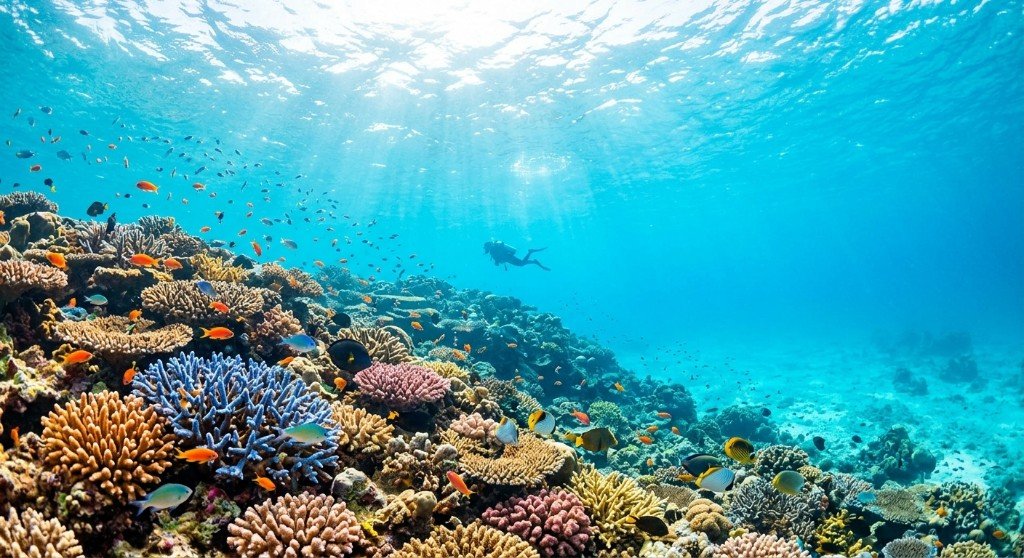
Current diving at the Kerama Islands is not a first-certification outing. The visibility that makes "Kerama Blue" famous — regularly 20 to 30 meters, sometimes more — exists precisely because open-ocean current flushes plankton and sediment away from the reef. That same current is the defining variable of every dive here, and it separates Kerama from the calmer, current diving in Kerama 1/2 can shelter novices. If you are comfortable with your buoyancy, have logged at least a few dozen dives, and want to understand what advanced, technique-driven diving actually feels like against real current, this is the place. If you are still working on trim or air consumption in flat water, Kerama's channels between Tokashiki, Zamami, Aka, and Geruma islands will humble you quickly — the current can run from a lazy half-knot to a boat-dragging two-plus knots within the same tide cycle.
What makes Kerama distinct from Okinawa's mainland sites is the geography: this is a scattered archipelago of roughly 20 small islands sitting on a shallow bank surrounded by deep channels, so tidal water is forced through narrow gaps between islands twice a day. Divers who have only experienced reef drift in open water are often surprised by how localized and direction-specific Kerama current is — a site can be glassy at the surface and ripping at 15 meters, or reversing entirely from the pattern the dive boat expected. This is what draws experienced divers back: it's a place where drift, kerama, and advanced technique are inseparable from the experience itself, not marketing language.
Dive Site Conditions and Current Patterns
The channels around Aka and Geruma islands, and the passage known locally as Nagannu, see some of the most reliable current diving in Kerama. Expect:
- Tidal timing dominates everything. Dive shops schedule boats around slack tide and the building current, not around convenience. A site that's a lazy drift at 9am can be unnavigable by 11am.
- Thermoclines and current often arrive together. Divers frequently report a noticeable temperature drop of 2-4°C when hitting the main current layer, useful as an early warning that you've crossed into faster water.
- Visibility improves with current strength, which is counterintuitive for new divers used to associating current with murk. In Kerama, stronger flow usually means cleaner water, because it's pulling in oceanic water rather than stirring up local sediment.
- Topography funnels flow. Reef walls and channel necks between islands accelerate water dramatically — a site might be comfortable 20 meters off the wall and genuinely demanding right against it, where eagle rays and grey reef sharks tend to stage specifically because of that acceleration.
- Surface conditions can mislead. Kerama's inner sea is often calm and turquoise even when subsurface current is running hard, so surface appearance is not a reliable briefing substitute — always get the dive guide's current reading before entry.
Marine life rewards the effort: schooling barracuda and jacks hold position in the current using minimal effort, something worth watching and imitating rather than fighting.
Season and Access From Naha
The dive season at Kerama runs essentially year-round thanks to Okinawa's subtropical water, but conditions differ enough to plan around:
- April to June: Water warms into the low-to-mid 20s°C, winds are moderate, and this is considered the best window for stable current diving with fewer surface disturbances — strong recommendation for an advanced trip focused on technique practice.
- July to September: Warmest water (27-29°C) and the most reliable boat schedules, but this is also typhoon season in the western Pacific — build a buffer day or two into any trip, since boats cancel outright rather than running in marginal conditions.
- October to November: Water still comfortable, crowds thinner, current patterns remain strong and predictable — many repeat divers consider this the sleeper season.
- December to March: Diveable but cooler (22-24°C), with stronger seasonal wind; current diving is still available but surface conditions get choppier, making boat transits less pleasant.
Access starts at Naha Airport on Okinawa's main island, which has direct flights from Tokyo, Osaka, and several other Japanese hubs, plus a handful of international routes. From Naha:
- High-speed ferry from Tomari Port (泊港) in Naha reaches Zamami Island in about 50 minutes and Aka/Geruma (via Zamami) in roughly an hour. This is the standard route for most dive operators.
- Day-trip dive boats run directly from Naha's marinas for operators who prefer not to base divers on the islands overnight, departing early morning and returning by late afternoon.
- Staying on Zamami or Aka is worth considering for a multi-day current diving trip, since it puts you on the first boat out before tidal conditions shift and avoids the ferry commute eating into bottom time.
Drift Technique: Staying Safe in Strong Current
This is where Kerama separates recreational tourists from divers who've actually trained for it. A few non-negotiable techniques:
- Pre-dive current briefing and a hook or reef hook mentality. Even if you don't carry a physical reef hook, know in advance where the "safe zone" lee of a bommie or ledge is, so you can duck out of flow if you're overexerted or task-loaded.
- Negative or neutral entry, never positive. A positive, floaty entry in strong current means you drift on the surface before you can descend, often away from the group. Advanced Kerama operators brief a fast, controlled descent as standard.
- Stay low and use topography. Current speed drops dramatically close to the reef structure compared to mid-water. Advanced technique here means hugging contour, not fighting the current in open water where speed is highest.
- Buddy contact and SMB discipline. Because Kerama current can separate a pair within seconds, deploy a safety sausage (SMB) promptly if you surface away from the boat, and agree on a lost-buddy current protocol before entry — ascend, deploy, and wait, don't swim against the flow trying to relocate your buddy.
- Gas planning with a current margin. Swimming against even moderate current burns air dramatically faster than static finning. Advanced divers plan a higher reserve than they would for a calm reef dive, and call the dive early rather than pushing a tank toward empty while fighting flow.
- Know the back-up plan: drift and surface. Sometimes the safest technique is not fighting current at all — riding it to a pre-agreed pickup point while the boat tracks your group's bubbles or SMB, rather than burning gas and risking exhaustion trying to return to a fixed point.
Local guides at Kerama are trained specifically around these drift protocols, and a reputable operator will refuse to run a current site with anyone who hasn't demonstrated controlled buoyancy and air management in calmer water first — treat that refusal as a safety feature, not an inconvenience.
Booking, Gear, and Boat Etiquette
- Book through a Kerama-based or Naha-based operator with Advanced Open Water (or equivalent) verification, and expect to show logged dive history for genuine current sites — reputable shops gatekeep this for real safety reasons.
- Bring or rent a reef hook and a surface marker buoy; many operators supply one but having your own means you know how to deploy it under pressure.
- A hooded 3mm wetsuit is often enough given water temperatures, but divers doing multiple days of current diving often prefer a 5mm for the slightly better thermal buffer during long surface waits for current to ease.
- Respect the boat's current window. Operators build dive timing tightly around tide tables; showing up late or over-extending a dive delays the entire boat's schedule for the day and can push other groups into worse conditions.
- Marine park and coral etiquette matters as much here as the diving skill itself. Kerama's reefs sit inside a national park, and divers are expected to avoid any fin contact with coral — a drift dive done with good technique rarely touches the reef at all, since you're moving with the water rather than muscling against it.
- Base yourself on Zamami or Tokashiki for 3+ day trips. Local guesthouses and small dive lodges cater specifically to divers and often include early breakfast service built around the first boat's departure time, which matters when the best current window is the first one of the day.
- Historically, these islands were the first landing point of the Allied invasion of Okinawa in 1945, and several Kerama sites still carry wartime history alongside the marine life — some dive shops mention this context during surface intervals, and it's worth asking about if you're interested in more than the reef itself.
For most visitors, two to three days of diving is enough to properly experience Kerama's current diving — enough time to catch at least one strong tidal window with good conditions, without needing to push through a weak-visibility day just to justify the trip.
Was this page helpful?
Your feedback helps us improve our guides