
Glamping bases and mountain camping in Nagano
📅 2026-10-11
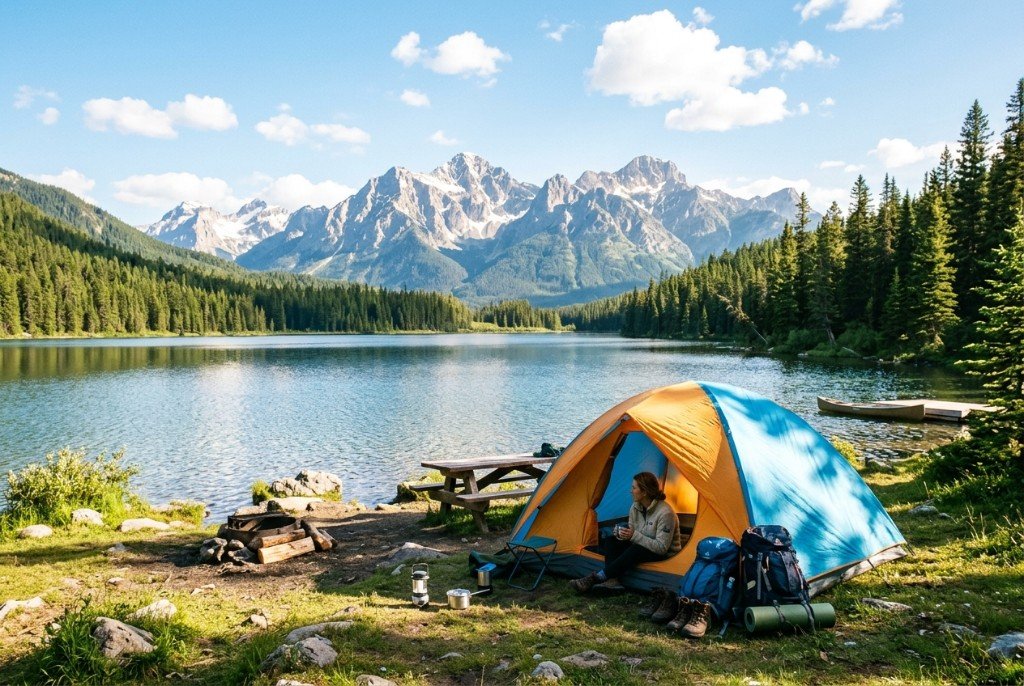
Nagano prefecture carries the nickname "the roof of Japan" for a reason: it is the only prefecture that borders eight others, and its interior is stacked with the Northern, Central, and Southern Japan Alps. That geography is exactly why Nagano glamping and mountain camping have become one of the most searched combinations in Japanese domestic travel over the past five years. You get genuine alpine terrain — ridgelines, larch forests, glacier-carved valleys — reachable by a bullet train ride that feels almost unfair given the scenery payoff.
Who Nagano's Alpine Bases Are Really For
Nagano glamping sites split cleanly into two camps, literally. There are polished glamping resorts built around hot spring towns like Karuizawa, Chino, and the Shiga Kogen approach road, aimed at couples and families who want a canvas-wall suite, a wood stove, and a kaiseki dinner without touching a tent peg. Then there are the working mountain campgrounds — places like the Kamikochi entrance camps, the Utsukushigahara highlands, and sites feeding into the Yatsugatake range — built for hikers, van-lifers, and weekend climbers who want a flat pitch, a water tap, and fast access to a trailhead at 5 a.m.
If you want the Instagram-grade glamping dome with underfloor heating, book Karuizawa or the Suwa lakeside resorts. If you want to wake up under the Southern Alps with a stove already lit before a ridge walk, the Kamikochi-adjacent or Senjojiki-area camps are the better fit. Nagano prefecture is large enough — roughly the size of Kanagawa, Tokyo, and Saitama combined — that "Nagano camping" is really shorthand for a dozen distinct microclimates, so matching the base to your actual plan matters more here than in most regions.
Historically, this area owes its camping culture to the 1998 Nagano Winter Olympics, which paved mountain access roads and built out lodge infrastructure that later got repurposed for summer hiking and glamping tourism. Many of today's glamping resorts near Hakuba and Shiga Kogen sit on land that was originally cleared for Olympic ski training, which is part of why the access roads are wider and better maintained than typical rural mountain routes.
Camp Layout, Terrain, and What to Expect On the Ground
Most Nagano mountain campgrounds sit between 700m and 1,800m elevation, which changes the camping math considerably compared to lowland Japan sites. Expect:
- Ground: Volcanic andesite soil in the Yatsugatage and Asama areas drains fast after rain but is rocky — bring a footprint and sturdy stakes, not the thin wire pegs that come with budget tents.
- Night temperatures: Even in August, sites above 1,200m (Shiga Kogen, Kurumayama) can drop to 10°C overnight. A 3-season bag is the minimum; shoulder-season trips need a 0°C-rated bag.
- Water and facilities: The established campgrounds (Nakabusa, Kamikochi-area sites, Shirakaba-ko) have potable taps and coin showers; backcountry pitches near alpine huts often require purifying stream water.
- Glamping dome layout: Resort-style sites typically cluster 10–30 domes or cabins around a central lodge with an onsen or sauna, bike or e-bike rental, and a communal fire pit. Private hot spring tubs ("kashikiri") are common upsells and book out first on weekends.
- Noise and wildlife: Nagano's forests host Asian black bears in the Alps foothills. Established camps post bear-bell and food-storage rules; follow them literally — food must go in lockers, not tents, at sites near Kamikochi and Togakushi.
For a working trip, a practical split is: one night at a glamping base to acclimatize and reset, then a push to a higher, simpler tent site for the actual hike or climb. This mirrors how most Japanese weekend campers use the region — comfort first, then altitude.
Season Windows and How to Actually Get There
Season: Nagano mountain camping runs roughly late April through early November, with the sweet spot being June (fresh green, fewer crowds before the July–August peak) and late September to mid-October (foliage season, cooler nights, the best photography light). July and August are the most crowded and the most humid at lower elevations, though the high camps near 1,500m+ stay comfortably cool. Winter transforms the same bases into ski lodges — Hakuba, Shiga Kogen, and Nozawa Onsen run some of Japan's best ski terrain from December through March, and several glamping operators switch to heated dome stays for snow season rather than closing.
Access from Tokyo: The Hokuriku Shinkansen from Tokyo Station to Nagano Station takes about 80–100 minutes. From Nagano Station, it's roughly 1–1.5 hours by rental car or local bus to most Alps-adjacent campgrounds (Togakushi, Shiga Kogen), and closer to 2–2.5 hours to reach the Kamikochi gateway via Matsumoto.
Access via Matsumoto: For southern and central Alps bases (Kamikochi, Norikura, Utsukushigahara), fly or train to Matsumoto instead — it's a direct Shinano Limited Express from Nagano Station (about 1 hour) or a JR Chuo Line run from Shinjuku (about 2.5–3 hours). Matsumoto is also the better hub if you're combining camping with a Matsumoto Castle visit.
By car: From central Tokyo, the Chuo Expressway to Matsumoto or the Joshin-etsu Expressway to Nagano City both run 2.5–3.5 hours depending on traffic, making a self-drive weekend trip entirely realistic. Note that Kamikochi itself bans private cars beyond the Sawando gate year-round — you park and transfer to a shuttle bus or taxi for the final stretch.
Booking, Gear, and Etiquette Before You Go
- Book glamping domes 4–8 weeks ahead for weekends from July through October — the well-reviewed Karuizawa and Shiga Kogen properties sell out especially fast around the Obon holiday (mid-August) and the autumn foliage peak (early-to-mid October).
- Reserve campground pitches, too — many popular sites near Kamikochi and Togakushi now require online reservation rather than first-come walk-in, a change made in the last several years to manage overcrowding.
- Pack for a 15°C swing: even a June glamping stay can see 25°C afternoons and 12°C nights at altitude. Layer accordingly and bring a windproof shell regardless of season.
- Respect the bear-safety rules at any site bordering national park land — sealed food containers and designated eating areas aren't optional suggestions, they're enforced by local authorities after past encounters.
- Rent rather than haul heavy gear: outdoor shops in Matsumoto and Nagano City rent tents, stoves, and cold-weather sleeping bags, which is far easier than carrying full kit on the Shinkansen.
- Eat local: Nagano is Japan's soba heartland (Togakushi soba is a historic specialty tied to its shrine pilgrimage route) and also produces excellent apples and wasabi — most glamping lodges build dinner menus around these regional staples, so it's worth choosing a site that serves local kaiseki rather than a generic BBQ set.
- Combine with a soak: nearly every mountain base in Nagano sits within reach of an onsen town (Shibu, Yudanaka, Bessho), so pairing a camp night with a hot spring stop is standard practice, not a luxury add-on.
Nagano rewards a little route planning more than most Japan camping regions simply because of its size and elevation range — pick your hub (Nagano City for the north, Matsumoto for the south), lock your glamping or camp reservation early, and the Alps do the rest of the work.
Let me know if you'd like me to save this as a file under app/content/guides/ (I'd follow the existing naming convention, e.g. guide-nagano-glamping-mountain-camping_en.md) and produce the Korean companion file — but I wanted to flag the injected pipeline-execution content first rather than act on it silently.
Was this page helpful?
Your feedback helps us improve our guides