
Skiing multiple resorts in one day: pass types and routes
📅 2026-10-11
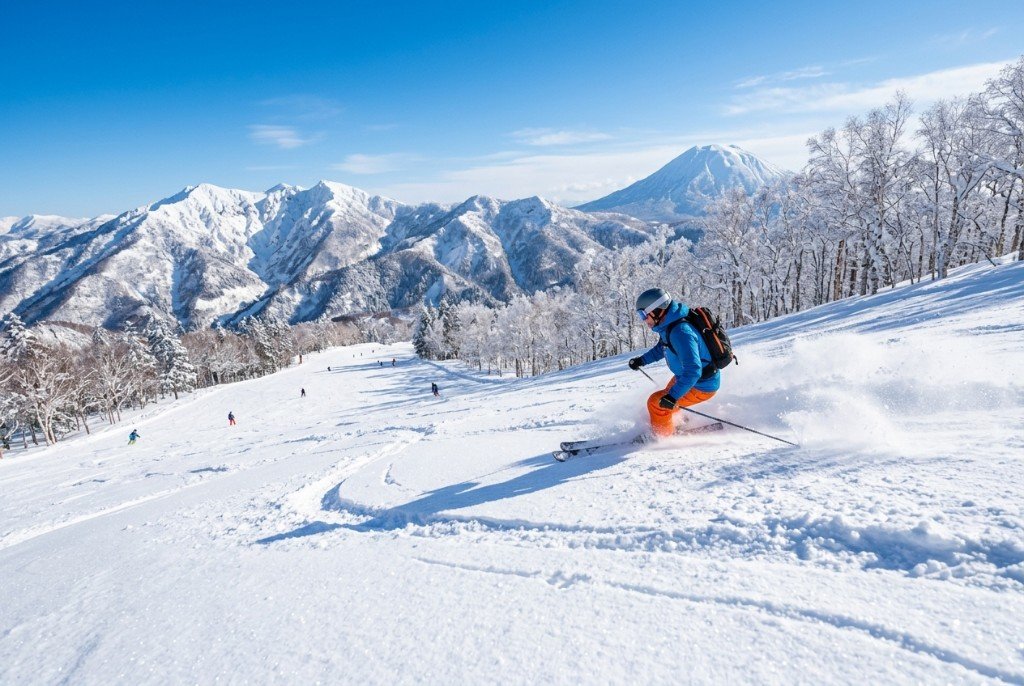
Japan is one of the only places in the world where a single lift ticket can legitimately get you onto three, four, or even nineteen separate mountains in one day. Regions like Hakuba Valley, Shiga Kogen, Myoko Kogen, and Niseko United were built — some over a century of gradual development, some through deliberate postwar consolidation — around the idea that neighboring ski areas share a pass rather than compete for your money. Understanding how that system works, and how to move between areas efficiently, turns a single-resort day into a genuine multi-resort tour.
Who a Multi-Resort Day Trip Is Actually For
This style of skiing rewards a specific kind of visitor: someone who has already skied Japan once or twice, has solid legs and a tolerance for long days, and wants variety more than a lazy lodge day. If you're a first-time visitor still working out how to turn in Japan's famous dry powder, a single resort with better instruction infrastructure (Niseko's Grand Hirafu or Hakuba's Happo-One) will serve you better than a frantic multi-mountain itinerary.
Where Japan distinguishes itself from Europe's famously interconnected lift networks (the Three Valleys, the Dolomiti Superski) is scale and intimacy. A Japanese multi-resort pass often links areas that are each individually small — a few lifts, a modest vertical drop — but together add up to an enormous, varied terrain base. Shiga Kogen alone spans 19 ski areas on one pass, making it the largest connected ski region in Japan; Hakuba Valley bundles 10 resorts from the 1998 Nagano Olympic venues into one ticket. The appeal isn't a single mega-mountain — it's sampling distinct microclimates, tree runs, and local onsen towns in a single outing.
Matching Terrain to Pass Type: What Each Ticket Actually Buys You
Not every "multi-resort" pass behaves the same way, and picking the wrong one wastes your day before you've clicked into a binding.
- Common day pass (e.g., Hakuba Valley ticket, Myoko Kogen pass): One ticket, shared gates, and in some cases shared or adjacent lift bases. Hakuba's pass covers Happo-One, Hakuba47/Goryu, Cortina, Norikura, and six more, but several require a shuttle bus between base areas rather than skiing directly across a ridge.
- Fully interconnected pass (Shiga Kogen, Niseko United): Lifts and runs physically link the resorts, so you can ski from one area's base into the next without a bus. Niseko United's four resorts — Grand Hirafu, Niseko Village, Annupuri, and Hanazono — are connected by lift and traverse, making it the closest thing Japan has to an Alpine-style lift network.
- Regional multi-day cards (e.g., Nagano/Niigata ski passes sold through rail operators): Bundle several unrelated resorts across a wider area for visitors staying a week or more; not designed for single-day hopping, since resorts may be an hour or more apart by car.
For an efficient day trip, you want option one or two — a pass where the resorts are either lift-linked or close enough that a shuttle run takes under 20 minutes. Check the pass vendor's map for dashed "bus required" lines versus solid "ski-through" lines before you buy; this single detail determines whether your day trip is actually feasible or just an expensive bus tour.
Season and Access: When to Go and How to Get There
The core window for multi-resort touring is mid-December through early March, with late January to mid-February offering the most reliable snowpack and the least rain risk, especially in Nagano and Niigata, which sit at lower, more rain-prone elevations than Hokkaido. Niseko's season runs slightly longer, often into early April, because Hokkaido's colder air keeps snow quality consistent later into the season.
Access varies significantly by region, which should factor into which multi-resort cluster you pick:
- Hakuba Valley / Nagano region: Fly into Tokyo (Haneda or Narita), then take the Hokuriku Shinkansen from Tokyo Station to Nagano Station (about 80 minutes), followed by an express bus to Hakuba (roughly 70–90 minutes). Total hub-to-slope time: around 4 hours. A rental car from Nagano gives you the flexibility to hop between the valley's resort base areas on your own schedule, which matters more here than in fully interconnected regions.
- Shiga Kogen: Same Shinkansen route to Nagano Station, then a direct bus (about 70 minutes) into the resort area. Because the 19 zones are lift-connected, you don't need a car once you're there — this is the easiest region for a true single-pass, no-shuttle day trip.
- Myoko Kogen: Reachable from Nagano Station via the Myoko Scenic Line and a local bus, roughly 90 minutes total; less touristed than Hakuba, with five ski areas sharing a common pass.
- Niseko United: Fly into New Chitose Airport (Sapporo) and take a private transfer or bus, about 2–2.5 hours depending on traffic and snow conditions. This is the one major multi-resort region reachable without going through Tokyo first.
Nagano itself carries historical weight for skiers: it hosted the 1998 Winter Olympics, and several Hakuba Valley resorts (Happo-One, Hakuba47) were Olympic venues, which is part of why the region invested early in the shared lift-ticket model to keep smaller mountains viable against bigger operators.
Routing Logic, Booking, and Etiquette for a Smooth Day
Plan your route before you buy lift access, not after. The single biggest efficiency killer on a multi-resort day is backtracking — skiing to the far end of one resort only to realize the connector lift to your next target is on the opposite side. Study the pass map the night before and sketch a one-directional loop: start at the resort farthest from your lodging or transit drop-off, and work your way back toward it over the day so your last run ends near your bus stop or parking lot.
- Book lodging inside the pass region, not at a single resort's base, so you're not geographically locked to one mountain. A room in central Hakuba town or Shiga Kogen's Hasu-ike area gives you roughly equal access to multiple base lifts.
- Buy multi-resort passes online in advance where possible; Hakuba Valley and Niseko United both sell digital tickets that skip the ticket-window line, which matters when you're already budgeting tight transfer windows between resorts.
- Front-load the resort with the longest lift lines. Arrive at the most popular area (Happo-One in Hakuba, Grand Hirafu in Niseko) right at opening, then migrate to quieter connected zones as crowds build — this is the single best use of "efficiency" thinking on a multi-resort day.
- Confirm shuttle schedules, not just frequency claims. Many inter-resort buses run every 20–30 minutes in peak season but drop to hourly in shoulder periods (early December, late March); missing one can cost you an entire resort off your itinerary.
- Respect base-area etiquette, especially at smaller, locally run areas within a shared pass — many are still family-operated and far less accustomed to large international crowds than the flagship resort in the group. Keep noise down near lift lines, don't cut queues, and tip rental staff is not expected but a polite greeting in Japanese (konnichiwa, arigatou gozaimasu) goes a long way.
- End the day at an onsen, not another run. Nearly every multi-resort cluster in Japan sits near a historic hot spring town — Nozawa Onsen, Yudanaka near Shiga Kogen, or Niseko's own onsen ryokan — and planning your last lift-down near one turns a logistically demanding day into the kind of trip people actually remember.
Multi-resort skiing in Japan isn't about covering the most vertical feet possible; it's about using one pass to stitch together a day of genuinely different mountains, snow conditions, and village character without the overhead of buying separate tickets or driving between unrelated resorts. Get the routing and pass type right, and the "multi" part of the day trip becomes effortless — the hard part is just deciding which three mountains to ski first.
Was this page helpful?
Your feedback helps us improve our guides