
Planning a scuba trip to Okinawa: water temps, seasons, visibility, and packing
📅 2026-10-11
Who Okinawa Diving Is For, and Why It's Different From Mainland Japan
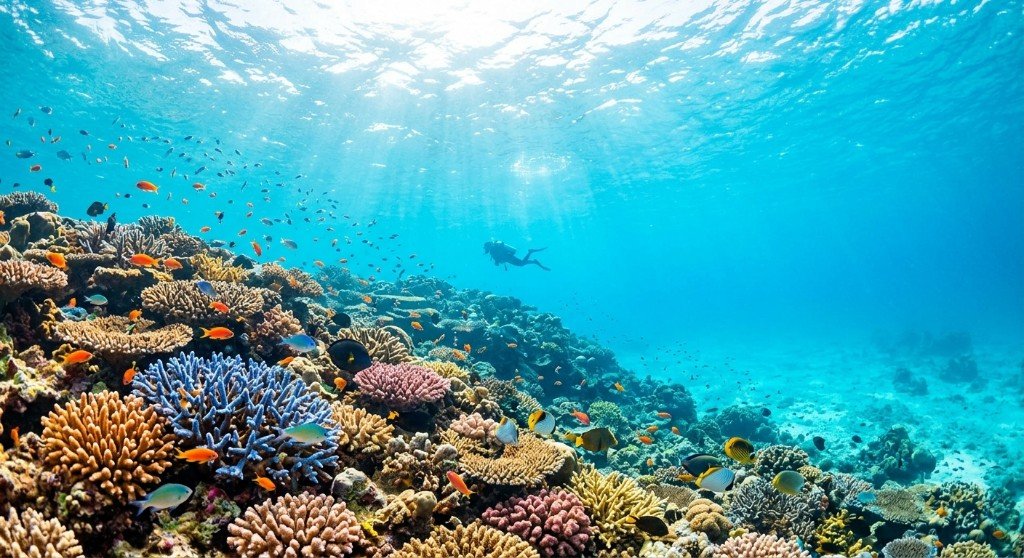
Okinawa sits closer to Taipei than to Tokyo, and the diving reflects that geography. While mainland Japan's dive sites run cool, current-driven, and seasonal, Okinawa offers subtropical reef diving with coral gardens, limestone caverns, and warm water almost year-round. This makes Okinawa the default choice for divers who want tropical conditions without leaving Japan — new divers doing their first open-water certification, experienced divers chasing manta rays and hammerheads, and underwater photographers drawn to the clarity of the Kerama Islands.
The planning question that trips people up isn't whether to go, but when. Okinawa's "dive season" is wider than most people assume, but water temperature, visibility, and typhoon risk shift enough across the year that the trip you plan in January looks nothing like the trip you'd plan in August. This guide walks through conditions, timing, access, and the practical packing list so you're not guessing.
Culturally, Okinawa was its own kingdom — the Ryukyu Kingdom — until annexation by Japan in 1879, and that history still shapes the islands: distinct language, cuisine, and a slower pace than mainland cities. Many dive shops are family-run, multi-generational operations, and a lot of local captains free-dove or spearfished before diving became a tourism industry, so their site knowledge of current patterns and seasonal fish behavior is deep and worth asking about directly.
Conditions: Water Temperature, Visibility, and What's Actually Down There
Water temperature in Okinawa ranges from around 20–22°C (68–72°F) in the coldest months (January–March) up to 28–30°C (82–86°F) in peak summer (July–September). That's a meaningful swing — a 3mm wetsuit is comfortable in August, but a 5mm or semi-dry suit is the right call in winter, especially for multiple dives a day.
Visibility is where Okinawa earns its reputation. The Kerama Islands, a short boat ride from the main island, regularly post 25–30 meters (80–100 feet) of visibility, especially from late spring through early summer before the rainy season stirs up runoff. Visibility drops somewhat during and right after typhoons, when rain runoff and swell churn nearshore water, but it recovers quickly — often within a few days — because Okinawa's reef systems sit on clean limestone with little sediment input.
What you'll actually see varies by site and season:
- Winter (January–March): This is manta ray season around the Kerama Islands and Ishigaki, with increased sightings at cleaning stations. Water is coolest and least crowded.
- Spring (April–June): Arguably the best all-around window — warming water, excellent visibility, and lower typhoon risk than summer.
- Summer (July–September): Peak warmth and the most boat traffic, but also peak typhoon season — more on that below. Hammerhead shark season picks up in some northern areas in early summer.
- Autumn (October–December): Water is still swimmable, typhoon frequency drops off by November, and crowds thin out, making this a quietly excellent shoulder season.
Beyond reefs, Okinawa's cave and cavern systems — particularly around Miyako Island — are a signature draw, with sunlight shafts cutting through limestone caverns like the famous "Antonio Gaudi" formation. These sites reward divers with cavern or advanced certification, since overhead environments carry real risk if you're not trained for them.
Season and Access: When to Go and How to Get There
Best overall windows: April–June and October–November. These months balance warm-enough water, strong visibility, and the lowest typhoon risk. July–September has the warmest water but coincides with peak typhoon season (roughly June through October, with August–September the statistical peak) — trips booked in this window should build in a flexible day or two, since boat dives get cancelled on short notice when a storm approaches. Winter (December–March) is for divers specifically chasing manta season or who prefer fewer crowds and don't mind a thicker wetsuit.
Getting there: Naha, on Okinawa's main island, is the primary hub. From Tokyo (Haneda or Narita), direct flights run about 2.5–3 hours; from Osaka (Kansai), roughly 2 hours. Budget carriers (Peach, Jetstar Japan, Skymark) run this route cheaply if booked a few weeks ahead, which matters since flight cost often exceeds the cost of the diving itself.
From Naha Airport, most dive operators either pick up from your hotel or meet at a marina a short taxi ride away — a rental car is useful if you're staying outside the main tourist strip (Kokusai-dori / Chatan) but isn't required if you base yourself centrally. For the Kerama Islands, boats depart from Tomari Port in Naha, roughly 15–20 minutes by taxi from the airport.
If your priority is manta rays, hammerheads, or caverns specifically, consider flying onward from Naha to Ishigaki (about 1 hour) or Miyako (about 45 minutes) — both have their own small airports with frequent domestic connections, and basing there cuts out a lot of boat transit time to the best sites.
Practical Tips: Booking, Gear, and Etiquette
Booking: Reserve dive operators at least 2–3 weeks ahead in peak summer and around Golden Week (late April–early May) and Obon (mid-August), when both flights and dive boats fill up with domestic tourists. Confirm whether your operator requires proof of certification in advance — most do — and ask about their typhoon cancellation/refund policy before paying a deposit, since this is the single most common source of trip disruption.
Packing list:
- Wetsuit thickness matched to season: 3mm (summer), 5mm or semi-dry (winter)
- Reef-safe sunscreen — many Okinawa operators now require it, and some popular reef areas restrict oxybenzone-based sunscreens by local regulation
- Your own mask and regulator if you dive often; rental gear is widely available but fit varies
- A dive computer, even if your shop provides one as backup
- Underwater light for cavern dives, even in daytime, since some formations are dim-lit by design
- Motion sickness medication for boat transfers to the Kerama Islands, where crossings can be choppy outside of calm summer stretches
- A dry bag for the ride back — Okinawa's humidity means nothing air-dries fast between dives
Etiquette: Don't touch or stand on coral, even briefly — Okinawa's reefs have suffered bleaching events in recent years and recovery is slow. Many operators enforce a strict no-touch, no-glove-on-coral policy and will end a dive early for repeat offenders. Tip culture isn't as expected as in some countries, but a small gift or genuine thanks to your boat captain goes further than cash in most family-run shops. Finally, build a non-diving buffer day into any itinerary during typhoon season — it's the easiest way to turn a weather cancellation from a lost trip into a beach day instead.
Was this page helpful?
Your feedback helps us improve our guides