
Night diving in Okinawa: creatures and safety tips
📅 2026-10-11
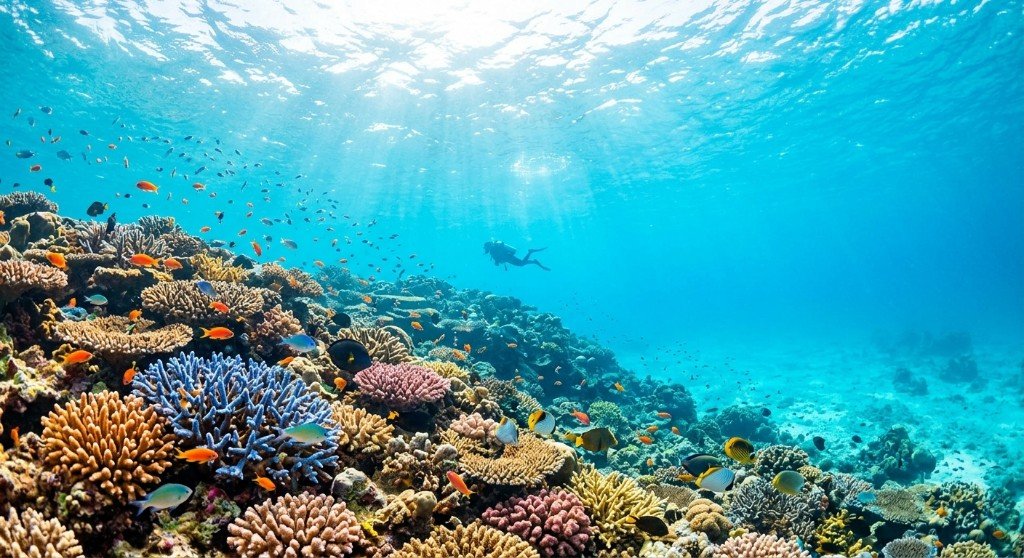
Why Okinawa After Dark Is a Different Dive Entirely
Daytime Okinawa diving is famous for coral gardens, manta cleaning stations, and turtle encounters in warm, glassy water. Night diving in Okinawa is a completely different experience on the same reef. Once the sun drops, the reef's day shift — parrotfish, surgeonfish, damselfish — tucks itself into coral crevices, and a night shift takes over: octopus hunting in the open, slipper lobsters walking across sand flats, decorated crabs, nudibranchs in colors you rarely see at noon, and squid schools that flash and pulse color across their mantle in what looks like silent communication. This isn't a gimmick add-on to a regular dive trip; it's a genuinely distinct skill and a genuinely distinct ecosystem view.
This guide is for certified divers (Open Water minimum, ideally Advanced Open Water or a specific night diving certification) who are comfortable with buoyancy and navigation in daylight and want to add a night dive or two to an Okinawa trip. It is not a beginner's first-ever dive — night diving adds sensory and procedural complexity that's much easier to manage once basic skills are automatic. If you're brand new to diving, do your check-out dives in daylight first and save the night dive for later in the trip once you're settled into the water.
Okinawa is also culturally distinct from mainland Japan in ways that shape the diving itself. The Ryukyu Islands were an independent kingdom until the 19th century, with trade links across Southeast Asia, and that history shows in everything from the subtropical reef ecology (closer to Taiwan and the Philippines than to Honshu) to the local fishing traditions that still shape where boats anchor and which reef zones are treated as community-protected. Many dive shops work closely with local fishing cooperatives, and respecting those boundaries — not finning over set nets, not touching staghorn coral that communities have been nursing back after past bleaching events — is part of diving here responsibly.
Conditions: What the Reef and the Water Actually Do at Night
Okinawa's night dive sites are mostly the same sites used by day, but they behave differently once light disappears, and a few specific locations are night-dive specialists for good reason.
- Visibility and light: Okinawa typically has excellent daytime visibility (20–30m on good days), but at night your world shrinks to the beam of your primary torch, roughly a 2–4m sphere of visible reef. This is a feature, not a bug — it forces close observation and reduces the sensory overload of a huge reef system, which is part of why creature spotting improves at night.
- Thermoclines and currents: Water temperature swings are mild in Okinawa (24–29°C depending on season), but tidal current direction can reverse between your afternoon briefing and your night entry. Always check the live tide table the shop posts, not the one from your daytime dive.
- Site types: Sandy-bottomed bays near Onna Village and the Kerama Islands are favored because sand flats expose hunting octopus, bobtail squid, and flatfish that would otherwise be buried. Reef-wall sites around Cape Maeda ("Blue Cave" area) work well too, since swim-throughs and overhangs that are crowded with daytime divers empty out at night and reveal nocturnal crustaceans tucked into every ledge.
- What you'll actually see: Expect reef octopus hunting in the open (something almost never seen by day), Spanish dancer nudibranchs, decorator crabs, basket stars unfurling fully only after dark, parrotfish asleep inside self-secreted mucus cocoons, and — if you're diving near a full moon in the right week of early summer — the tail end of coral spawning events, one of the most dramatic things you can witness underwater anywhere in the world.
- Bioluminescence: On moonless nights, turning torches off briefly (as a group, in a controlled, pre-briefed moment — never spontaneously) reveals glowing plankton stirred by fin kicks. This is a highlight many divers don't know to ask for, so mention it at the briefing if your guide hasn't already planned a "lights-out" moment.
Season and Getting There: When to Go and How to Reach the Dive Sites
Best season: Okinawa dive conditions are good nearly year-round thanks to its subtropical location, but for night diving specifically, late spring through early autumn (May–October) offers the warmest water, calmest evening seas, and the richest nocturnal activity, since warmer water correlates with more active invertebrate life. June is prime time if you want a shot at coral spawning, which tends to cluster around full moons in that month. July–September brings the most stable conditions but also typhoon risk — build a buffer day or two into your itinerary in case a storm shuts down boats for 24–48 hours. Winter (December–March) is diveable and quieter, with fewer boats and lower prices, but water temperature drops enough that a 5mm wetsuit is worth it for a long night dive, and some pelagic night-active species are less common.
Getting there: Naha Airport on Okinawa's main island is the hub, with direct flights from Tokyo (about 2.5 hours), Osaka, and several other mainland cities, plus direct international flights from Taipei, Seoul, and a few Southeast Asian cities. From Naha Airport:
- Onna Village / Cape Maeda area (the most popular night-dive base on the main island): roughly 45–60 minutes by rental car or shop shuttle, heading north along the Okinawa Expressway.
- Kerama Islands (Zamami, Tokashiki): a 50–90 minute ferry from Tomari Port in Naha, or many dive shops run their own boat transfer directly from a marina near the airport, cutting out the public ferry schedule.
- Ishigaki / Yaeyama Islands (for divers who want a more remote, less-crowded night dive scene): a separate ~1 hour flight from Naha, or direct flights from Tokyo/Osaka to Ishigaki Airport, then a short taxi to the port town where most dive shops are based.
A rental car is genuinely useful on the main island, since night dive shops often want you on-site before sunset for a full briefing and gear check, and public transit options thin out in the evening.
Practical Tips: Booking, Gear, Etiquette, and Staying Safe
Booking: Night dives are usually run as an add-on to a regular 2-tank day trip or booked as a standalone evening boat/shore dive. Book at least a day ahead in peak season (June–August), since shops cap night dive groups smaller than day groups — often 4–6 divers per guide instead of 8–10 — precisely because of the added safety management night diving requires.
Required and recommended gear:
- A primary dive light (rated for at least 60–90 minutes of burn time) plus a backup light clipped to your BCD — non-negotiable, not optional. If your primary fails mid-dive, the backup is what gets you back to the boat or shore safely.
- A tank-mounted strobe or glow marker so your guide and buddy can spot you in silhouette.
- A slate or wrist-mounted signal light for non-verbal communication, since normal hand signals are hard to see without pointing a torch directly at your buddy's face (which is also poor etiquette — never shine your light directly into another diver's eyes or mask).
- A reef hook or extra weight if diving a current-prone site, since night orientation makes drift harder to judge.
Safety specifics for night diving:
- Do a full daylight check dive at the same operator before your first night dive if possible, so your weighting and gear setup are dialed in before visibility drops.
- Agree on a lost-buddy protocol before entry: typical is signal with light sweeps for 30–60 seconds, then ascend together if no contact, following standard lost-buddy procedure adapted for darkness.
- Never touch, chase, or corner nocturnal creatures for a photo — octopus, moray eels, and lionfish are far more active and defensive at night, and lionfish spines are genuinely dangerous. Admire with your light at a steady distance; let your guide position the group.
- Watch your air and depth more conservatively than you would by day — darkness distorts time perception, and many divers unconsciously stay down longer than planned.
- Surface signaling matters more at night: a whistle and a strobe or light on your BCD make you findable by the boat crew immediately on ascent.
Food and stay: Base yourself in Onna Village or nearby Chatan if you're diving the main island — both have a strong concentration of dive shops, casual Okinawan izakaya serving local specialties like umibudo (sea grapes) and Okinawa soba, and guesthouses used to divers' early mornings and late evenings. In the Kerama Islands or Ishigaki, book accommodation through your dive shop where possible; many run combined lodging-and-diving packages that simplify logistics considerably for a multi-day night-diving-focused trip.
Was this page helpful?
Your feedback helps us improve our guides