
Solo glamping travel planning and safety tips
📅 2026-10-11
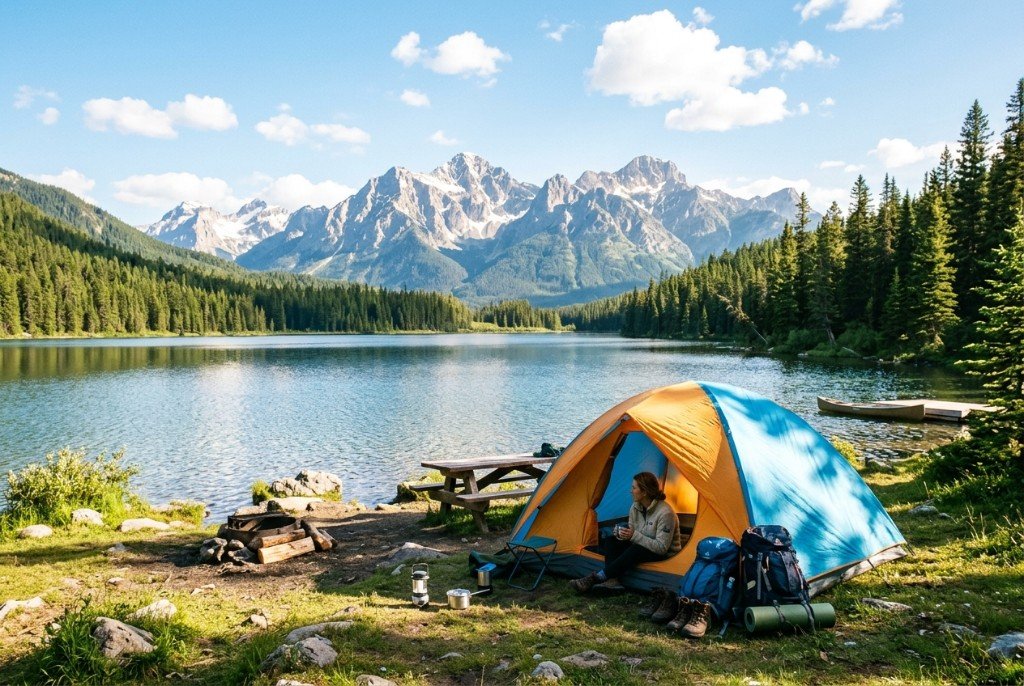
Who Solo Glamping in Japan Is Really For
Solo glamping sits in a sweet spot between backpacking and a resort stay: you get a tent, yurt, or cabin with a real bed, often a heater or air conditioning, and sometimes a private deck — but you're still outdoors, cooking your own meals, and making every decision yourself. That combination makes it one of the most approachable entry points into solo travel for people who want nature without the logistical overhead of full wilderness camping.
Japan is unusually well suited to this. The country's low violent-crime rate, dense network of konbini (convenience stores) even in rural areas, reliable train and bus timetables, and a culture that generally leaves solo travelers — especially women — alone rather than hassling them, make it one of the lower-friction places in the world to try independent travel for the first time. You don't need fluent Japanese; you need a charged phone, a Suica/ICOCA card, and a plan.
This guide is for three overlapping groups: people trying solo camping for the first time who want a softer landing than a bare tent pad; experienced campers who want to pair a quiet glamping base with ski, dive, or surf days; and travelers specifically researching glamping safety because they're nervous about being alone in an unfamiliar country. If you're in any of those categories, the rest of this guide is built around your actual decision points, not generic travel-brochure advice.
Reading a Site Before You Book: Layout, Terrain, and Activity Pairings
Not all glamping sites are equal, and the difference matters most when you're solo and have no one to double-check your read of a place.
Layout fundamentals to check in listings or reviews:
- Distance from your tent/cabin to the shared bathroom block — anything over 150m matters at 2am.
- Whether sites are fenced or open to forest; open sites near Hokkaido or Nagano forests mean real wildlife (bears, in some regions) and require food storage discipline.
- Lighting along paths. Many rural sites go genuinely dark; a site with solar path lights is meaningfully safer for a solo traveler walking alone at night than one without.
- Reception/office hours. A site with 24-hour staff presence is a different safety profile than one that's unattended after 6pm.
Pairing glamping with activity season is where Japan's geography gets interesting. A single trip can combine a glamping night with:
- Ski: Hakuba, Niseko, and Nozawa Onsen all have glamping or cabin-tent sites within a 20–40 minute drive of lift bases, letting you ski by day and sleep under canvas (heated) at night, December through March.
- Surf: Chiba's coastline (Isumi, Kamogawa) and Shonan near Enoshima have beach-adjacent glamping grounds where a dawn surf session and an evening campfire fit the same 24 hours, best April–October.
- Dive: Okinawa and the Kerama Islands pair glamping with boat dive operators who do hotel pickups; a glamping stay here is less about saving money and more about staying near the water instead of in a town hotel.
- Camp-only: Classic highland sites — Kiyosato, Aso, Biei — are built purely around the glamping experience itself, with on-site saunas, communal firepits, and curated dinners.
Knowing which category your target site falls into tells you what gear to pack and what else to book alongside it.
Season and Access: When to Go and How to Get There
Timing in Japan is not just about weather comfort — it affects site availability, price, and crowd density, all of which matter more when you're traveling alone and want some breathing room.
Peak windows:
- Golden Week (late April–early May) and Obon (mid-August): domestic travelers flood every popular site. Book 2–3 months ahead or avoid these weeks entirely as a solo traveler who wants quiet.
- Autumn foliage (October–November): arguably the best solo glamping window — cool nights, clear skies, dramatically lower humidity than summer, and sites still fully staffed before winter closures.
- Winter (December–February): only viable at sites explicitly built for cold weather (insulated domes, wood stoves). Check this explicitly; a summer-only glamping ground with an unheated canvas tent is a genuine cold-exposure risk, not just an inconvenience.
- Summer (June–August): lowland sites get hot and humid; rainy season (tsuyu, mid-June to mid-July) brings sudden heavy rain. Highland or coastal sites fare better.
Access from major hubs, using Tokyo as the reference point since most international arrivals land there:
- Hakuba/Nozawa (ski pairing): Shinkansen to Nagano (~1h40m) then local bus (~1h), or direct highway bus from Shinjuku (~4h). A rental car from Nagano Station gives the most flexibility for solo travelers juggling ski gear.
- Chiba coast (surf pairing): Narita/Haneda access is actually closer than central Tokyo for some sites — direct limousine bus or local train (Sobu Line) to Katsuura or Kamogawa, roughly 1.5–2h.
- Okinawa/Kerama (dive pairing): Flight into Naha (2.5h from Tokyo, 1h from Osaka), then local bus or rental car; Kerama requires an additional ferry (~50 min from Naha port).
- Kiyosato/Yamanashi (highland camp): Chuo Line express from Shinjuku (~2h20m) direct to Kiyosato Station, then a short taxi — one of the most solo-friendly routes in the country because no car is strictly required.
Build your itinerary around train timetables first, car rental second — Japan's rural bus schedules can run as few as 4–6 times a day, and missing the last one as a solo traveler with no backup plan is avoidable with five minutes of checking ahead.
Booking, Gear, and On-Site Etiquette for Independent Travelers
Booking: Use Japanese platforms (Hinata, Nap Camp) alongside English ones (Agoda, Booking.com) — Japanese-only sites often have better availability and pricing but may require a Japanese phone number or furigana name entry; a hotel concierge or the site's own English-language contact form can usually bridge this. Confirm cancellation policy explicitly; many Japanese sites have strict same-week no-refund rules.
Gear for solo glamping safety specifically:
- A portable battery pack and a physical paper map as backup — rural signal can be patchy even with a Japanese SIM.
- A whistle or personal alarm, more as a social signal than a weapon — useful if you slip on a trail alone.
- Insect repellent with high DEET/icaridin content for Honshu summer sites; mosquito-borne discomfort is the actual, non-dramatic risk most solo campers encounter.
- A headlamp rather than a phone flashlight, so your phone stays charged for emergencies.
Etiquette that matters more when you're alone and visibly a guest:
- Quiet hours (often 22:00–6:00) are enforced more strictly at smaller, family-run sites — a solo traveler being audibly considerate is noticed and remembered, often resulting in better treatment the next morning.
- Trash sorting (burnable/non-burnable/recyclable) is taken seriously; ask staff rather than guessing, since getting it visibly wrong as a foreign solo guest draws more attention than getting it right would.
- If the site has a communal onsen or bath, tattoos may need to be covered with a small patch (available at most front desks) — this is a long-standing cultural norm tied to historical associations between tattoos and organized crime, not a judgment of the individual guest, and most sites have quietly adapted with cover patches specifically to accommodate international visitors.
- Solo diners at communal dinner tables are common enough that staff rarely treat it as unusual; sitting with other solo guests is optional, not expected.
A brief note on why this works culturally: Japan's modern camping boom traces back to a 1990s–2000s "aukodoa" (outdoor) lifestyle movement and accelerated sharply post-2020 as domestic travelers sought low-contact nature escapes; glamping specifically grew out of that demand for comfort-forward outdoor stays. The result is an industry still oriented primarily toward domestic solo and small-group travelers, which means the infrastructure — single-occupancy tent options, solo-sized rental gear, one-person set meal plans — already assumes you might be traveling alone, rather than treating it as an edge case.
Plan around real train times, pick a site whose season and heating match your dates, pack the handful of safety basics above, and solo glamping in Japan ends up being less a risk to manage and more simply one of the easiest versions of independent travel available anywhere.
Was this page helpful?
Your feedback helps us improve our guides