
Spring Corn Skiing in Japan: How to Read Slush and Chase the Last Good Snow
📅 2026-10-11
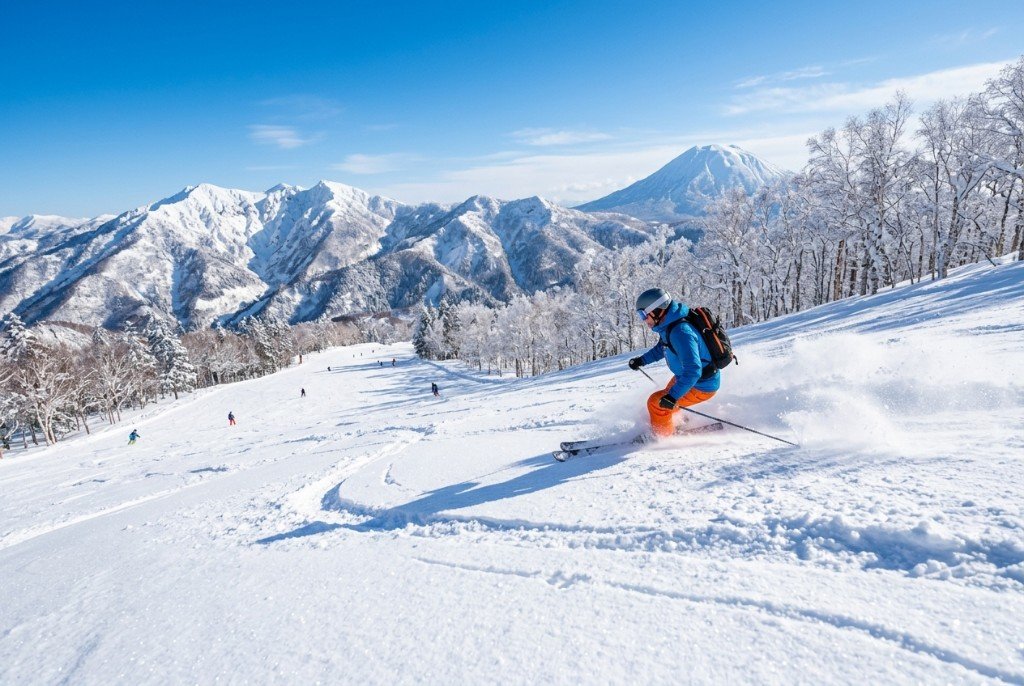
Who Spring Corn Season Is For, and Why Shiga Kogen Is the Place to Learn It
Spring skiing in Japan has a reputation problem. Visitors who only know the country for bottomless January powder assume the season is over by March, so they book elsewhere and miss one of the most rewarding stretches on the calendar. Corn snow season — roughly late March through early May at the right elevation — is a completely different sport from midwinter powder, and it attracts a different kind of skier: people who like reading conditions, timing their runs against the sun, and getting long, grippy, high-speed turns on a nearly empty mountain.
Shiga Kogen, in Nagano Prefecture, is one of the best places in the country to learn this game. It's Japan's largest ski area by lift-served terrain — eighteen interconnected resorts sharing one lift pass, spread across a high plateau inside Joshinetsu Kogen National Park. Because much of the terrain sits above 1,500 meters, with some lifts reaching close to 2,000 meters, Shiga Kogen holds snow later than almost anywhere else in Honshu, with some years running lifts into early May. That elevation buffer is exactly what makes it a reliable spring-skiing laboratory: the freeze-thaw cycle that produces corn snow needs cold nights and warm days, and Shiga Kogen gets both well after lower resorts have turned to mud and bare patches.
This is also a historically important mountain, not just a convenient one. Shiga Kogen hosted alpine events for the 1998 Nagano Winter Olympics, and the area has been developed as a ski destination since the 1930s, giving it a dense, old-fashioned network of ryokan, onsen, and connecting roads that feel distinct from newer, more purpose-built resort towns. Skiing corn snow here in April, with cherry blossoms starting to appear in the valleys below while the upper slopes still hold a full winter base, is a seasonal contrast you don't get at most destinations.
Reading the Mountain: How Corn Snow Forms and How to Ski It
Corn snow gets its name from its texture — individual granular pellets, roughly the size of corn kernels, that form when the surface of the snowpack melts during the day and refreezes overnight. Understanding that cycle is the entire skill of spring skiing, because the same slope can be dangerously icy, perfectly smooth, or a wet, draggy mess within a four-hour window, depending only on the sun angle and air temperature.
The practical pattern on a clear spring day at Shiga Kogen looks like this:
- Early morning (first lift to around 9:30am): The overnight freeze is still intact. South- and west-facing slopes are often a hard, icy crust that hasn't softened yet — sharp edges matter more than float here.
- Mid-morning (9:30am–11:30am): This is the sweet spot. The sun has softened the top centimeter or two into that classic corn texture — grippy, forgiving, fast. It arrives earliest on east-facing slopes that catch the sun first, and later on north-facing terrain.
- Midday to early afternoon: Lower-elevation and south-facing runs turn to slush — wet, heavy snow that slows you down and can hide ruts or bare patches underneath. This is when experienced spring skiers move to higher, shadier terrain or take a long lunch.
- Late afternoon: As temperatures drop, slush that was unskiable at 1pm can firm back up into fast corn by 3pm, especially at altitude.
The practical consequence is that you should ski the mountain in an order, not a fixed lift queue: start on whichever aspect gets morning sun first, chase the softening snow across different faces as the day warms, and retreat to the highest lifts (Yokoteyama and the upper Ichinose area at Shiga Kogen hold their quality longest) once the lower bowls go slushy. Checking a slope-specific forecast — not just the town weather — for overnight low temperature and cloud cover is the single most useful habit for spring planning. A clear, cold night followed by a sunny morning is the ideal setup; an overcast night with no refreeze usually means the whole mountain goes to slush early and stays soft and slow all day, which some skiers actually prefer because it's more forgiving to fall on.
Season Window and Getting There From Tokyo or Nagano
Spring corn season at Shiga Kogen typically runs from mid-March, once the deep midwinter snowpack has consolidated, through late April, with the very top lifts sometimes operating into the first week of May on strong snow years. Late March to mid-April is the most reliable window for consistent corn cycles — enough residual base for full coverage, long enough days for the freeze-thaw rhythm to be dependable, and noticeably quieter lift lines than winter peak.
Getting there from Tokyo takes roughly two and a half to three hours door to door. The standard route is the Hokuriku Shinkansen from Tokyo Station to Nagano Station (about 80–100 minutes), followed by a direct bus from Nagano Station to Shiga Kogen (roughly 70–90 minutes depending on the specific resort area). Nagano is also the better base than Tokyo if you're combining a ski trip with other seasonal travel, since it puts you within range of the Japanese Alps and the historic town of Obuse.
If you're driving, Nagano is about 3 to 3.5 hours from central Tokyo via the Joshin-etsu Expressway, and a car gives you flexibility to chase conditions between Shiga Kogen and neighboring Nozawa Onsen on the same lift-adjacent road network — useful in spring when snow quality can vary meaningfully between nearby valleys depending on which slopes caught the most sun or the most overnight cloud cover. Just confirm tire requirements; spring mountain roads can still have icy patches at dawn even when the valley floor is clear and dry.
Booking, Gear, and Etiquette for a Spring Trip
Spring skiing rewards slightly different planning than a midwinter trip, and getting a few details right makes the difference between a great week and a frustrating one.
Booking: Lodging is genuinely cheaper and easier to book last-minute in April than in January or February, since most international visitors have already left for the season. That said, don't assume every lift or gondola is running — call ahead or check the resort's operating calendar, since spring operations often consolidate onto fewer lifts as lower-elevation terrain closes for the year. If you want a specific run or area (the upper Yokoteyama terrain, for example), confirm it's still open before you commit travel dates.
Gear: Bring or rent all-mountain or slightly softer-flex skis rather than stiff powder boards — corn and slush both reward skis that can hold an edge through variable texture. Wax matters more in spring than in winter: a warm-temperature wax grips wet snow better and prevents the sticky, slow feeling that makes slush exhausting. Dress in layers you can shed; spring days at altitude swing from near-freezing at the first lift to comfortable in a base layer by early afternoon, and sunburn is a real risk on open, high-elevation terrain reflecting strong spring sun — sunscreen and glacier-style glasses or goggles are not optional.
Etiquette and timing: Japanese ski culture values an early start, and that habit pays off doubly in spring — the best corn snow of the day is almost always gone by late morning, so skiers who arrive at opening are rewarded far more than in winter, when good snow often lasts all day. It's also worth building in an onsen soak into your afternoon plan once the snow turns to slush; many Shiga Kogen-area ryokan have hot spring baths that make a natural, culturally appropriate way to end a ski day early rather than forcing runs on snow that's past its best. Finally, respect any roped-off or thin-cover areas near lift lines — spring thaw exposes rocks and bare patches unevenly, and area staff mark hazards that aren't always obvious from a distance.
Spring corn season isn't a compromise version of a Japan ski trip — for skiers who plan around the freeze-thaw clock rather than ignoring it, it's arguably the most technically interesting snow the country offers all year.
Was this page helpful?
Your feedback helps us improve our guides