
Spring Skiing in Japan: April Slush, Bonus Powder Days, and Festival Season
📅 2026-09-27
Why Chase Japan's Season Extend Into April
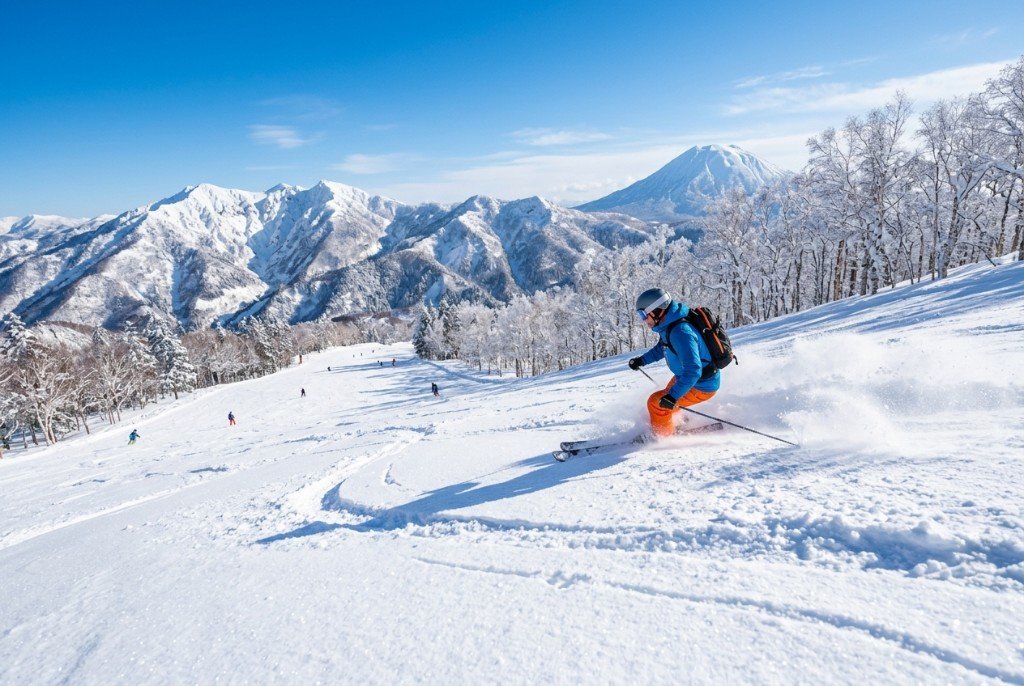
Most travelers assume Japanese skiing wraps up in March once the big powder storms taper off, but that assumption leaves a lot of good turns on the table. High-elevation resorts in Nagano, Niigata, and Hokkaido routinely keep lifts spinning well into April — some, like Shiga Kogen's Yakebitaiyama sector or Gassan in Yamagata, push into May and even July on glacier-fed snowfields. Spring skiing in Japan is a distinct experience from the deep-powder pilgrimage that dominates December through February: warmer air, longer daylight, thinner crowds, and a completely different snow personality. This is the season for people who want to ski without six layers of merino wool, who'd rather share a gondola with three people than thirty, and who like their ski trip bookended by a regional matsuri (festival) instead of just another izakaya dinner.
This guide is for intermediate-to-advanced skiers and riders who already have a few Japan trips under their belt, or first-timers who specifically want to avoid peak-season pricing and crowds. It's less ideal for beginners chasing bottomless powder — April is about corn snow, groomed spring conditions, and a mountain culture that's winding down for the year, not blower pow days.
Conditions: Reading Japan's Spring Snowpack Like a Local
The defining feature of April skiing in Japan is the freeze-thaw cycle. Overnight temperatures drop below freezing, hardening the surface into a firm, sometimes icy crust; as the sun climbs, that surface softens into what locals and visiting skiers alike call "corn snow" — soft, granular, forgiving, and genuinely fun to ski fast on. The catch is timing: get on the slopes too early and you're carving frozen boilerplate; wait too long and you're wading through heavy, wet slush that grabs edges and saps your legs by 1pm.
The practical rule of thumb: be on the first lift, ski the upper mountain first while it's still firm, and chase the sun down-mountain as the morning progresses. By early afternoon, south-facing runs and lower elevations turn to slush fast, so plan your last runs on north-facing or shaded terrain, or simply call it a day by 1-2pm — many spring skiers here are on the mountain by 8am and off by lunch, which pairs nicely with an afternoon onsen soak.
Conditions vary enormously by region and elevation:
- Hokkaido (Niseko, Rusutsu, Furano): Lower elevations soften and close by early-to-mid April, but upper bowls and backcountry-adjacent terrain can hold rideable snow into late April in good years.
- Nagano/Niigata (Shiga Kogen, Hakuba, Myoko, Naeba): Shiga Kogen is the standout for season extend — several lifts in its highest sectors run into early May, and its size means you can always find a shaded, softer line even as lower runs turn to mush.
- Tohoku (Zao, Hachimantai): Zao's famous "snow monsters" (ice-encrusted trees) linger into April, and Hachimantai's Appi-adjacent terrain often stays skiable later than its southerly latitude suggests, thanks to elevation and heavy Sea of Japan snowfall.
- Glacier/snowfield skiing (Gassan, Tateyama): These aren't lift-served in the conventional sense in late spring — Tateyama's famous Snow Corridor bus route (walls of snow reaching 15-20 meters) opens mid-April and draws sightseers as much as skiers, while Gassan's actual ski season often doesn't start until late April and runs into July.
Wax choice matters more in spring than any other time of year — a warm-temperature wax designed for wet, transformed snow will make a noticeable difference versus a cold-weather wax that turns your base sticky and slow in slush.
Season and Access: Timing Your Trip and Getting to the Mountain
April conditions in Japan aren't uniform, and access windows shrink fast as the month goes on, so plan around specific resort closing dates rather than assuming "ski season" as a blanket concept.
Early April (1st–10th): Most honshu resorts below 1,500m are closing or closed. This is prime time for Shiga Kogen, Zao, Myoko's higher lifts, and Hokkaido's Niseko/Rusutsu upper mountain. Weekday lift tickets are frequently discounted 20-40% versus peak winter rates.
Mid-to-late April (11th–30th): The field narrows to genuine season-extend destinations — Shiga Kogen's Yakebitaiyama and Ichinose areas, Hakuba's Happo-One upper gondola terrain on good years, and Tateyama's Snow Corridor opens to bus and walking traffic. This is also when spring festival season overlaps most visibly with what's left of ski season — more on that below.
Getting there from Tokyo (the most common hub):
- Shiga Kogen / Nozawa Onsen area: Hokuriku Shinkansen from Tokyo Station to Nagano (about 80-100 minutes), then a resort shuttle bus or local bus (45-75 minutes depending on exact resort). Total door-to-slope: roughly 3-4 hours.
- Hakuba: Shinkansen to Nagano, then an Alpico Highway Bus direct to Hakuba (about 70 minutes). Total: around 3.5 hours. In spring, book the bus in advance — schedules thin out compared to peak winter.
- Niseko/Rusutsu (Hokkaido): Fly into New Chitose Airport (Tokyo–Sapporo is about 90 minutes by air), then a resort bus or rental car (roughly 2-2.5 hours to Niseko). Spring is a good time to rent a car here since icy road risk drops significantly compared to midwinter.
- Zao Onsen: Tohoku Shinkansen to Yamagata or Shiroishi-Zao, then a local bus (30-40 minutes). Total from Tokyo: about 3 hours.
- Tateyama Snow Corridor: Access via the Tateyama Kurobe Alpine Route from Toyama (itself reachable via Hokuriku Shinkansen from Tokyo, about 2 hours), then the Tateyama Kurobe cable car and bus combination. This is a full-day excursion in itself, not a quick add-on.
Always check individual resort websites in the weeks before travel — closing dates shift year to year based on snowfall totals, and a lean winter can cut two to three weeks off the tail end of the season.
Practical Tips: Booking, Gear, and Making the Most of Festival Season
Booking strategy: Spring is when flexible, last-minute booking actually works in your favor in Japan — a rarity given how tightly winter peak-season accommodation books out. Watch resort snow reports through late March and commit to lodging once you see a healthy base holding. Many ryokan and pensions in ski towns drop rates noticeably after the Golden Week rush hasn't yet begun (Golden Week starts around April 29th and brings a spike in domestic travel, so book well ahead if your trip overlaps that window).
Gear adjustments for slush and spring conditions:
- Bring or rent skis/boards you don't mind getting wet and slightly beat up — spring snow is abrasive on edges and bases.
- A single mid-weight layer plus a shell often replaces the multiple insulating layers you'd wear in January; overheating is the more common problem in April.
- Goggles with a lighter tint (or sunglasses on the sunniest days) work better than the dark lenses needed for flat winter light.
- Sunscreen is non-negotiable — UV reflected off spring snow at altitude causes serious sunburn even on cool days.
Festival season overlap: April in the Japanese Alps and Tohoku coincides with several regional matsuri worth building a trip around. Nagano's cherry blossoms typically peak in early-to-mid April in the valley towns even while the mountains above still hold snow, creating a striking contrast of blossoms and snowfields in the same afternoon. Zao Onsen's hot spring town runs seasonal illumination and local food festivals as the "snow monster" season winds down. Hakuba and the broader Nagano region often host spring closing-day events at individual resorts, complete with costume contests, live music, and pond-skimming competitions — a fun, low-stakes way to close out a spring ski trip.
Etiquette notes specific to spring: Slush riding kicks up more spray and debris than powder, so give other skiers wider berth on shared groomers. Many onsen towns are transitioning between winter and spring tourism, so some seasonal shuttle buses and restaurants may run reduced schedules — confirm operating hours locally rather than relying on winter-season information. Finally, if you're combining ski with sightseeing (Tateyama Snow Corridor, cherry blossom viewing, or a festival), build in buffer time — spring itineraries in Japan tend to be more weather- and schedule-dependent than the reliably-open, single-focus days of midwinter ski trips.
Was this page helpful?
Your feedback helps us improve our guides