
Zao tree skiing: navigating forest runs safely
📅 2026-10-11
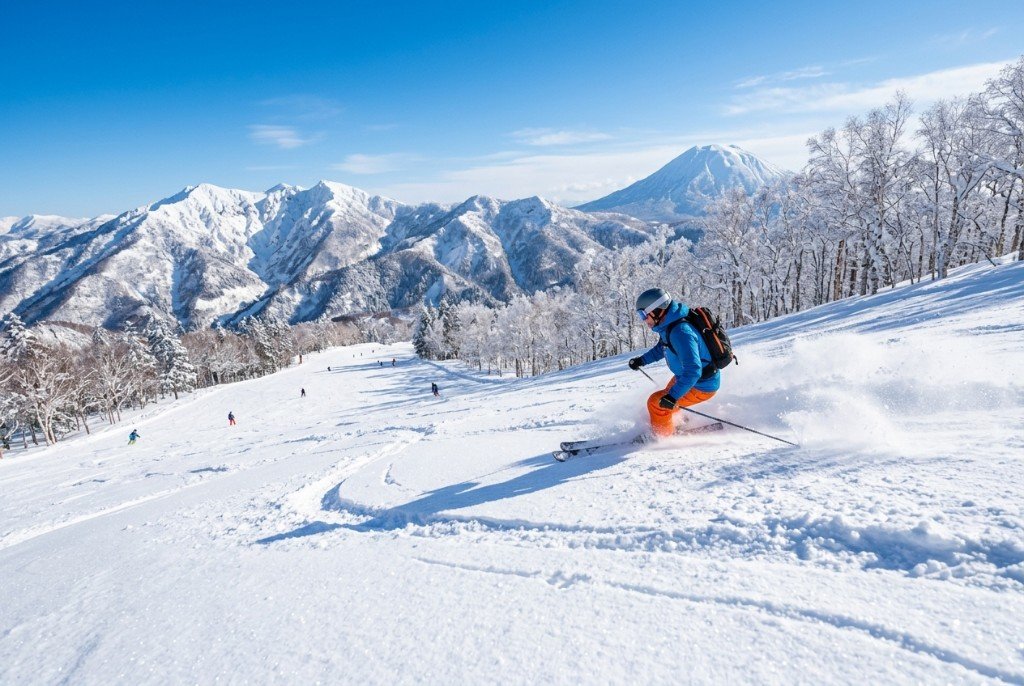
Why Zao's Tree Skiing Stands Apart
Zao Onsen, in Yamagata Prefecture on the main island of Honshu, is famous worldwide for its "juhyo" — the wind-sculpted ice monsters formed when supercooled fog freezes onto Aomori todomatsu fir trees near the summit. Fewer visitors realize that the same microclimate that builds those ice monsters also blankets the resort's mid-mountain forests in some of the lightest, driest powder in Japan. Zao sits close enough to the Sea of Japan to catch the same Siberian moisture that feeds Niseko and Hakuba, but its continental position inland gives the snow a slightly colder, drier character that holds up well between storms.
What makes Zao distinct for tree skiing specifically is the structure of the glades themselves. Unlike the tight, stump-filled tree runs common in Hokkaido's younger forests, much of Zao's skiable woodland is mature birch and beech, spaced naturally by decades of growth. The result is a more forgiving canopy with wider sightlines, which is exactly why this terrain has become a magnet for intermediate skiers looking to graduate from groomers into glade skiing without the claustrophobic tightness of expert-only tree runs elsewhere. This is not expert-only terrain by Japanese standards, but it is also not a groomed run — forest skiing anywhere carries real hazards, and Zao's open-access tree zones mean skiers of mixed ability share the same glades. Treat every run as a safety exercise first and a powder day second.
Zao also carries cultural weight beyond the snow. Zao Onsen village has operated as a hot spring resort since the Edo period, and the ski area itself dates to the 1920s, making it one of Japan's oldest organized ski resorts. The juhyo have been illuminated for night viewing since the 1950s, drawing visitors who come purely to see the ice monsters rather than ski — a reminder that Zao's terrain and its folklore are intertwined, and that the mountain's reputation for otherworldly winter scenery is part of what draws international skiers to its forests in the first place.
Reading the Glades: Terrain, Snow, and the How-To for Safe Forest Lines
Zao's tree skiing is spread across several sectors, but the most accessible intermediate glades sit between the Jizo and Sanroku zones, where natural clearings between birch trunks create semi-marked lines that ski patrol monitors loosely rather than grooms directly. Above these, closer to the ropeway's upper stations, the trees thin into the juhyo zone — technically skiable in places but far more serious terrain, with wind-affected snow, exposed rocks, and the risk of disorientation in fog. Intermediate skiers should treat the juhyo boundary as a hard stop, not a dare.
The core technique for safe forest skiing at Zao comes down to five habits:
- Never ski the trees alone. Zao's forest zones are large enough that a fall out of sight of the main run can go unnoticed for hours. Ski with a partner, agree on a regroup point before dropping in, and keep each other in sight or shouting distance.
- Respect tree wells. Japan's dry, abundant snowfall builds deep, loose wells around trunks and low branches, especially after a multi-day storm cycle. A skier who falls head-first into a well can suffocate within minutes even in shallow-looking snow — this is the single most serious hazard in any forest terrain, not just Zao's. Give wide berth to any tree with a visible depression or shadowed hollow at its base.
- Keep speed in check. Mature birch spacing at Zao feels generous compared to tighter glades, but sightlines still collapse quickly when snow is falling or flat light washes out contrast. Ski at a speed where you can stop within the distance you can actually see, not the distance you wish you could see.
- Carry a whistle and tell someone your line. Cell signal is inconsistent in the lower glades. A whistle carries much further than a shout if you need to signal a partner or patrol.
- ~~(intentionally omitted)~~ — stick to marked glade entrances. Zao's patrol closes specific tree sections after heavy snowfall or when avalanche risk rises on the steeper pitches near Jizo; a closed rope means the hazard assessment has already been done for you.
Snow quality in the glades tends to stay better longer than on the groomers, since fewer skiers track it out, but that same lower traffic means fewer eyes if something goes wrong — which is the core trade-off of tree skiing anywhere in Japan, and especially pertinent for intermediates still building judgment about when a line is within their ability.
Season and Access: When to Go and How to Get There
Zao's season typically runs from early December through early April, with the most reliable powder window from mid-January through late February, when the Siberian air mass is most active and the juhyo are fully formed. Early December and late March offer thinner cover and are better suited to groomer skiing than tree runs, since gladed terrain needs a deeper base to cover downed branches, rocks, and stumps safely.
Zao Onsen is reached via Yamagata city, which sits roughly 2.5–3 hours from Tokyo:
- By train: Take the Yamagata Shinkansen directly from Tokyo Station to Yamagata Station (around 2 hours 40 minutes). From Yamagata Station, a direct bus to Zao Onsen takes about 40 minutes, with frequent departures during ski season.
- By air: Yamagata Airport has limited domestic connections; most international visitors find the Shinkansen from Tokyo more practical and often faster door-to-door once airport transfers are factored in.
- By car: From Tokyo, it's roughly 4–4.5 hours via the Tohoku Expressway, useful if you're combining Zao with other Tohoku resorts like Zao's neighbor Nishi-Zao or Yamagata's other fields. Winter tires or chains are mandatory, and mountain roads around Zao Onsen can close temporarily during heavy snowfall — build in a buffer day if driving.
Once in Zao Onsen village, the resort is walkable, with the main ropeway and gondola stations a short walk from most lodging.
Practical Tips: Booking, Gear, and Village Etiquette
Book lift tickets and any lesson or guide service in advance during the January–February peak, since Zao has become increasingly popular with overseas skiers chasing both the juhyo and the glade skiing, and weekend lodging in the village fills early. If you're new to tree skiing specifically, consider booking a half-day with a local guide for your first forest run — guides know which glades are open, where the wells are forming that week, and can set a safe pace while you calibrate your own judgment.
Gear-wise, a few things matter more in the trees than on groomers: a transceiver-whistle-shovel-probe kit is overkill for Zao's lower-mountain glades but worth carrying if you're pushing toward the juhyo zone or skiing after a big storm cycle; a helmet is close to non-negotiable given the trunk density; and goggles with a low-light lens are essential, since Zao's glades sit in shadow for much of the short winter day and flat light is common.
After skiing, Zao Onsen's biggest draw is its hot springs — the village's sulfuric, milky-white water is reputed among the most acidic in Japan and has been used medicinally since the Edo period. Most ryokan and several public bathhouses welcome day visitors, and soaking after a day in the trees is as much a part of the Zao ritual as the skiing itself. Etiquette follows standard onsen rules: wash and rinse thoroughly at the stations provided before entering the bath, keep towels out of the water, and know that many of Zao's older bathhouses still do not accommodate visible tattoos — check ahead if this applies to you.
For food, Yamagata Prefecture is known for imoni (a taro and beef stew simmered in a sweet soy broth), which is sold streetside in Zao Onsen during winter and is the single best apres-ski meal on the mountain — cheap, hot, and exactly what you want after a cold day of careful, deliberate forest skiing.
Was this page helpful?
Your feedback helps us improve our guides