
Onna Blue Cave Guide: Scuba Diving vs Snorkeling in Okinawa, Plus Booking Tips
📅 2026-08-24
Where Light Meets Water: An Introduction to Onna's Blue Cave
Along the rugged western coastline of Okinawa's main island, in the seaside village of Onna, a narrow limestone opening leads into one of Japan's most photographed marine spaces: the Onna Blue Cave (Aoi Doukutsu). Sunlight enters through a submerged gap in the cave mouth and refracts through the shallow turquoise water, casting an electric blue glow across the cave's interior walls and ceiling. It is a phenomenon that looks almost artificial in photographs, yet it occurs entirely through natural light physics — no filters, no artificial lighting, just sun, limestone, and clear tropical water doing what they do best.
The Blue Cave sits within Cape Maeda's marine protected coastline, one of the most accessible reef systems in Okinawa, which is precisely why it has become the single most popular dive and snorkel site in the prefecture. On a busy summer weekend, dozens of small groups cycle through the cave entrance in a steady rhythm, yet the site rarely feels overcrowded underwater because the visit is brief, well organized, and split across multiple entry points along the rocky shoreline.
For travelers weighing scuba diving against snorkeling here, the decision matters more than it might at other destinations. The cave's character changes dramatically depending on whether you are floating at the surface or descending a few meters below it, and each approach suits a different kind of traveler, budget, and comfort level in the water. This guide walks through both experiences in detail, plus the seasonal, tidal, and logistical factors that determine whether your visit becomes a highlight of your Okinawa trip or a disappointing scramble through crowds and murky visibility.
A Site Shaped by Ryukyu Geology and Local Fishing Tradition
Okinawa's coastline is built almost entirely from uplifted coral limestone, laid down over hundreds of thousands of years as the Ryukyu Islands rose and fell with sea level changes. The Blue Cave itself is a solution cave, carved by centuries of wave action eating into softer limestone pockets while harder coral formations resisted erosion, leaving behind the arched chambers and swim-through openings that divers explore today. Cape Maeda, where the cave is located, remains geologically active in a slow sense — the same wave energy that carved the cave continues to reshape its edges, which is one reason local dive operators monitor conditions daily rather than relying on a fixed seasonal schedule.
Before it became a dive tourism landmark, this stretch of Onna's coast was fishing ground for the surrounding villages, part of the traditional Okinawan relationship with the sea that predates mass tourism by generations. Okinawan coastal communities historically practiced reef-gleaning and small-boat fishing techniques adapted to the region's fringing reefs, and place names along this coast still echo that history. The modern dive industry arrived in earnest from the 1970s and 1980s onward, as mainland Japanese tourists and later international visitors discovered that Okinawa offered subtropical diving conditions within domestic reach. Cape Maeda and its Blue Cave became an early anchor point for that industry precisely because the site combines dramatic visuals with relatively easy, shore-accessible entry — a rarity among Japan's more remote dive destinations like the Kerama Islands or Yaeyama.
Today, the cave sits within a broader push by Onna Village to balance tourism revenue with reef conservation, including coral restoration projects and diver education efforts that ask visitors to avoid touching the reef, refrain from wearing sunscreen containing oxybenzone, and follow no-fishing rules within the marine protected zone.
Scuba vs Snorkel: How to Choose, and How to Book Each
The Snorkeling Experience
Snorkeling the Onna Blue Cave is the faster, cheaper, and lower-commitment option, and it is genuinely spectacular for the photo and video payoff it delivers. Most snorkel tours depart from the small boat harbor near Cape Maeda, take you by short boat ride or a walk down a steep staircase to the cave entrance, and let you float directly into the chamber wearing mask, snorkel, and fins. Because the cave mouth sits close to the surface, snorkelers get an excellent view of the blue-light effect without needing to dive deep — in fact, the blue glow is often most vivid near the surface, where the light hasn't yet scattered downward through the water column.
Expect to pay roughly 3,000–5,000 yen for a standalone snorkel tour, with sessions lasting 30–60 minutes including cave time. Most operators supply full gear rental, and many now include underwater camera rental or GoPro footage packages, since photographing the cave's blue glow is the main draw for most visitors. No certification or prior experience is required, making this the default choice for families, casual travelers, and anyone short on time.
The Scuba Diving Experience
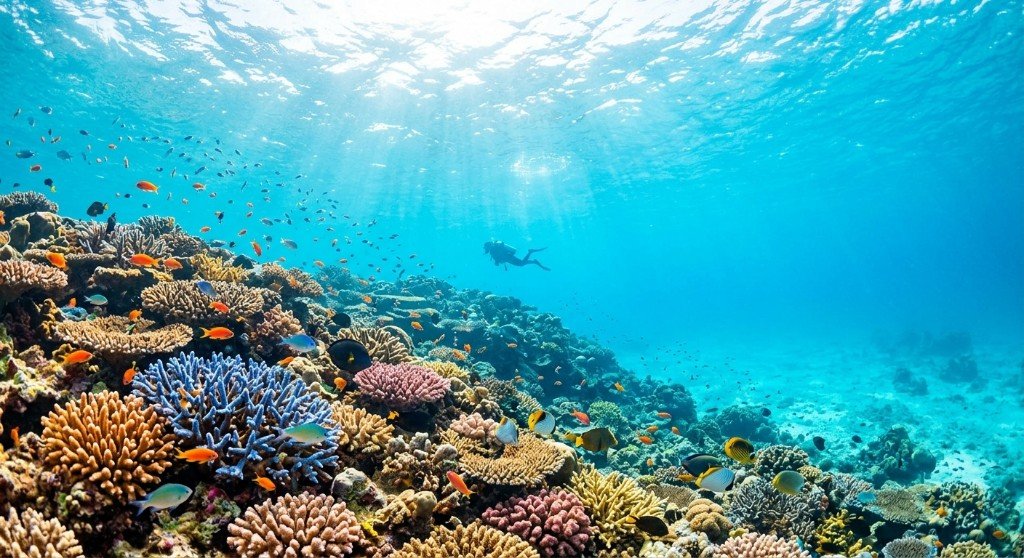
Scuba diving the Blue Cave unlocks a materially different experience. Below the surface, divers can explore the cave's interior structure more fully — swim-throughs, overhangs, and the schools of glassfish and cardinalfish that shelter in the cave's shadowed recesses. Divers also have time to continue beyond the cave itself onto Cape Maeda's surrounding reef, which hosts sea turtles with enough regularity that turtle sightings are almost an expected bonus rather than a rare treat, along with moray eels, parrotfish, and healthy coral coverage in the surrounding bay.
Because the cave sits at a shallow, easy depth — typically in the 3–8 meter range at the entrance — it's an accessible dive even for newly certified divers, and many operators run dedicated Blue Cave dive packages as a first ocean dive after a resort or discovery course. Expect to pay 8,000–15,000 yen for a two-tank boat or shore dive package including the cave, often with equipment rental bundled in; discovery dives for uncertified first-timers typically run 10,000–18,000 yen with an instructor guiding you throughout.
Booking Tips That Actually Matter
Book at least a few days ahead in peak season (July–September), since Cape Maeda's popularity means morning slots fill quickly. Early morning tours — the first departures around 8:00–9:00am — consistently offer the best visibility and the fewest crowds, both in the cave and on the access paths down to the water. Afternoon tours, especially after 1:00pm, often contend with more boat traffic, more snorkel groups queueing at the cave mouth, and lower light angles that dull the blue effect.
Tide matters as much as time of day. The Blue Cave is best visited around mid to high tide, when water depth at the entrance is sufficient for comfortable swim-through access; at low tide, the cave mouth can become too shallow or even partially exposed, and some operators cancel or reroute trips entirely. Reputable local operators check tide tables when scheduling departures, so when booking, ask directly whether your slot is timed to favorable tide conditions — this single question filters out less careful operators.
Weather also plays a decisive role. Because Cape Maeda is exposed to open ocean swell, wind and surf conditions can shut down access to the cave with little notice, particularly during typhoon season (roughly June through October). Build a buffer day or two into your Okinawa itinerary if the Blue Cave is a must-do, and choose operators who offer free rescheduling for weather cancellations rather than strict no-refund policies.
Expert Recommendations for a Better Blue Cave Visit
- Pick scuba if you have even one free half-day and comfortable footwear for the reef walk — the extended bottom time and reef access beyond the cave mouth are worth the higher cost and gear logistics, especially if turtle encounters matter to you.
- Pick snorkeling if your itinerary is tight, your group includes children or non-swimmers-turned-comfortable-floaters, or you simply want the iconic blue-glow photo without the certification overhead.
- Combine both across your Okinawa trip. Many visitors snorkel the Blue Cave on a shorter Onna Village day and reserve a separate scuba day for Cape Maeda's broader reef or a boat trip out to the Kerama Islands, which offer world-class visibility (often 20–30 meters) as a contrast to the more intimate, structure-focused Blue Cave dive.
- Avoid the midday cruise-ship and tour-bus surge. Cape Maeda draws large group tours from Naha and central Okinawa resorts; visiting on a weekday, or booking the first or last tour slot of the day, meaningfully reduces the number of people sharing the cave with you.
- Bring reef-safe sunscreen and water shoes. The walk down to the cave entrance crosses sharp volcanic and coral rock, and Okinawa's marine protection rules increasingly restrict sunscreens with oxybenzone and octinoxate, both harmful to coral.
- Check operator reviews for cave crowding management, not just overall ratings — some tours time entry so your group has the cave largely to itself for a few minutes, while cheaper operators cycle groups through in a rush that undercuts the experience.
- If seasickness or boat access is a concern, ask specifically whether your tour is shore-entry or boat-entry; Cape Maeda offers both, and shore entry avoids the boat ride entirely at the cost of a steeper walk down.
Planning Your Visit: Final Thoughts
The Onna Blue Cave rewards a little planning far more than it punishes spontaneity — the difference between a crowded, murky ten minutes and a genuinely magical swim through glowing blue water often comes down to nothing more than which hour and which tide you chose. Whether you go with a snorkel and fins or a full scuba setup, the core appeal is the same: a rare natural light show produced by nothing more than sun, sea, and Okinawan limestone. Scuba divers gain depth, time, and access to the wider reef; snorkelers gain simplicity, speed, and a lower barrier to entry — and either path, timed well against tide and crowds, delivers one of Okinawa's most memorable ocean experiences. Book early, watch the tide tables, and let Onna Village's blue-lit cave anchor a broader itinerary that might also carry you toward Okinawa's ski-free but adventure-rich mix of surf breaks, reef dives, and coastal camping across the wider Ryukyu chain.
Was this page helpful?
Your feedback helps us improve our guides