
Bear-Aware Camping in Japan's Mountains: A Practical Safety Guide
📅 2026-09-22
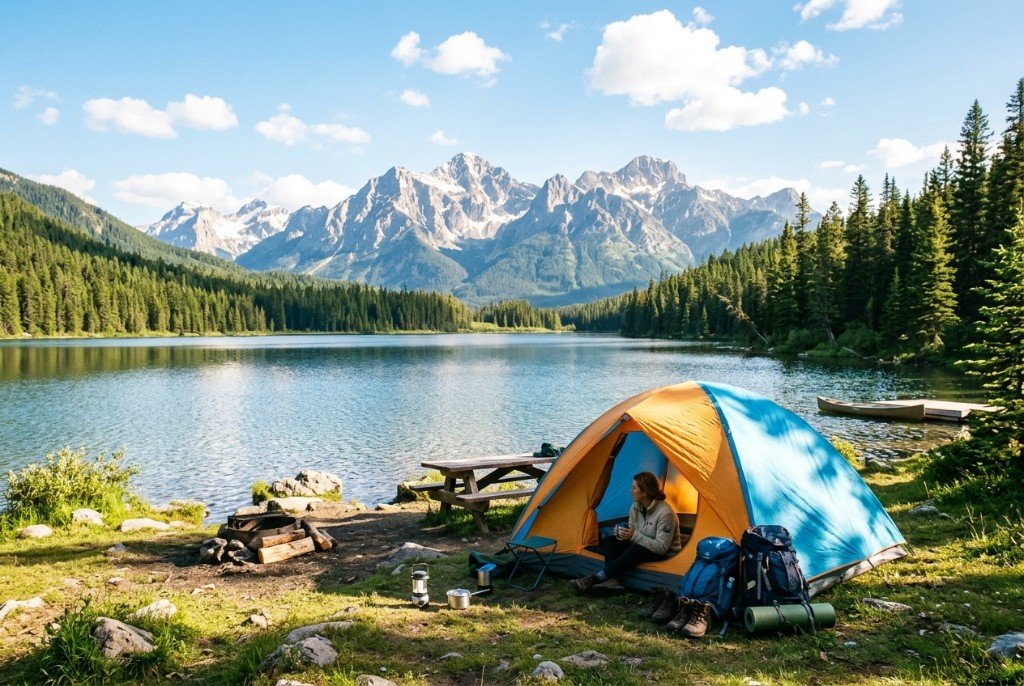
Japan's mountain interior — the Chubu highlands, the Tohoku ranges, the vast forests of Hokkaido — offers some of the best camping in Asia, but it is also genuinely bear country. Honshu, Shikoku, and Kyushu host the Asian black bear (tsukinowaguma), while Hokkaido is home to the much larger brown bear (higuma). Bear encounters have risen sharply over the past decade as bears expand into fringe habitat near towns and campgrounds, and 2023–2025 saw record numbers of incidents reported across Akita, Iwate, Nagano, and Hokkaido. This guide is written for campers who want to keep enjoying Japan's mountains without becoming a statistic — covering camp selection, gear, timing, and etiquette specific to bear safety in Japan.
Who This Guide Is For
This is written for two overlapping groups: car campers heading to established campgrounds in mountain prefectures (Nagano, Yamanashi, Gunma, Tohoku, Hokkaido), and backcountry hikers doing multi-day tent treks through national parks like Daisetsuzan, Shiretoko, Chichibu-Tama-Kai, or the Northern Japan Alps. If you're camping near the coast or in lowland Kanto suburbs, bear risk is close to zero and you can skip straight to gear and weather planning. But if your route takes you above roughly 600–800m in forested terrain, or into any of Hokkaido's national parks, bear awareness is not optional — it's core trip planning, on par with checking the weather.
What makes bear safety in Japan distinct from North America is scale and behavior. Asian black bears are smaller (typically 60–150kg) but are quick, tree-climbing, and increasingly habituated to human food near rural settlements — most fatal encounters involve surprised bears at close range rather than predatory stalking. Hokkaido's brown bears are a different order of concern: adult males can exceed 250kg, and the Shiretoko Peninsula and Daisetsuzan range have among the highest brown bear densities in the world. The 2021 Sapporo urban bear incursion and repeated maulings on Hokkaido trails in recent years have made bear bells and bear spray standard trailhead gear rather than tourist novelties.
Reading the Terrain: Campsite Conditions and Bear Behavior
Good bear-aware camping starts with reading the landscape the way a bear would. Bears in Japan follow food — beechnuts (buna) and acorns in autumn, salmon runs in Hokkaido rivers, and unfortunately, unsecured campsite garbage and food scraps year-round. A poor mast year for beech and oak (common in Tohoku and often announced publicly by prefectural forestry offices in late summer) reliably pushes bears lower in elevation and closer to campgrounds and farmland, so check regional "kuma dekibae jouhou" (bear appearance forecasts) before a September–November trip.
Practical layout rules for a mountain campsite:
- Cook and eat at least 50–100m from your tent, ideally in a different direction from your food storage. The "food triangle" used in North America applies directly here.
- Store all food, trash, toothpaste, and scented items in a bear canister or hung bear bag, 4m off the ground and 2m from the trunk if no canister is available. Many Hokkaido national park huts now provide bear boxes — use them even if it feels excessive.
- Avoid camping near berry patches, salmon streams, animal trails, or fresh diggings. Fresh claw marks on trees, overturned rocks, or scat with berry seeds are all signs of recent bear activity — move on rather than settling in.
- Pitch tents in open, visible areas rather than dense brush, so you have sightlines and bears have less reason to be startled at close range.
- Never keep food, snacks, or scented toiletries inside your tent, including in Hokkaido, where brown bears have been known to investigate tents directly.
If you do encounter a bear at distance, back away slowly while speaking in a calm, low voice — never run, and never turn your back. Asian black bears will often flee if given space and warning. For close encounters, particularly with Hokkaido brown bears, bear spray (available at outdoor shops in Sapporo, Asahikawa, and Kushiro) is the recommended deterrent, and campers should know how to deploy it before they need it, not while panicking in the moment.
Season and Access: When to Go and How to Get There
Timing matters as much as gear. Bear activity in Japan's mountains follows a clear seasonal arc:
- Spring (April–June): Bears emerge from hibernation hungry and are most active at lower elevations searching for food, including near campgrounds and rivers. Mothers with cubs are especially defensive during this period — give any sighting a very wide berth.
- Summer (July–August): Bears generally move to higher, cooler elevations and activity near popular campgrounds drops somewhat, though this is peak camping season, so overall encounter volume stays significant simply due to more people on trails.
- Autumn (September–November): The highest-risk window. Bears enter hyperphagia, aggressively foraging to build fat reserves before winter, and will travel further and closer to human settlements — including campgrounds — if natural food (beechnuts, acorns) is scarce. Most reported bear-human conflicts in Japan cluster in this period.
- Winter (December–March): Honshu black bears hibernate and risk drops close to zero for typical car camping, though Hokkaido brown bears do not always fully den and rare winter activity is still recorded.
For access, Nagano's Northern and Central Alps campgrounds are reachable from Tokyo via the Chuo Line or Azusa limited express to Matsumoto (about 2.5 hours), then local bus or rental car into the mountains — Kamikochi, a classic bear-country basecamp, is roughly 3.5–4 hours door to door from central Tokyo. Tohoku bear country (Akita, Iwate) is best reached via Tohoku Shinkansen to Morioka or Akita (2–3.5 hours from Tokyo) followed by a rental car, since many trailhead campgrounds have no public transit. Hokkaido's Daisetsuzan and Shiretoko require flying into New Chitose Airport (Sapporo) or Memanbetsu Airport (for Shiretoko/eastern Hokkaido), both about 90 minutes from Tokyo by air, followed by a 2–4 hour drive or connecting flight/bus depending on the specific park — a rental car is close to essential for Hokkaido bear-country camping since campgrounds are widely spaced.
Practical Tips: Booking, Gear, and Etiquette
Booking and permits: Popular Hokkaido national park campgrounds (Daisetsuzan's Asahidake, Shiretoko's Rausu-area sites) and Northern Alps huts fill quickly in July–August and require advance reservation, often through Japanese-language booking portals — English-speaking travel desks in Sapporo or Matsumoto tourist centers can assist. Some Shiretoko trails require registration at a visitor center and a mandatory bear-safety briefing before entry, particularly during peak salmon-run season in autumn.
Essential gear checklist:
- Bear bell (kuma yoke suzu) — widely sold at convenience stores and outdoor shops in mountain towns; constant noise while hiking is the single most effective way to avoid surprising a bear
- Bear spray (capsaicin-based, not the same as personal defense spray) — sold at Sapporo/Asahikawa outdoor retailers; check it isn't expired, and practice the safety release
- Hard-sided or soft bear canister for food storage, or 15m of paracord for a proper bear hang
- Portable radio or phone playing music/talk at low volume in dense brush, as a supplement to bells
- Headlamp with extra batteries — most encounters near camp happen at dawn, dusk, or during nighttime bathroom trips
Etiquette and local knowledge: Always check in with campground staff or the nearest visitor center about recent bear sightings before pitching a tent — rangers in Hokkaido and Tohoku track sightings closely and will redirect you from active zones. Never feed wildlife, including seemingly harmless foxes or deer, since habituated wildlife corridors also draw bears. If hiking in a group, stay together and talk audibly rather than hiking in silent single file, which is when most surprise encounters happen. Respect any temporary trail or campground closures (tsuukou dome) issued after a sighting — these are taken seriously by local authorities and re-opened only after confirmed bear movement away from the area.
Historically, Japan's relationship with bears is layered with reverence as much as fear: the Ainu people of Hokkaido regard the brown bear as kamuy (a divine spirit) central to the iyomante ceremony, and many Tohoku mountain villages maintain matagi hunting traditions built around deep respect for bear behavior rather than eradication. Understanding this cultural context helps visitors approach bear country the way locals do — not as an obstacle to avoid, but as a resident of the mountains deserving distance, respect, and preparation. Camp smart, store food properly, make noise on the trail, and Japan's mountain wilderness remains one of the most rewarding — and safely shareable — landscapes in the country.
Was this page helpful?
Your feedback helps us improve our guides