
Chiba Pacific Surf Seasons: A Complete Swell Window Guide to Kujukuri and Hebara
📅 2026-08-22
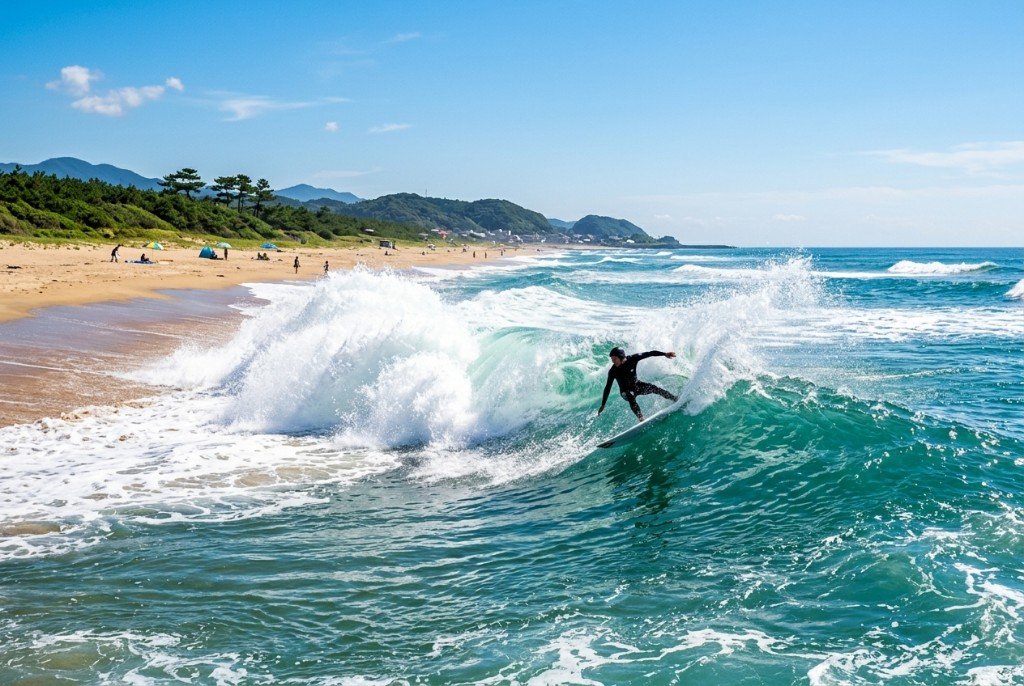
The Pacific Doorstep of Tokyo: Why Chiba Belongs on Every Surfer's Map
Less than two hours from central Tokyo, the Chiba Peninsula juts into the Pacific Ocean like a paddle-out into open water, catching swells that travel thousands of kilometers uninterrupted before finally breaking on Japanese sand. This geography is the entire reason Chiba became Japan's most important surf region rather than a footnote. Where the Sea of Japan coast depends almost entirely on winter monsoon wind swell, Chiba's Pacific-facing beaches receive a much richer diet of energy: distant typhoon swells rolling in from the south and southeast, powerful autumn low-pressure systems, and steady windswell generated locally by the Kuroshio Current's influence on regional weather.
The chiba surf season is best understood not as a single block of months but as a rotating calendar of swell sources, each with its own character, wind pattern, and ideal beach. Understanding this rhythm is the difference between a surfer who checks a forecast app and hopes, and one who reads the Pacific like a local. Two names dominate any serious discussion of Chiba surf geography: Kujukuri, the impossibly long sand-beach coastline stretching some 60 kilometers along the prefecture's eastern flank, and Hebara, the more compact, reef-influenced break near Kamogawa on the southern coast that has become a proving ground for more experienced surfers. Together they represent the two poles of what Chiba offers — Kujukuri's endless, forgiving beach breaks perfect for learning and longboarding, and Hebara's punchier, more technical waves that reward local knowledge and good timing.
This guide walks through Chiba's surf seasons month by month, explains the swell windows that matter, and gives practical, on-the-ground advice for surfers planning a trip — whether that trip is a weekend escape from Tokyo or a dedicated surf pilgrimage timed to typhoon season.
From Fishing Villages to Surf Culture: How Chiba Became Japan's Wave Capital
Long before surfboards appeared on its beaches, the Chiba coast was a working coastline. Kujukuri's shallow, sandy shorebreak made it ideal for traditional beach-seine fishing, and small fishing communities dotted the coastline for centuries, their livelihoods tied to the same currents and swells that surfers now chase for recreation. The name "Kujukuri" itself, meaning "ninety-nine ri" (an old unit of distance), reflects the almost mythic scale locals attributed to this unbroken stretch of sand — a coastline so long it seemed to defy easy measurement.
Surfing arrived in Japan in the postwar decades, carried largely through American cultural influence and returning travelers who had discovered the sport in Hawaii and California. Chiba, with its proximity to Tokyo and its exceptional exposure to Pacific swell, became one of the first regions in the country to develop a dedicated surf culture. By the 1970s and 1980s, Kujukuri's beach towns — places like Ichinomiya, Taito, and Chojamachi — had begun transforming from quiet fishing hamlets into surf towns, with board shops, surf schools, and a growing resident population of dedicated wave riders. Ichinomiya's status was cemented decades later when it was selected as the venue for surfing's Olympic debut at the Tokyo 2020 Games, a milestone that brought international attention to a stretch of coast that Japanese surfers had quietly cherished for two generations.
Hebara, further south near Kamogawa, developed a somewhat different identity. Its rockier, more variable bathymetry produces waves with more shape and power than the open beach breaks of Kujukuri, and it became known among more experienced Japanese surfers as a spot that demanded respect and local knowledge. Even today, the cultural distinction persists: Kujukuri is often described as Chiba's welcoming front door, while Hebara and the surrounding southern Boso Peninsula breaks are considered the region's more serious, committed waves. This layered history — working coastline turned surf mecca turned Olympic stage — gives Chiba a cultural depth that goes beyond mere wave quality; surfing here is woven into the identity of entire towns.
Reading the Calendar: Chiba's Surf Seasons and Swell Windows Explained
The single most useful mental model for the chiba surf season is to separate the year into four distinct swell regimes.
Spring (March–May): Transitional and Wind-Dependent Spring in Chiba is a season of transition. Winter's north wind swells fade, and the powerful typhoon-driven swells of autumn are still months away. Waves tend to be smaller and more wind-dependent, generated by passing low-pressure systems and occasional early-season southerly disturbances. This is a good window for beginners, particularly at Kujukuri, where the gentle, spread-out swell energy suits longboards and soft-top learning sessions. Water temperatures are still cool, so a 3/2mm or 4/3mm wetsuit is standard through April.
Summer (June–August): The Typhoon Window Opens Summer marks the beginning of Japan's typhoon season, and this is where the chiba surf season truly comes alive. From late June through August, tropical storms and typhoons tracking north from the Philippine Sea and South China Sea send long-period groundswell up the Japanese coastline. Even typhoons that stay well offshore or make landfall in Kyushu or Shikoku can generate excellent, clean swell in Chiba days before and after their passage. The key swell window to watch is the 48–72 hours before a typhoon's closest approach, when the storm is still distant enough to avoid dangerous onshore chop but close enough to be pumping groundswell toward the coast. Both Kujukuri and Hebara light up during these windows, though Hebara's exposure and bathymetry often produce noticeably more powerful, better-shaped waves during the same swell event. Water is warm (often 24–27°C), making boardshorts-only sessions common in peak summer.
Autumn (September–November): Peak Season This is unambiguously the best chiba surf season for consistency, size, and wave quality. Typhoon activity remains elevated through September and into October, while the increasing frequency of autumn low-pressure systems adds a second, more temperate source of swell. Many experienced Chiba surfers consider late September through October the single best stretch of the year — typhoon swells are still frequent, but water temperatures remain comfortable and the crowds thin slightly compared to peak summer weekends. Hebara comes into its own during this period, with more consistent size and shape than the sometimes-blown-out summer conditions.
Winter (December–February): North Swell and Cold Discipline Winter swell in Chiba comes primarily from strong northeast monsoon winds and passing low-pressure systems in the North Pacific. Waves can be powerful and well-organized, particularly at north-facing sections of Kujukuri, but the tradeoff is cold water (dropping into the low-to-mid teens Celsius) and biting offshore winds. A 5/4mm or 5/4/3mm hooded wetsuit, boots, and gloves become essential gear. Winter is the domain of dedicated locals rather than casual visitors, but the payoff is uncrowded lineups and genuinely good waves for those willing to brave the cold.
Where to Paddle Out: Practical Guidance for Kujukuri and Hebara
Kujukuri Beach Kujukuri isn't one spot but dozens of access points along its 60-kilometer sweep, and choosing the right stretch matters. The central and southern sections around Ichinomiya, Kujukurimachi, and Chosei are the most developed for visiting surfers, with surf shops, board rentals, parking, and showers concentrated near the town centers. As a general rule, the beach break quality is fairly consistent along the whole coastline, so proximity to train stations (Kazusa-Ichinomiya on the JR Sotobo Line is the most convenient) often matters more than chasing a specific peak. Kujukuri's sand-bottom, gently shelving beach breaks are exceptionally forgiving, which makes it Japan's most popular destination for surf lessons and beginner sessions — but the same open exposure means it can also hold genuinely powerful, well-overhead waves during a strong swell window, so check conditions rather than assuming it's always mellow.
Hebara Beach Located near Kamogawa on Chiba's southern Boso Peninsula coast, Hebara is smaller in scale but bigger in reputation among intermediate-to-advanced surfers. Its coastline features more textured bathymetry than Kujukuri's uniform sand beaches, producing waves with more push, better shape on their day, and a more defined takeoff zone — which also means more competition for the best peaks. Parking is more limited than at Kujukuri, and it's worth arriving early on weekends and during active swell windows. Hebara rewards local knowledge of tide and sandbar conditions, so first-time visitors do well to watch a session before paddling out, or ask at a local surf shop about the day's bank conditions.
Beyond the Big Two Surfers with a car and flexible plans should also consider the wider Boso Peninsula coastline south of Hebara, where smaller, less-crowded beach and point setups can offer relief from weekend crowds at the two headline spots, particularly during peak autumn swell windows when everyone in Tokyo is checking the same forecast.
Getting There Both regions are reachable by train and bus from Tokyo, with Kujukuri slightly more transit-friendly via the JR Sotobo Line, while Hebara and the southern Boso coast are more comfortably accessed by car via the Tateyama Expressway, particularly if carrying boards and wetsuits for a multi-day trip.
Expert Recommendations for Timing Your Trip
Experienced Chiba surfers consistently offer a few pieces of advice worth internalizing. First, treat typhoon tracking as a core skill, not an afterthought — the goal is never to surf in the storm itself, but to identify the swell window in the 2–3 days beforehand when groundswell arrives with clean, offshore-groomed conditions before onshore wind and chop move in. Japanese weather services and international typhoon tracking sites both are useful, and cross-referencing swell period (aim for periods above 10–12 seconds for the most powerful, well-organized waves) with local wind forecasts will consistently outperform simply checking wave height alone.
Second, don't overlook the shoulder seasons. Late spring and early autumn — the weeks just before the typhoon season ramps up or just after it tapers off — often deliver an underrated combination of good size, manageable crowds, and comfortable water temperatures.
Third, match the spot to the swell and your skill level honestly: Kujukuri for learning, mellow longboarding, and reliable beach-break fun; Hebara and the southern Boso breaks when you want more power and are comfortable navigating a busier, faster lineup. Finally, always check tide tables alongside swell forecasts — many Chiba beach breaks, Kujukuri included, are notably tide-sensitive, with certain stages of the tide producing dramatically better shape than others at the same swell size.
Conclusion: Planning Around Chiba's Rhythms
Chiba's Pacific coast rewards surfers who plan around its seasonal rhythms rather than showing up and hoping. The chiba surf season builds from a quiet, transitional spring into a typhoon-charged summer, peaks through an autumn stretch that many regard as the year's finest swell window, and closes with a cold but rewarding winter of north swell for those willing to suit up. Kujukuri offers accessibility, consistency, and forgiving beach breaks well suited to visitors and beginners, while Hebara delivers the punch and technicality that keeps more experienced surfers coming back. Whichever stretch of Chiba's long coastline you choose, understanding these seasonal swell windows — and reading the typhoon calendar with a little care — is the surest way to turn a good trip into a great one.
Was this page helpful?
Your feedback helps us improve our guides