
Family Ski Japan: Kids Parks, Magic Carpets, and Easy Runs the Whole Crew Will Actually Enjoy
📅 2026-09-26
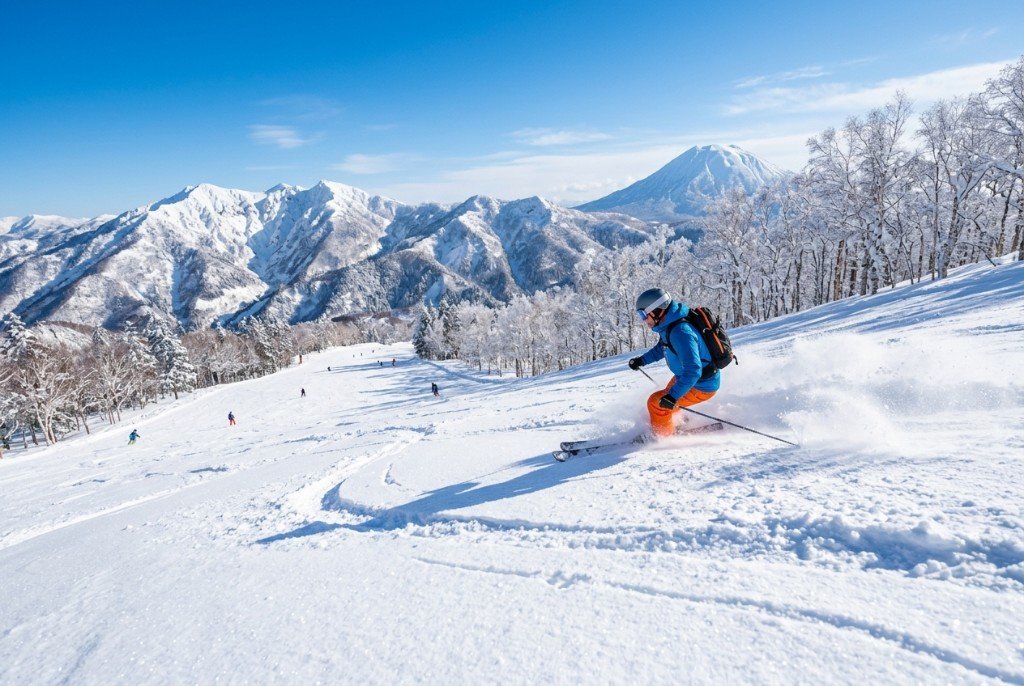
Japan's ski country has quietly become one of the best places on earth to take small children onto snow, and the reason has almost nothing to do with terrain difficulty. It's the infrastructure around the terrain: heated rest houses every few hundred meters, English-speaking ski schools built specifically for foreign families, snow so dry and light that falling doesn't hurt, and a kids park culture — dedicated low-speed zones with conveyor "magic carpets," snow tubing lanes, and fenced-off play areas — that Japanese resorts have refined over decades of serving domestic families first, tourists second. If your mental image of a Japan ski trip is powder-chasing backcountry skiers in Niseko, this guide is the other half of the story: family ski Japan trips built around kids parks and easy runs, where the goal isn't vertical feet, it's a toddler's first turn and a hot chocolate that doesn't get spilled on the chairlift.
Who This Is For, and Why Japan Beats the Alps for Small Kids
This guide is for parents traveling with children roughly age 2 through 10, whether you're a strong skier looking for a resort that won't bore you while your kids nap through ski school, or a total beginner family learning together. It's also for grandparent-inclusive trips, since Japan's easy-run resorts tend to have excellent onsen (hot spring) facilities where non-skiing relatives can happily spend the day.
What makes Japan distinct from, say, the Alps or North American resorts is threefold. First, snow quality: the combination of Siberian cold fronts crossing the Sea of Japan means resorts in Nagano, Niigata, and Hokkaido get extremely light, dry powder that cushions falls far better than the wetter, denser snow common in Europe or the US East Coast — a real factor when your five-year-old face-plants for the tenth time in an hour. Second, scale and price: family lift tickets, rentals, and lessons in Japan often run 40–60% cheaper than comparable Alpine resorts, and many kids parks are either free or bundled into a nominal all-day play pass separate from the main lift ticket, so non-skiing toddlers can tube and play without you buying a full ski pass. Third, and most practically, Japan's ski culture developed around domestic family tourism through the 1970s–90s boom (the era when Japanese ski resorts multiplied rapidly amid a national skiing craze, partly fueled by the film "Yukiguni"-era romanticism around snow country), so the base-area infrastructure — heated toilets, coin lockers, rental shops with kid-sized everything down to size 12cm boots, on-site pediatric-scale ski schools — was built for exactly this audience decades before international visitors arrived. You're not adapting an expert resort for kids; you're using a resort designed with kids in mind from the ground up.
Snow Conditions, Terrain Layout, and How Kids Parks Actually Work
Understanding the anatomy of a Japanese "kids park" (kizzu paaku, キッズパーク) helps you pick the right resort. Most large family-oriented resorts split their mountain into three distinct zones:
- The kids park proper: a fenced, gently sloped area near the base, usually served by a magic carpet (conveyor belt lift) rather than a chairlift, so toddlers never have to load or unload a moving chair. These zones often include inflatable obstacles, snowmen, mascot characters, and a snow tubing lane. Many are staffed by attendants and separated from through-traffic skiers, which matters — a wandering four-year-old on an open beginner run shared with intermediate skiers is a real risk, and Japan's dedicated kids parks solve this by physical separation, not just signage.
- Green (easy) runs: wide, groomed, gently pitched runs rated for beginners, typically 5–15% gradient, usually the longest runs on the mountain so kids can build confidence with a long, gradual descent rather than a short steep pitch.
- The main mountain: intermediate and advanced terrain for parents who want to ski while a partner or ski school handles the kids, or for older children (7+) ready to graduate off the magic carpet.
Snow conditions vary meaningfully by region. Hokkaido resorts (Niseko, Rusutsu, Furano) get Japan's lightest, driest powder and the most reliable early-season base, but are colder — expect single-digit Fahrenheit days in January, which matters for how long a small child can comfortably stay outside even with breaks. Nagano and Niigata resorts (Hakuba, Nozawa Onsen, GALA Yuzawa, Naeba) run slightly milder, with excellent grooming and famously well-built kids parks, plus onsen towns within walking distance for warm-up breaks. Nozawa Onsen in particular is worth knowing for its history: it's one of Japan's oldest ski villages, with public bathhouses (soto-yu) dating back centuries that predate skiing entirely, so a day of snow play ends in a genuinely local hot-spring soak rather than a generic resort spa.
Season and Access: When to Go and How to Get There From a Real Hub
Season window: Japan's ski season runs roughly mid-December through late March, but for family trips with young kids, aim for mid-January through late February. This avoids the crowded, pricier Christmas–New Year window and the sometimes-thin early-December base, while giving you the most reliable snow and mildest daytime temperatures for outdoor play breaks. Late-season (March) can work for older kids and offers cheaper lift passes, but coverage in the kids park areas can get patchy as temperatures rise.
Access from Tokyo (the realistic hub for most international families):
- GALA Yuzawa: the single easiest option for a family trip — a dedicated Shinkansen station, GALA Yuzawa Station, sits directly beneath the base lodge. From Tokyo Station, it's about 75 minutes on the Joetsu Shinkansen, with zero transfers and no need to rent a car. Rental shops and the kids park are literally inside the train station building. This is the best choice for a first-time family trip or a day/overnight trip with very young children who don't travel well.
- Nozawa Onsen / Shiga Kogen (Nagano area): take the Hokuriku Shinkansen to Nagano or Iiyama Station (about 90 minutes–2 hours from Tokyo), then a 25–50 minute connecting bus. Slightly more transfer complexity but rewarded with a real onsen village atmosphere.
- Hakuba Valley: Shinkansen to Nagano Station (about 90 minutes), then an 80-minute bus or private transfer. Hakuba has some of the best-developed kids parks and English-language ski schools in the country, a legacy of hosting Winter Olympic events in 1998, which pushed significant international-standard infrastructure investment.
- Niseko / Rusutsu (Hokkaido): fly into New Chitose Airport (Sapporo), then a 2–2.5 hour bus or train transfer. This is the furthest and most expensive option logistically, best suited to families who want the absolute best powder and don't mind a longer travel day; Rusutsu in particular is known for an unusually large, well-equipped indoor and outdoor kids play area for a resort of its size.
For most first-time family ski Japan trips, we'd point you to GALA Yuzawa or Nozawa Onsen over Niseko simply on the strength of the shorter, simpler access — a 75-minute direct Shinkansen beats a multi-leg flight-plus-bus routing when you're managing nap schedules and snow gear for a toddler.
Practical Tips: Booking, Gear, Etiquette, and Where to Stay or Eat
Booking: Reserve ski school lessons for kids at least 2–3 weeks ahead for peak weeks (late December, mid-February school holidays in Japan and abroad); English-language children's classes at popular resorts like Hakuba and Niseko fill up fast. Book kids-park equipment (sleds, tubes) is usually walk-up and pay-per-use, but rental clothing and boots for children under 100cm can be limited in stock at smaller resorts — reserve rental gear online in advance rather than counting on same-day availability.
Gear: Pack your own base layers and mittens (Japanese convenience stores are excellent for emergency hand warmers — kairo — sold everywhere), but rent outer shells, pants, boots, and skis locally; hauling kid ski gear through airports is rarely worth it for a trip under two weeks, and Japanese rental shops stock sizes down to very small children reliably at the major family resorts mentioned above.
Etiquette: Japanese ski culture is notably quiet and orderly — lift lines form single file without pushing, and loud behavior in gondolas or rest houses draws attention. Teach kids the lift-line queue norm before you go; it's one of the few real culture-shock moments for foreign families. Also budget time for boot-removal customs: many resort restaurants and rest houses (and all onsen) require removing outdoor boots at the entrance, so slip-on layers for kids save a lot of hassle.
Stay and food: Ski-in/ski-out lodging is less common in Japan than in the Alps; instead, most families stay in a nearby onsen town or resort-adjacent hotel with a shuttle. Look for accommodations advertising "kids menu" or "family plan" (kazoku puran) — these often include early dinner service (5:30–6:30pm) tailored to young children, which matters since many standard Japanese restaurants expect later dinner seatings. Convenience stores (konbini) near every resort are a genuine lifesaver for quick, kid-friendly food, hot drinks, and forgotten gear at any hour. Finally, budget at least one afternoon for an onsen soak as a group reward — it's not just relaxation, it's the actual cultural centerpiece of a Japanese snow-country trip, and kids generally love it once they get used to the idea of a communal warm bath after a cold day of play.
Was this page helpful?
Your feedback helps us improve our guides