
Itoshima surf day trips from Fukuoka
📅 2026-10-11
Why Itoshima Is Fukuoka's Default Surf Day Trip
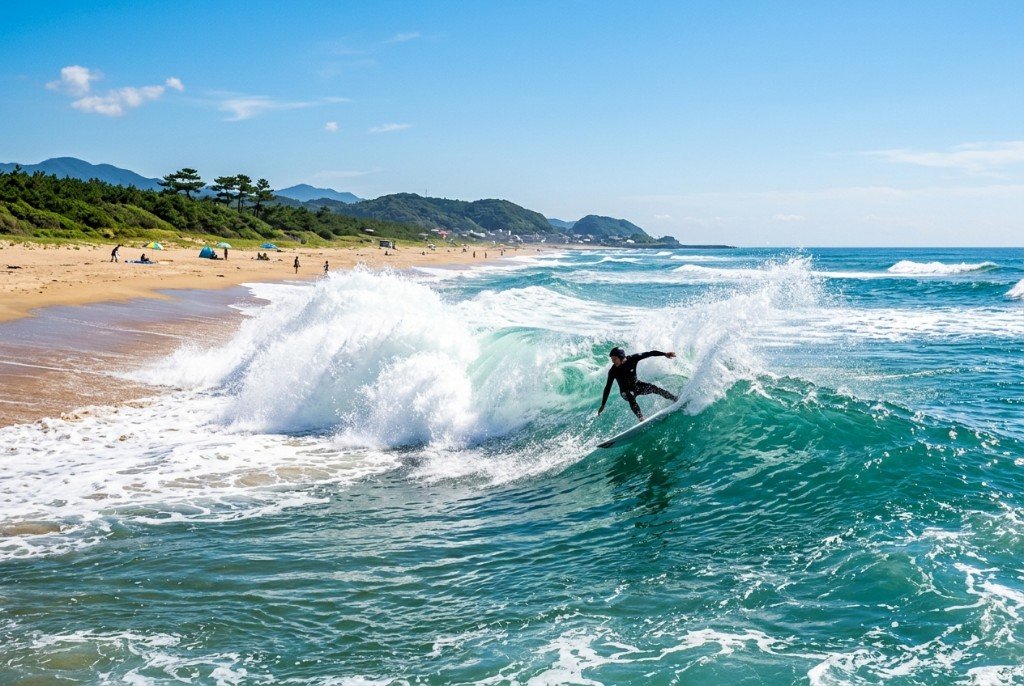
Ask any surfer based in Fukuoka City where they go on a free Saturday and the answer is almost always Itoshima. It isn't the biggest or most famous wave in Kyushu, but it is the most convenient one that still delivers consistent, rideable surf — which is exactly why it has become the region's default surf day trip rather than a specialty destination for traveling surfers chasing a specific swell.
What sets Itoshima apart from other Kyushu surf spots is the combination of geography and infrastructure. The peninsula faces the Genkai Sea (part of the Sea of Japan), which means it catches winter groundswells that the Pacific-facing coasts of Kyushu simply don't see, while also picking up wind swell for much of the rest of the year. At the same time, it sits close enough to a million-person city that you can surf a dawn session, shower at a beach-side facility, eat lunch, and be back at your desk or hotel in central Fukuoka by mid-afternoon. Few places in Japan offer that ratio of wave quality to urban access.
Itoshima also carries cultural weight beyond surfing. The area has long been associated with Japanese mythology — Shiraito Falls and the surrounding hills are tied to local legends predating organized Shinto shrines in the region, and the dramatic basalt cliffs at Keya no Oto were formed by ancient volcanic activity and have been a scenic and spiritual landmark for centuries. In the last fifteen years, the same coastline has become ground zero for Fukuoka's café-and-surf culture: converted farmhouses now operate as roastery cafés, and the beach towns of Futamigaura and Imazu have a visible, youthful surf community that didn't exist in the same form a generation ago. Surfing here means riding waves against both a volcanic coastline and a very current food-and-lifestyle scene.
Conditions: The Breaks, the Swells, and How Itoshima Surfs
Itoshima isn't one wave — it's a string of beach breaks and a few reef/point setups strung along roughly 15 km of coastline, and conditions vary meaningfully from one end to the other.
Nijinomatsubara (Rainbow Pine Beach) is the most popular and beginner-friendly stretch, a long sandy beach break close to Fukuoka-side access roads. It's forgiving, has multiple peaks that spread the crowd out, and is the easiest place to rent a board and take a first lesson.
Futamigaura, framed by the twin "Meoto Iwa" (wedded rocks) just offshore, is more exposed to northwest wind swell and tends to be the spot locals check first when a winter low is tracking across the Sea of Japan. It can get punchy and a little disorganized on bigger days, but on a clean mid-period swell it produces fun, workable peaks for intermediate surfers.
Imazu Beach, closer to the city side, is a reliable fallback with gentler, more consistent peaks — a good call when the open-coast spots are blown out or when you're sailing solo without a local to point you toward the better peak of the day.
Keya, near the Keya no Oto cliffs, has a punchier, more exposed setup for when a bigger groundswell is running and you want something with more wall and power; it's also the most scenic spot to simply watch waves if conditions aren't surfable.
As a general read: the Genkai Sea responds to the same winter storm cycles that bring snow to Hokkaido and the Sea of Japan coast — a passing low pressure system will often produce a building swell over 24–48 hours, peak, then drop off over the following two days. Checking a Japan-specific swell/wind forecast (Surfline or the Japanese app "Nami-X"/波伝説 is standard practice locally) the night before is far more useful here than checking generic weather apps, since wind direction off the peninsula changes the rideability of each break independently.
Season and Access: When to Go and How to Get There from Fukuoka
Season window. Itoshima surfs somewhat year-round, but the character of the waves shifts by season:
- Winter (December–February) brings the most consistent, often the most powerful groundswells, driven by cold fronts crossing the Sea of Japan. Water and air temperatures drop significantly, so a 4/3 or 5/4 wetsuit with boots, gloves, and a hood is standard, not optional. This is the highest-quality surf season for intermediate to advanced surfers.
- Spring and early summer (March–June) is more hit-or-miss, with smaller, wind-dependent surf, but water temperatures are far more forgiving and days are long — a good window for beginners and lesson-takers.
- Typhoon season (August–October) can produce excellent, well-organized swell as storms track north past Kyushu, though timing it requires watching typhoon paths closely and respecting that the same systems bring dangerous currents and onshore chop outside a narrow good-swell window.
- Midsummer (July–August) is mostly small and crowded with swimmers, more valuable for the beach-town atmosphere and the seasonal seafood than for serious surf.
Getting there from Fukuoka. This is the part that makes Itoshima a true day trip rather than a weekend commitment:
- By train: From Hakata or Tenjin, take the JR Chikuhi Line toward Karatsu and get off at Chikuzen-Maebaru or Imazu Station — roughly 40–50 minutes from central Fukuoka, with trains running frequently. From the station, surf shops and some beach accommodations offer shuttle pickup, or it's a short taxi ride (around 10–15 minutes) to the sand.
- By car: Driving from central Fukuoka takes about 40–60 minutes via Route 202/Fukuoka-Nishi route depending on traffic and exact beach destination, and a car is genuinely useful here since the coastline is long and spot-hopping between Nijinomatsubara, Futamigaura, and Imazu in response to conditions is a normal part of a surf day.
- From Fukuoka Airport: Add roughly 20–30 minutes to either route above to connect from the airport into central Fukuoka first. For visitors flying in specifically for a surf day trip, landing at Fukuoka Airport in the morning and being in the water by early afternoon is realistic.
Taken together, this makes "Itoshima Fukuoka surf day trip" a genuinely practical plan for Kyushu travelers who don't want to build an entire itinerary around a single surf session — it fits as a half-day or full-day add-on to a Fukuoka city stay.
Practical Tips: Booking, Gear, Stay, and Local Etiquette
Booking a board or lesson. Several surf shops cluster around Futamigaura and Imazu and rent boards (soft-tops for beginners, shortboards/fish for experienced surfers) by the half-day or full day; most also run beginner lessons with wetsuit rental included. Booking a day or two ahead by phone or through shop websites is wise on weekends and holidays, since good-swell weekends in winter can sell out rental stock by late morning.
Wetsuit planning. Because of the winter water temperature swing, pack (or rent) accordingly:
- Summer: boardshorts/bikini or a thin spring suit
- Spring/autumn: 3/2mm full suit
- Winter: 4/3mm or 5/4mm with boots, gloves, and hood — rental shops stock these seasonally, but confirm availability if you're visiting outside peak winter weeks
Facilities and showers. Nijinomatsubara and Imazu both have public shower/changing facilities near the main parking areas, which matters for a day-trip plan since you likely won't have hotel access to rinse off before heading back into Fukuoka.
Food and stay. Itoshima's café culture is a genuine draw in its own right — the area is known across Fukuoka for farm-to-table brunch spots, small-batch bakeries, and oyster huts in season (roughly November–March) along the coast near Keya and Shikanoshima side roads. If you want to extend the trip past a single day, a handful of small guesthouses and one or two surf-focused lodges operate near Futamigaura, letting you catch an early session the next morning before the wind picks up — a popular move for anyone chasing a specific winter swell window rather than committing to only one day.
Etiquette. Itoshima's breaks are popular with a strong local surfing community, especially at Futamigaura and Keya. Standard respectful lineup behavior applies — don't drop in, wait your turn at the peak, and be mindful that smaller beach breaks get crowded fast on the first good weekend swell after a flat spell. The crowd is generally welcoming to visitors who surf politely and keep their gear off access paths used by local fishermen and beachgoers.
Combining with other Kyushu activities. If you're routing a broader Kyushu trip around Fukuoka, Itoshima pairs naturally with onsen stops near Dazaifu or a side trip to Karatsu (another stop on the same Chikuhi Line) for pottery and castle sightseeing on a non-surf day — useful if swell forecasts don't cooperate and you want a backup plan that doesn't waste the day.
Was this page helpful?
Your feedback helps us improve our guides