
Glamping vs Tent Camping in Japan: The Real First-Timer's Guide
📅 2026-09-26
Who Should Read This (and Why the Glamping vs Tent Debate Matters in Japan)
If you're planning your first outdoor stay in Japan, the glamping vs tent Japan first trip decision is one of the most consequential choices you'll make — and it's different from the same choice back home. Japan's campsite culture (キャンプ場, kyanpu-jō) has exploded in popularity since around 2015, driven by a domestic "solo camp" boom (popularized by anime like Yuru Camp△) and a parallel glamping wave that brought hotel-grade comfort into forests, lakesides, and coastal pine groves. The result is a spectrum unlike most Western camping markets: at one end, ultra-minimalist tent sites with coin-operated showers and vending-machine ramen; at the other, air-conditioned geodesic domes with duvets, private decks, and kaiseki-style dinners delivered to your tent.
This guide is for first-time visitors trying to decide which end of that spectrum suits them — solo travelers, couples on a scenic-route honeymoon leg, families with young kids, or anyone combining camp nights with ski, dive, or surf days elsewhere in Japan. If you're nervous about language barriers, gear logistics, or Japan's famously strict site etiquette, glamping removes almost all of that friction. If you want the cheaper, more immersive version — cooking your own dinner under cedar trees, hearing a mountain stream at night — tent camping in Japan is safer and easier than most people assume, provided you know the conditions.
The short version: glamping suits first-timers who want a low-risk, high-comfort introduction to Japan's outdoors, especially in shoulder seasons or if paired with ski/dive/surf logistics. Tent camping suits first-timers who are already comfortable with basic outdoor skills and want a cheaper, more flexible, more "local" experience. Most people don't need to pick one for the whole trip — Japan's campsite density makes it easy to mix both across a single itinerary.
Site Conditions: Layout, Facilities, and What Actually Differs
Understanding the physical layout of Japanese campsites is the key to the glamping vs tent Japan first trip decision, because the gap in comfort is larger than in the US, Australia, or Europe.
Glamping sites in Japan typically fall into a few standardized formats: canvas bell tents on raised wooden platforms, dome tents with glass fronts facing a lake or valley, or converted trailer-cabins. Chains like Hoshino Resorts' PICA, The Farm, and Grand'Or run polished versions with heated floors, private bathrooms, and on-site restaurants — genuinely comparable to a boutique hotel, just under canvas. Almost all glamping sites include bedding (futon or Western beds), a heater or air conditioner, and either an attached or very short walk to a private toilet/shower. Many bundle dinner and breakfast (often a wood-fired barbecue set or a regional kaiseki box), which matters if you don't want to shop for groceries in a country where konbini stock is great but limited.
Tent camping sites, by contrast, range from free auto-camp fields with a single shared toilet block to well-equipped "auto camp" grounds (car-adjacent pitches) with coin showers, dishwashing stations, and a small shop selling firewood (mostly pre-cut, sold in bundles — foraging is discouraged or banned at most managed sites). Pitch fees usually run ¥1,000–¥4,000 per night for a car + tent, dramatically cheaper than glamping's ¥8,000–¥25,000+ per person. The trade-off is you bring or rent everything: tent, sleeping bag, stove, cookware. Rental gear (レンタルキャンプ用品) is available at larger sites and via outdoor shops in cities like Tokyo, Nagano, and Sapporo, which is the easiest workaround if you're flying in without gear.
A distinctly Japanese detail: quiet hours (消灯時間, shōtō jikan) are taken seriously, generator noise is frowned on, and campfires are often restricted to designated fire pits or raised braziers (直火, direct-on-ground fire, is banned at the vast majority of sites to protect thin topsoil). Glamping removes the need to know any of this since staff manage the fire pit for you; tent campers should confirm rules on the campsite's website or via a quick call before arrival.
Season and Access: When to Go and How to Get There
Season shapes this decision more in Japan than almost anywhere else, because the country's climate swings hard between a humid, rainy summer and a cold, dry-ish winter, with a narrow but glorious shoulder season on either side.
- Spring (April–May): Prime tent-camping season — mild nights, cherry blossoms at lower-elevation sites, and the rainy season (tsuyu) hasn't started. Late June through July is the rainy season across most of Honshu, when glamping's covered decks and dry bedding become genuinely worth the premium.
- Summer (July–August): Hot and humid at low elevation, but high-altitude sites (Nagano's highlands, parts of Hokkaido) are pleasant and popular for tent camping. This is also peak season for combining camp nights with surf trips (Chiba, Miyazaki, Shonan) or river activities — pack a tent with good ventilation, or glamp with air conditioning if humidity is a dealbreaker.
- Autumn (October–November): The best all-around window — koyo (autumn foliage) turns campsites near Nikko, Fuji Five Lakes, and Nagano spectacular, temperatures are cool but manageable in a tent, and this is arguably peak season for scenic first-timer trips.
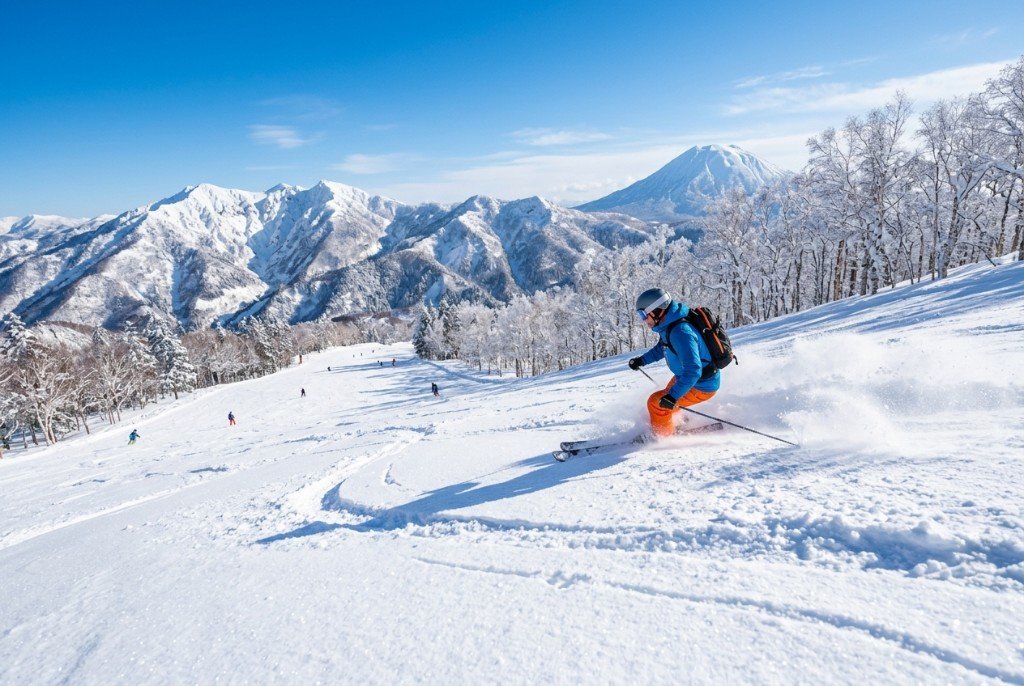
- Winter (December–March): This is where glamping earns its keep. Winter tent camping requires a four-season tent, a sleeping bag rated well below freezing, and real experience — not recommended for first-timers. Glamping domes with heating let you experience snow camping near ski resorts (Niseko, Hakuba, Nozawa Onsen) in comfort, often as a value-add to a ski trip, watching snowfall through a heated glass wall rather than shivering through it.
Access: Most first-timer-friendly campsites sit within 1.5–3 hours of a major hub by car, and car rental is genuinely the best way to reach them — Japan's rail network is superb between cities but thins out fast near forests and coastlines. From Tokyo (Haneda/Narita), Yamanashi's Fuji Five Lakes region (glamping and tent sites with direct Mt. Fuji views) is about 2 hours by highway bus or rental car. From Osaka/Kansai Airport, the Kii Peninsula's coastal and forest campsites are 1.5–2.5 hours by car. From Sapporo (New Chitose Airport), Niseko's winter glamping domes are about 2 hours by car or shuttle bus. If you don't want to drive, look specifically for sites that advertise a shuttle from the nearest train station — a growing number of glamping resorts run this service free for guests, effectively solving the access problem that keeps many first-timers away from tent camping in rural areas.
Practical Tips: Booking, Gear, Food, and Etiquette
Booking: Glamping sites, especially name-brand ones (Hoshino, Grand'Or, The Farm), should be booked 1–3 months ahead for weekends and any autumn-foliage or cherry-blossom dates — these sell out fast to domestic travelers. Tent pitches are more forgiving but still book out on Japanese public holidays (Golden Week in early May, Obon in mid-August) and around three-day weekends. Use sites like nap-camp.com or直接 official campsite pages; English support is inconsistent, so a translation app or asking your accommodation to call ahead helps.
Gear: If tent camping, renting locally (via outdoor chains like Alpen Outdoors, Kojitsu Sanso, or campsite-affiliated rental counters) beats flying with bulky gear. A 3-season tent, sleeping bag, and a compact stove cover most spring–autumn trips; add a closed-cell foam pad, since Japanese campsite ground is often harder-packed than expected. If glamping, you typically need nothing beyond a change of clothes and personal toiletries — confirm what's included (towels, yukata robes, and slippers are common at higher-end sites, but not universal).
Food: Konbini (convenience stores) are a genuine camp-food lifesaver in Japan — decent instant meals, fresh onigiri, and canned highballs are available even near rural sites, but stock up before driving into more remote mountain areas where the last konbini might be 20–30 minutes out. Many campsites sell local firewood and charcoal on-site rather than allowing you to bring your own from outside (a biosecurity measure to prevent pest spread), so budget a small cash reserve for this.
Etiquette: Separate burnable and non-burnable trash meticulously — most sites provide almost no communal bins and expect you to sort and often carry out your own trash, unlike Western campgrounds. Keep noise low after quiet hours, avoid direct-on-ground fires, and if a site has an onsen or shared bath, follow standard Japanese bathing etiquette (wash and rinse fully before entering the shared tub). For families or first-timers still deciding, most Japanese campgrounds happily let you rent just a couple of items to "trial" tent camping for one night before committing to a longer, gear-heavy trip — a good bridge between glamping's safety net and full tent-camping independence.
Was this page helpful?
Your feedback helps us improve our guides