
Oarai Surf Day Trip: The Complete Ibaraki Guide from Tokyo
📅 2026-09-13
Why Surfers Keep Coming Back to Oarai
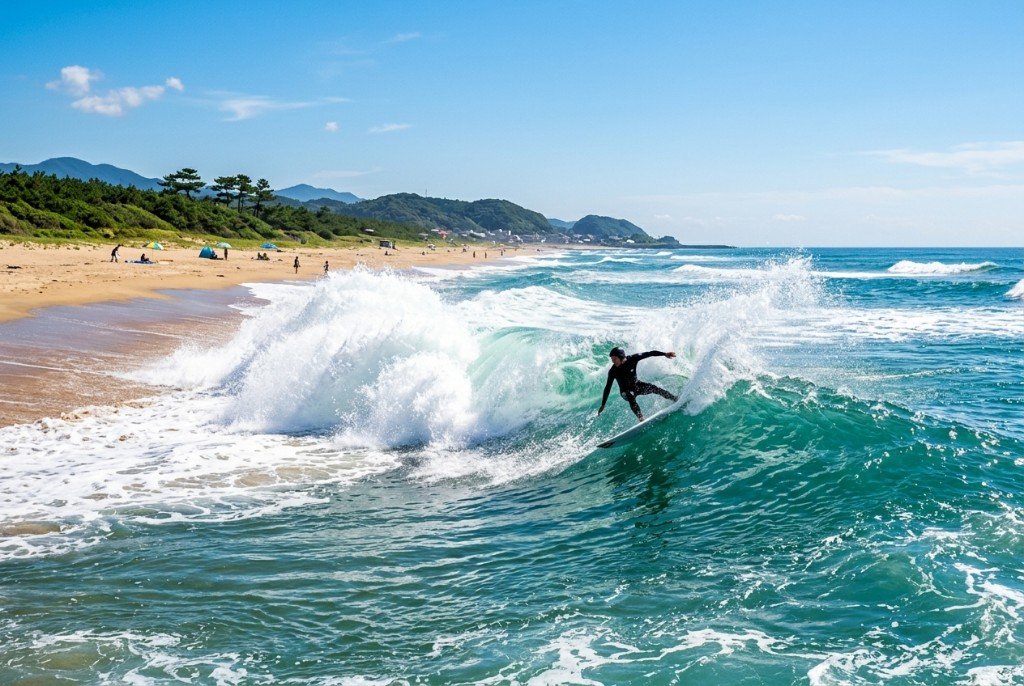
Ask any Kanto-based surfer where to go when the forecast lights up and the swell is pointing onshore from the Pacific, and Oarai will come up within the first two answers. An Oarai Ibaraki surf day trip has become something of a rite of passage for Tokyo surfers who don't own a car, don't want to drive three hours to Chiba's outer breaks, and just want to be in the water by mid-morning. Oarai sits on the Ibaraki coastline roughly 120 kilometers northeast of central Tokyo, where the Naka River empties into the Pacific and creates a dependable, sandy-bottom beach break that holds a wide range of swell directions.
What makes Oarai genuinely special isn't just the surf — it's the logistics. This is one of the only quality surf breaks in the Kanto region reachable by direct train with a board bag, no car required, and a walk of under fifteen minutes from the station to the sand. That combination of consistent waves and train-accessible convenience is why "oarai ibaraki surf day trip" is one of the most searched phrases among Tokyo's weekend surf community. Add in a working fishing port, a famous shrine gate rising out of the ocean, fresh seafood stalls, and even an aquarium for a non-surfing partner or kids, and you have a coastal town that rewards a full day, not just a quick paddle-out.
Beyond surfing, Oarai's beach and harbor infrastructure quietly support a broader ocean-sports culture — stand-up paddleboarding in the calmer inner bay, sea kayaking near the rock formations, and even light freediving around the port's rocky edges when visibility cooperates in late summer. Winter turns the region toward its inland ski areas a few hours further north, but for a same-day Tokyo departure, Oarai's identity is squarely about the ocean.
From Sacred Coastline to Surf Town: Oarai's Layered Past
Oarai's cultural weight predates surfboards by well over a thousandand years. The town's name is inseparable from Oarai Isosaki Jinja, a Shinto shrine first recorded in the 9th century and dedicated to Okunitama, a deity associated with healing and the sea. The shrine's most photographed feature, the Kamiiso no Torii, stands directly in the surf zone on a cluster of black rocks just offshore — a gate framing sunrise over open ocean that has drawn pilgrims and photographers for generations. Local surfers often paddle out within sight of this torii, and there's a quiet, almost ceremonial feel to sessions here that you don't get at Japan's more built-up surf towns like Shonan or Chiba's Ichinomiya.
The town's modern identity as a fishing and port community grew through the Edo and Meiji periods, when Oarai's harbor became a key stop for coastal shipping along the Hitachi coast. That fishing heritage is still visible today in the working port beside the surf beach, where boats unload the morning's catch just a short walk from where surfers are waxing boards. Surfing itself arrived in the region in the 1970s and 80s as Japan's domestic surf culture spread north from Shonan and Chiba, and Oarai's long, open beach — plus its rail connection via the Joban Line — made it a natural extension of Tokyo's surf map. In recent years, the town gained an unexpected second life as a pilgrimage site for fans of the anime "Girls und Panzer," which used Oarai as its setting; shopfronts throughout town still display character panels, giving the place an odd but charming layering of shrine tradition, fishing-port grit, surf culture, and anime tourism all within a few blocks of each other.
Getting There, Getting In the Water: The Practical Playbook
Getting to Oarai from Tokyo. The most reliable route for an Oarai Ibaraki surf day trip is via the JR Joban Line. Take a direct or rapid Joban Line train from Ueno Station to Mito Station (roughly 70–90 minutes depending on the service), then transfer to the Kashima Rinkai Railway Oarai Kashima Line to Oarai Station (about 15 minutes). Total door-to-sand time from central Tokyo is typically 2 to 2.5 hours. If you're driving, take the Joban Expressway north to the Mito-Higashi IC, then local roads to the coast — allow 2 hours outside of rush hour, and note that beachside parking lots fill up fast on good-swell weekends, so arrive early or have a backup lot in mind.
Board bags on trains. Japanese trains generally allow surfboard bags if wrapped and carried without inconveniencing other passengers; off-peak Joban Line trains are manageable, but avoid rush hour departures out of Ueno with a longboard. A dedicated board bag with wheels makes the station transfer at Mito far easier.
Where to surf. The main beach break sits directly in front of Oarai Station's exit, near the shrine and the Sun Beach area — this is the most consistent and beginner-friendly stretch. More experienced surfers often head slightly south toward the river mouth near the Naka River, where sandbars can produce punchier, faster waves, especially on a rising swell. Conditions are best on a moderate NE to SE swell with light offshore or cross-shore wind; Oarai is exposed to the open Pacific, so it can hold size well but also blow out quickly on strong onshore days — check a Japan-specific surf forecast the morning of your trip rather than the night before.
Rentals and gear. Several surf shops within walking distance of the station and beach rent boards, wetsuits, and boots by the day, and many offer lockers or changing facilities — useful since this is a day trip and you won't have a car to change discreetly in. Wetsuits are worth renting even in summer, since water temperatures rarely feel as warm as the beach itself. Bring reef booties if you plan to explore the rockier stretches near the torii or the harbor breakwater.
Season and water temperature. Water temperatures range from a brisk 10–13°C in deep winter (a 4/3 or 5/4 wetsuit with hood, gloves, and boots is essential) up to a comfortable 24–26°C in August, when a spring suit or even boardshorts will do on calm days. Typhoon season (August through October) brings the most powerful and consistent swells but demands caution and local knowledge of rip currents near the river mouth.
Food and facilities. After a session, the fish market stalls near Oarai's harbor (Uotanto Ichiba) serve some of the freshest sashimi and grilled seafood in the prefecture at a fraction of Tokyo prices. Public showers and rinse stations are available near the main beach entrance.
Reading the Swell Like a Local: Expert Tips for a Better Session
Experienced Kanto surfers treat Oarai as a swell-window play rather than a default spot — it rewards checking the forecast rather than just showing up. A few insights that consistently separate a good session from a wasted trip:
- Time your trip around the tide, not just the swell. Oarai's beach break tends to work best from mid to high tide; low tide can expose sandbars and create closeouts, especially near the river mouth. Cross-reference the tide chart with your train schedule before locking in a departure time.
- Watch the wind direction more than the swell height. A 1-meter swell with clean offshore wind will outperform a 2-meter swell battered by onshore chop. Because Oarai faces almost directly east, morning sessions before the sea breeze picks up in early afternoon are typically the cleanest.
- Use Mito as your weather-window buffer. If conditions look marginal, some locals ride the Joban Line only as far as Mito, check a live beach cam or call a local shop, and decide there whether to continue on to Oarai or divert elsewhere — a useful trick when a Tokyo-based forecast doesn't fully capture coastal Ibaraki conditions.
- Combine sessions with the harbor and shrine. Even non-surfing travel companions get a full day here: the Aqua World Oarai aquarium, the shrine torii at sunrise or sunset, and the harbor fish market make this one of the more well-rounded "surf plus" day trips near Tokyo, unlike more surf-only spots in Chiba.
- Respect the lineup etiquette. Oarai has a loyal local crew, particularly at the river-mouth peak. Standard Japanese surf etiquette applies — wait your turn, don't drop in, and a polite nod or "ohayo gozaimasu" on the paddle-out goes a long way toward a welcoming session.
Making the Most of Your Day on the Ibaraki Coast
An Oarai Ibaraki surf day trip works precisely because it compresses everything that makes coastal Japan worth visiting — living Shinto tradition, a working fishing port, and a genuinely fun, accessible wave — into a single train ride from Tokyo. It doesn't demand a car, a hotel, or a full weekend, which is exactly why it has become the go-to answer for Kanto surfers chasing a quick, satisfying escape from the city. Whether you're a beginner renting a soft-top for your first ocean session or an experienced surfer chasing a clean typhoon swell at the river mouth, Oarai rewards a little planning: check the tide and wind before you check the swell height, catch an early train to beat the afternoon sea breeze, and leave enough time afterward to wander the harbor market and pay a quiet visit to the torii standing in the surf. Do that, and Oarai delivers one of the best ocean days you can have from Tokyo without ever needing to stay overnight.
Was this page helpful?
Your feedback helps us improve our guides