
Ishigaki vs Miyako: Which Okinawa Island Wins Your Scuba Holiday?
📅 2026-09-22
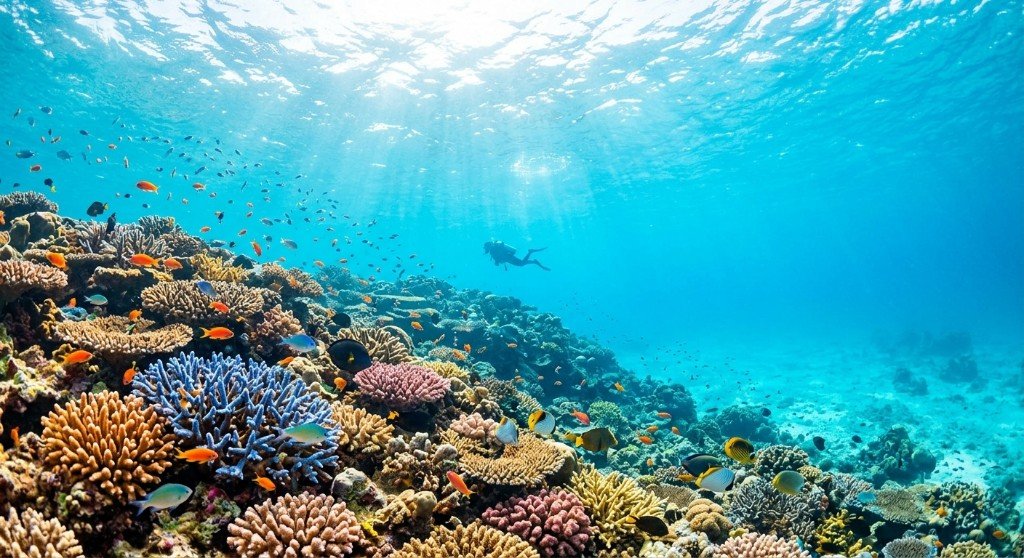
Who Should Choose Ishigaki, Who Should Choose Miyako
Every year divers land in Naha, transfer to a domestic flight, and ask the same question at the gate: Ishigaki or Miyako? Both islands sit in the southern Yaeyama and Miyako archipelagos of Okinawa Prefecture, both are warm-water reef diving with visibility that regularly tops 30 meters, and both get lumped together in "Okinawa scuba" searches. But they reward different kinds of divers, and picking the wrong one for your goals is the most common regret trip reports mention.
Ishigaki is the manta ray island. Kabira Bay's cleaning stations and the channels around the northern reefs host manta encounters that are close to guaranteed in season, and the island's dive culture is built around big-animal logistics — spotter boats, radio calls between operators, and dive plans that shift daily based on where mantas were seen that morning. If your bucket list has "swim with a manta" written on it in permanent marker, Ishigaki is the answer, full stop.
Miyako is the topography island. Its claim to fame is limestone-carved swim-throughs, arches, and cavern systems — Yabiji's undersea maze, the famous "Antonio Gaudi" formation named for its cathedral-like arches, and a string of blue caves near Irabu and Shimoji islands where sunlight shafts down through cracks in the rock ceiling. Divers who love technical navigation through swim-throughs, photographers chasing light beams in a cave mouth, and anyone who finds coral gardens more compelling than pelagics tend to prefer Miyako. It also has noticeably calmer, more current-sheltered bays on its west side, making it the gentler choice for newer divers or families mixing snorkeling with certified dives.
If you can only pick one and mantas are the priority, go Ishigaki. If cave and cavern diving with dramatic light is the priority, or you want calmer conditions for a mixed-ability group, go Miyako. If you have eight or more days, many divers do both — a fast ferry and short domestic flight connect them, and the contrast is part of the appeal.
Dive Site Conditions: Manta Cleaning Stations vs Cave Systems
Ishigaki's manta circuit. The core sites are Manta Scramble and Manta City in Kabira Bay's outer reef, both cleaning stations where mantas hover to have parasites picked off by wrasse. Depths run 10–18 meters, current can range from mild to brisk depending on tide, and boats typically anchor and let divers settle at a "manta point" to wait rather than actively chase the animals — patience matters more than fin technique here. Visibility averages 15–25 meters but can drop after heavy rain runoff, since Ishigaki's rivers feed directly into some bays. Water temperature swings from around 22°C in winter (needing a 5mm wetsuit or drysuit for comfort) to 29–30°C in summer (3mm or shorty is plenty).
Miyako's cave and arch network. Sites cluster around Irabu, Shimoji, and Kurima islands, connected to Miyako by bridges, which shortens boat transit time versus Ishigaki's channel crossings. Key dives include the Antonio Gaudi formation, the Grand Canyon-style Tsuji-ana channel, and multiple blue caves where the draw is ambient light rather than marine life density — expect swim-throughs from 5 to 25 meters, generally mild current inside sheltered bays, and some of the clearest water in Japan, with visibility regularly exceeding 30 meters since Miyako has almost no rivers to cloud the reef. This near-total absence of freshwater runoff is also why Miyako's water looks that surreal cobalt blue from the air — it's a geological quirk (the island is a raised coral limestone plateau, not volcanic, so there's no river system) rather than a lucky season.
Both islands require an Advanced Open Water certification or equivalent logged dives for the more current-exposed manta points and deeper cave penetrations; Open Water divers are welcome on shallower reef and cavern-mouth dives at both. Neither island permits solo cave penetration without cavern training — Miyako's overhead environments are cavern-style with visible exits, not full cave-diving requiring specialty certification, but guides still require a torch and buddy contact at all times.
Season and Access: Getting to Ishigaki and Miyako From Naha
Manta season on Ishigaki runs roughly May through November, peaking July–October when plankton blooms draw mantas to the cleaning stations most reliably. Winter (December–March) sightings drop off sharply, though whale watching becomes the consolation dive-boat activity in that window. Miyako's caves and reefs are diveable year-round since the appeal is topography rather than a migratory animal, but water clarity and calm seas peak April–October; winter brings stronger north winds that can close out the more exposed east-side sites, pushing boats to Irabu's sheltered west coast instead.
Typhoon season (roughly June–October, with August–September the statistical peak) affects both islands and can cancel boat diving for a day or two with little notice — build a buffer day into any itinerary during these months.
Getting to Ishigaki: the fastest route from Tokyo, Osaka, or Naha is a direct flight into New Ishigaki Airport (ISG). From Haneda or Narita it's roughly 3.5 hours direct on ANA or JTA in peak season, or a 1-hour hop from Naha. The airport sits about 20–30 minutes by taxi or hotel shuttle from Ishigaki's main dive-shop strip around Yashima and the harbor area — most operators will pick up directly from your accommodation.
Getting to Miyako: Miyako Airport (MMY) also has direct flights from Haneda (around 3 hours) and Naha (about 45 minutes), plus seasonal direct service from Kansai. The airport is close to central Hirara town, roughly 15 minutes by car to most dive shops and hotels. If you're island-hopping, a high-speed ferry does not currently run between Ishigaki and Miyako — the practical connection is a short domestic flight via Naha, so budget a half-day for the transfer if doing both on one trip.
Booking, Gear, and Etiquette for Both Islands
Book manta dives on Ishigaki at least 2–3 days ahead in peak season (July–September), since operators cap boat sizes and cleaning-station slots fill fast with repeat customers who track manta sighting logs. Ask your shop for their sighting rate over the past two weeks rather than a generic seasonal average — conditions shift week to week. For Miyako's cave dives, book with a shop experienced specifically in cavern guiding; not every general reef operator runs the technical sites, and light conditions inside the caves are best with a late-morning entry when the sun angle penetrates the cave mouths.
Gear: a dive light is non-negotiable for Miyako's caves even in daylight hours — bring your own compact primary light rather than relying on a rental, since beam quality affects both safety and your photos. For Ishigaki manta dives, a wide-angle camera setup (no strobe needed at cleaning-station depths) captures the animals better than a macro rig. Both islands rent full gear, but if you have your own mask and fins, bring them — rental sizing runs small and comfort matters most on days with 3–4 dives.
Etiquette: never touch or chase a manta — Ishigaki operators enforce a strict no-touch, no-flash-photography rule at cleaning stations and can end a trip early for repeat violators, since disturbed mantas abandon a station for the season. In Miyako's caves, buoyancy control is the etiquette that matters: silt kicked up off a cave floor can ruin visibility for the group behind you and takes many minutes to clear in an enclosed space.
Stay and food: Ishigaki's dive scene centers on Yashima-cho near the harbor, walkable to izakaya serving fresh maguro and Yaeyama soba after a boat day. Miyako's Hirara town has a similarly compact dive-and-dinner radius, and the island is also known for its own soba variant and for the beaches at Yonaha Maehama, worth a rest-day visit between dive days. Both islands see their dive shops close early (boats often leave by 8am for the best light and calmest seas), so plan late arrivals the night before your first dive day rather than the morning of.
Was this page helpful?
Your feedback helps us improve our guides