
Sea of Japan winter surf: Niigata and Toyama breaks
📅 2026-10-11
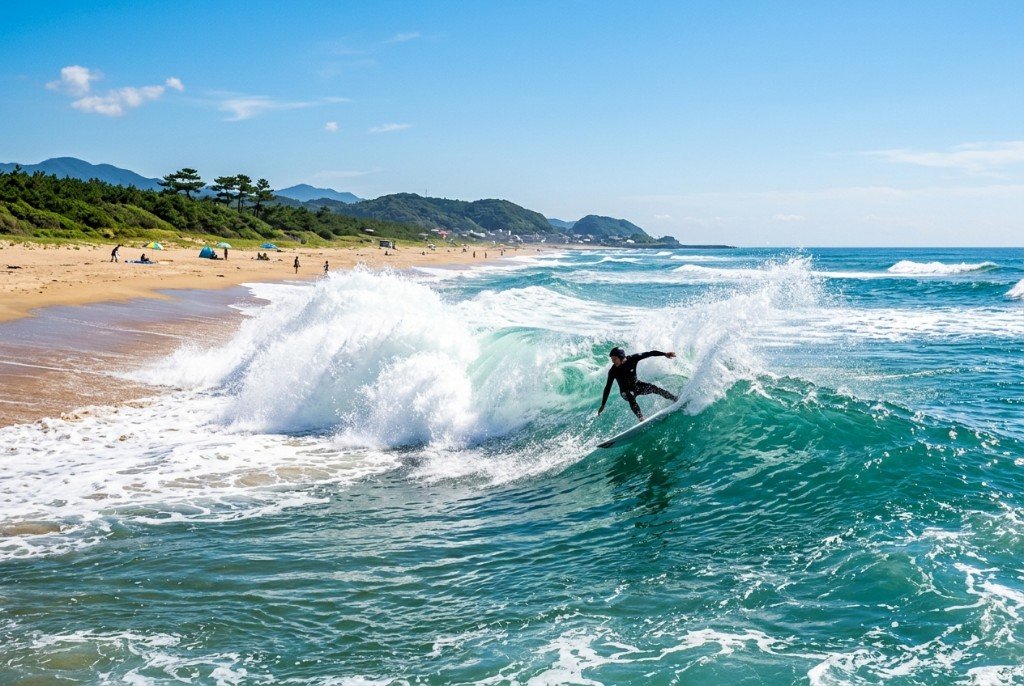
Who This Coastline Is For
Most visitors picture Japanese surf on the Pacific side — Shonan, Chiba, Miyazaki. The Sea of Japan coast, running through Niigata and Toyama prefectures, is a different animal entirely, and it rewards a different kind of surfer. This is winter surf country: the Siberian monsoon sweeps across the Sea of Japan from December through February, generating consistent wind swell that hits the Niigata and Toyama coastline with a punch most Pacific breaks only see during typhoon season.
This is not a beginner destination. The appeal is for intermediate-to-advanced surfers who want powerful, often hollow beach-break and river-mouth waves without the summer crowds of Chiba or Shonan. Water temperatures drop into the single digits Celsius in deep winter, air temperatures hover near freezing, and the swell window can close as fast as it opens. In exchange, you get empty lineups, sand-bottom peaks that would be mobbed anywhere near Tokyo, and a stretch of coast with its own quiet surf culture built by locals who've been riding these breaks since the 1970s, long before the rest of Japan's surf scene exploded.
Historically, this coast was a fishing and shipping corridor — Niigata City was one of Japan's original treaty ports opened in 1858, and Toyama's harbors fed the Kitamaebune trade route linking Osaka to Hokkaido. That maritime backbone is still visible in the breakwaters, jetties, and river mouths that now double as the sandbars and channels surfers rely on for structure. Understanding that the coastline was engineered for cargo ships, not surfers, helps explain why so many of the best peaks sit beside piers, jetties, and river outflows rather than on open, structureless sand.
Reading the Swell: Conditions Along the Niigata and Toyama Coast
The Sea of Japan swell mechanism is almost entirely wind-driven rather than groundswell-driven like the Pacific. A strong northwest monsoon flow (the "kita no kaze") blowing unobstructed across open water generates short-period, powerful wind swell that arrives with less warning than a Pacific groundswell but can pump for days once it's established. Watch synoptic charts for a deep low pressure system over the Sea of Okhotsk or northern Sea of Japan combined with a strong high over Siberia — that pressure gradient is what pushes wind across the water toward Niigata and Toyama.
Along Niigata, the breaks cluster around river mouths and jetty structures: areas near the Shinano River mouth and the beaches flanking Niigata City hold sandbars that shift year to year, so local knowledge matters more here than at a fixed reef. Further south toward Kashiwazaki and Joetsu, beach breaks pick up more open-ocean exposure and tend to be punchier and more consistent in a straight northwest wind swell. Toyama's coastline, wrapping around Toyama Bay, is more sheltered in spots — the bay's geography means swell has to wrap around the Noto Peninsula to the west, which can mellow out wave size compared to the fully exposed Niigata breaks but also create cleaner, more organized lines on the right day.
Expect short-period waves (6-9 seconds) that break with real speed and power — this is not the long, groomed groundswell of a Pacific winter storm. Boards suited to steep, fast beach break (shortboards with a bit of extra volume for the cold-water wetsuit bulk, or step-up boards on bigger days) work best. Rip currents near river mouths and jetties can be strong, especially after rain or snowmelt pushes extra volume through the outflow, so treat any river-mouth break with the same respect you'd give a flooded estuary anywhere else in the world.
Season and Access: When to Go and How to Get There
The surf season runs essentially opposite to what most visitors expect from "winter in Japan." December through February is peak swell season, with the most consistent and powerful wind swell arriving in January. Late autumn (November) and early spring (March) can still produce solid swells with milder air and water temperatures, making them a reasonable compromise if you want waves without the deepest cold.
Niigata is the primary hub. Niigata Airport has limited direct international service, so most travelers fly into Tokyo (Haneda or Narita) and connect onward. From Tokyo, the Joetsu Shinkansen runs directly to Niigata Station in about two hours, which is the fastest and most reliable way in during winter when mountain roads and flights can be disrupted by snow. If you're coming from Niigata to surf, a rental car from Niigata Station gives you access to the river-mouth breaks within 20-30 minutes and lets you chase the shifting sandbars that make or break a session.
Toyama connects via the Hokuriku Shinkansen, roughly two and a half hours from Tokyo Station through Nagano, or you can drive from Niigata along the coastal route in about two to three hours depending on winter road conditions. Toyama also has its own regional airport with a handful of domestic routes, useful if you're combining this trip with Kyoto or Osaka rather than Tokyo. A car is close to mandatory in Toyama since the better breaks are spread around the bay rather than clustered near the station.
Winter driving on this coast is genuinely serious — lake-effect-style snow dumps off the Sea of Japan can bury roads quickly, and rental cars should have winter tires (most agencies in the region fit them automatically by law from roughly December through March). Budget extra transit time and check road conditions the morning of any session.
Practical Tips: Gear, Booking, and Local Etiquette
Wetsuit and gear: A 5/3mm or thicker steamer with boots, gloves, and a hood is non-negotiable from December through February — water temperatures commonly sit between 6-10°C, colder than most surfers expect from Japan. Air temperatures near the coast regularly drop below freezing with wind chill, so pack a proper change-of-clothes system and a thermos; there's often nowhere warm to recover between sessions.
Booking and timing: Lodging in both Niigata and Toyama is inexpensive and flexible outside peak ski season, since most tourist traffic in winter heads to the mountains rather than the coast — book a business hotel near Niigata Station or a coastal minshuku (family-run guesthouse) in smaller surf towns, and plan to decide day-by-day based on the swell forecast rather than locking in a rigid itinerary. Track Japan Meteorological Agency marine forecasts and international swell models together, since local wind swell can be underestimated by generic global forecast models tuned for groundswell coasts.
Local etiquette: This is a small, tight-knit surf community, not a tourist-facing surf town. Lineups are often local-only in practice even if not in rule — be patient, don't paddle straight for the peak on your first wave, and a respectful nod or bow onshore goes a long way. Many of the river-mouth and jetty breaks are informally "owned" by regulars who've surfed them for decades; watching from the beach for 10-15 minutes before entering is standard practice and will tell you more about the current sandbar than any forecast.
Food and recovery: Niigata is famous for its rice and sake — a hot bowl of Niigata-style ramen or a post-session soak at a coastal onsen is the standard way to warm up after a winter session, and both are easy to find near the harbor towns. Toyama's seafood, particularly its winter shiroebi (white shrimp) and buri (yellowtail), is some of the best in Japan and makes a fitting reward after a cold, powerful session on the Sea of Japan.
Was this page helpful?
Your feedback helps us improve our guides