
First Powder Week in Niseko: Your Complete Guide to Lifts, Buses, and Hirafu Village Life
📅 2026-09-04
Introduction: Why Niseko Belongs on Every Powder Hunter's List
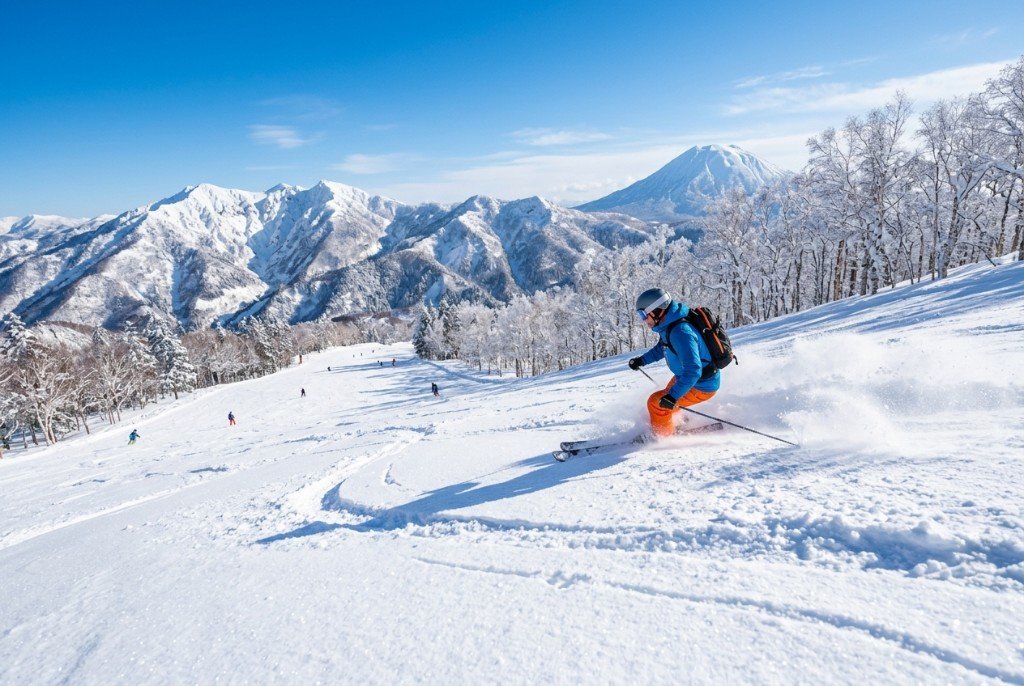
There's a specific kind of disorientation that hits first-time visitors during their first powder week in Niseko. It's not jet lag, though the flight from most Western countries will leave you groggy. It's the sensation of watching snow fall sideways for six consecutive hours while locals shrug and order another coffee. Niseko, on Japan's northern island of Hokkaido, receives an average of 14 to 15 meters of snowfall per season — a statistic so absurd that many skiers assume it's exaggerated marketing until they experience their first "Niseko dump" firsthand. This is not resort snow manufactured by machines and groomed into submission. This is Siberian cold fronts sweeping across the Sea of Japan, picking up moisture, and unloading dry, featherlight crystals onto four interconnected ski areas: Grand Hirafu, Hanazono, Niseko Village, and Annupuri, collectively marketed as Niseko United.
For newcomers, the appeal goes beyond snow quality. Niseko has become a genuine international ski culture hub, with a permanent expatriate community, Australian-owned restaurants, and a village infrastructure built specifically around the needs of visiting skiers and snowboarders. But that same popularity means logistics matter enormously. Understanding niseko powder week hirafu transport options before you arrive — which buses run when, how lift tickets are structured across the four resort zones, and where to base yourself in the village — can be the difference between a week of seamless powder mornings and a week of missed shuttles and overpriced taxi rides. This guide walks through everything a first-timer needs, from the historical roots of the region's ski culture to the specific bus routes that will get you to first tracks.
From Farming Village to Global Powder Destination: Niseko's Ski Heritage
Niseko's transformation is a story worth understanding before you strap on your boots, because it explains why the village feels the way it does today. The area takes its name from Mount Niseko-Annupuri, and skiing here dates back to the early 20th century, when Austrian and Swiss instructors introduced alpine techniques to Hokkaido in the 1910s and 1920s as part of Japan's broader modernization push. For decades afterward, Niseko remained primarily a domestic destination, beloved by Japanese families and known within Japan for its onsen (hot spring) culture as much as its skiing.
The pivot toward international fame began in the late 1990s and accelerated dramatically in the 2000s, when Australian skiers — searching for a Southern Hemisphere off-season alternative with reliable, deep powder — began arriving in numbers. Word spread quickly through ski forums and word-of-mouth networks: this was a place where you could genuinely ski face-shots on a random Tuesday. Australian investment followed, and Hirafu village, once a scattering of ryokan and small ski lodges, developed into a bilingual town with high-end condominiums, Western-style cafes, and a distinctly international après-ski scene, while still retaining Japanese staples like izakaya, ramen shops, and public bathhouses.
What makes this history relevant to your trip is the resulting hybrid culture. Niseko today operates on two overlapping systems — traditional Japanese resort etiquette (quiet lift lines, respect for groomed corduroy, careful boundary awareness) layered with an international, English-friendly tourist economy. Understanding this blend helps explain everything from the polite but firm signage about tree-well safety to the surprisingly good coffee shops tucked between traditional soba restaurants.
Getting There, Getting Around: Lifts, Buses, and Village Logistics
This is the section most first-timers wish they'd read before booking. Niseko's transport network has real structure to it, and mastering it early saves both money and precious powder time.
Reaching Niseko from the Airport
Most international visitors fly into New Chitose Airport (CTS) near Sapporo. From there, you have three realistic options: a direct airport shuttle bus (roughly 2.5 to 3 hours, bookable in advance and highly recommended during peak season), a private transfer, or the train-to-bus combination via Kutchan Station. During peak powder weeks in January and February, shuttle buses sell out days in advance, so reserve your seat before you land in Japan, not after.
Understanding the Lift Ticket System
Niseko United sells an all-mountain pass covering all four connected resort areas — Hirafu, Hanazono, Niseko Village, and Annupuri — accessible via a single gondola and lift network. For a first powder week, buy the multi-day all-mountain pass rather than single-resort tickets; the terrain access alone justifies it, since some of the best tree runs and sidecountry gates sit between resort boundaries. Tickets are sold at booths and increasingly through IC card systems (similar to Japan's transit cards) that you tap at each gate, which speeds up lift lines considerably compared to paper tickets. Buy your pass online in advance when possible — it's cheaper and skips the ticket-counter queue on your first powder morning, when every minute matters.
The Hirafu Shuttle and Public Bus Network
Hirafu village transport runs on two parallel systems. The first is the free resort shuttle bus, run by the various lodging and resort operators, which loops between accommodations and the base lifts every 15 to 20 minutes during operating hours. Most hotels and condos post shuttle schedules at the front desk — grab one on arrival. The second is the Niseko Hirafu public bus and the Niseko United inter-resort shuttle, which connects Hirafu to Hanazono, Niseko Village, and Annupuri. This inter-resort shuttle is essential if you're staying in Hirafu but want to explore Annupuri's mellower groomers or Hanazono's terrain park on a different day.
A few practical tips: buses fill up fast on powder mornings, so aim to be at your stop 10 to 15 minutes before departure. Schedules shift between weekday and weekend, and early/late season timetables run less frequently than peak-season ones, so always check the current board rather than relying on a printed schedule from a prior trip. Taxis are available but expensive and limited in number during storm days, so treat them as a backup, not a primary plan.
Where to Base Yourself
Hirafu remains the most convenient village base for first-timers, thanks to its density of restaurants, gear shops, grocery stores, and direct lift access. Niseko Village offers a quieter, more ski-in/ski-out resort feel with fewer nightlife options. Annupuri is the most laid-back and least crowded, appealing to families or those prioritizing quiet over convenience. For a first powder week, Hirafu's walkability and transport connectivity make it the easiest starting point, letting you skip reliance on bus timing for your morning lift access.
Expert Recommendations for Your First Powder Week
Seasoned Niseko regulars tend to repeat the same handful of pieces of advice to newcomers, and they're worth internalizing rather than learning the hard way.
First, get to the lifts early — not for the lift line, which is generally manageable, but because Niseko's cat tracks and traverses to prime tree runs get skied out by mid-morning on powder days. Locals and repeat visitors are often lined up before opening on the biggest storm days.
Second, invest in a guided backcountry or sidecountry tour for at least one day if you're an intermediate-to-advanced rider. Niseko's gated backcountry access points lead to legendary terrain, but avalanche conditions in Hokkaido's maritime snowpack can be unpredictable, and a local guide dramatically improves both safety and route-finding efficiency.
Third, rent avalanche safety gear (beacon, probe, shovel) even for sidecountry gates, and check the daily avalanche and weather report posted at each resort's information center before heading out. Ungroomed and gated terrain in Niseko is genuinely backcountry-adjacent, not resort powder in disguise.
Fourth, budget buffer time into your transport plans. Whether it's the airport shuttle, inter-resort bus, or a dinner reservation across the village, Hokkaido's heavy snowfall regularly slows road conditions, and locals build in extra time as a matter of course.
Finally, learn a few basic Japanese phrases even though English is widely spoken in Hirafu. Staff and locals consistently respond warmly to visitors making the effort, and it smooths interactions at smaller, more traditional restaurants outside the main tourist strip.
Conclusion: Making the Most of Your First Niseko Powder Week
A first powder week in Niseko rewards preparation without punishing spontaneity — the terrain and snow quality are forgiving enough that even modest planning around lifts, buses, and village logistics pays enormous dividends. Book your all-mountain lift pass and airport transfer in advance, base yourself in Hirafu for maximum flexibility, learn the shuttle and inter-resort bus schedules early in your trip, and don't underestimate how quickly deep powder days can fill up both the mountain and the buses carrying people to it. Handle those logistics up front, and the rest of your week becomes exactly what draws skiers back to Niseko year after year: quiet snowfall, endless tree runs, steaming onsen evenings, and some of the lightest, most consistent powder anywhere in the world.
Was this page helpful?
Your feedback helps us improve our guides