
Scuba Certification in Japan: Open Water Diver (OWD) Guide for Okinawa & Izu - JPFun Guide
📅 2026-08-19
Why Japan Is an Unexpectedly Brilliant Place to Learn to Dive
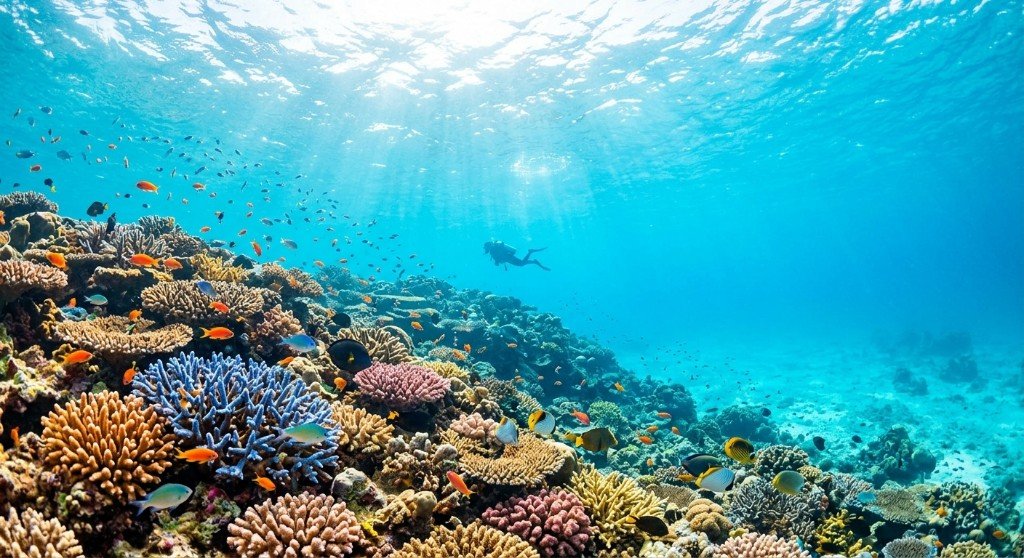
When people picture scuba diving, they usually imagine Thailand, the Philippines, or the Great Barrier Reef — not Japan. Yet Japan is quietly one of the most compelling places in Asia to complete a scuba certification, and for good reason. The country sits at the crossroads of the warm Kuroshio Current and colder northern waters, producing an astonishing range of dive environments within a single nation: coral gardens in Okinawa that rival anywhere in the Pacific, volcanic drop-offs in the Izu Peninsula just a few hours from Tokyo, hammerhead shark schools off the Yaeyama Islands, and even drift dives among schooling barracuda near Kerama. For a first-time diver, this diversity means your Open Water Diver (OWD) course doubles as an introduction to some of the most photogenic underwater terrain in the world.
Getting a scuba certification in Japan also solves a logistical problem many travelers don't anticipate: language and safety standards. Japanese dive schools are held to extremely high safety and maintenance standards, instructors are meticulous about briefings and equipment checks, and an increasing number of shops — especially in Okinawa, Izu, and around Tokyo Bay — offer full English-language instruction. This makes Japan an ideal base for combining a genuine, systematic dive education with a broader ski, surf, or camping itinerary, since many of the best dive regions overlap with Japan's other outdoor hubs.
This guide walks through what an OWD course in Japan actually involves, why the country's diving culture developed the way it did, how to choose a dive school, and what experienced instructors wish every beginner knew before their first open water dive.
A Brief History of Diving Culture in Japan
Japan's relationship with the ocean floor is far older than recreational scuba diving itself. Long before certification agencies existed, coastal communities in places like Toba (Mie Prefecture) and the Noto Peninsula practiced ama freediving — a centuries-old tradition, primarily carried out by women, of diving without tanks to harvest pearls, abalone, and seaweed. Some ama lineages trace back over 2,000 years, and a small number of practitioners still dive using traditional techniques today. This deep cultural familiarity with the sea helped lay the groundwork for how Japan approached diving once modern scuba equipment arrived in the mid-20th century.
Recreational scuba diving took off in Japan in the 1960s and 70s, closely tied to the postwar boom in domestic tourism and the opening of Okinawa's reefs to mainland visitors after the islands reverted to Japanese administration in 1972. Okinawa's Kerama Islands, with visibility often exceeding 30 meters, quickly became the country's diving heartland. Meanwhile, the Izu Peninsula — with its volcanic seascape and proximity to Tokyo — developed as the "backyard dive site" for Japan's largest metropolitan population, giving rise to some of the highest concentrations of dive shops per capita anywhere in the country.
Japan's diving industry professionalized rapidly, adopting international standards from PADI, NAUI, and SSI while layering on distinctly Japanese standards of discipline: rigorous equipment checks, conservative dive planning, and an emphasis on group harmony and safety briefings. This is part of why many divers who train in Japan describe the experience as unusually thorough compared to certifications rushed through in some budget diving destinations abroad.
How to Get Your Open Water Diver Certification in Japan: Practical Steps
Earning an OWD certification in Japan follows the same globally recognized framework used almost everywhere — most schools are affiliated with PADI, SSI, or NAUI — but the logistics and setting are distinctly Japanese. Here's how the process typically unfolds.
1. Choose your certifying agency. PADI is the most common choice among Japan's dive schools, especially those catering to international travelers, because its materials and eLearning modules are available in English. SSI and NAUI are also well represented, particularly in Okinawa. All three produce a certification recognized worldwide, so choose based on the specific dive school and schedule rather than the agency brand.
2. Complete the academic module. Every OWD course begins with theory covering dive physics, physiology, decompression theory, and equipment. Most reputable dive schools now offer this as eLearning you complete before arriving in Japan, which is highly recommended — it frees up your time in-country for actual diving rather than classroom hours.
3. Confined water training. Before open water, students practice core skills — mask clearing, regulator recovery, buoyancy control, controlled ascents — in a pool or a calm, shallow bay. In Japan, some shops in Izu and Okinawa use naturally sheltered coves for this stage instead of pools, which lets beginners get comfortable with real ocean conditions (mild current, sand, visibility) earlier in their training.
4. Open water dives. The certifying portion requires four open water dives over a minimum of two days, during which you demonstrate the skills learned in confined water under an instructor's supervision. This is where Japan's dive schools shine: your certification dives might happen over volcanic boulder fields in Izu, coral bommies in the Kerama Islands, or drift sites in the Yaeyama archipelago near Ishigaki.
5. Certification issuance. Once you've completed both the knowledge exam and all four dives, your instructor submits your certification, which typically arrives digitally within days and as a physical card by mail a few weeks later.
Where to do it: For beginners, Okinawa (particularly the Kerama Islands and Ishigaki) offers the warmest water (24–29°C depending on season) and best visibility, making skill practice less stressful. The Izu Peninsula is the most convenient for anyone based in Tokyo, with dive towns like Ito, Atami, and Izu-Oshima reachable by train or ferry in under three hours. Okinawa is best from spring through autumn; Izu can be dived year-round with a wetsuit or drysuit in colder months.
Expert Recommendations for Choosing a Dive School and Making the Most of Your Course
Instructors and experienced divers consistently offer a few pieces of advice to first-timers pursuing certification in Japan:
- Prioritize English-language capability if you're not fluent in Japanese. Confirm before booking whether briefings, safety instructions, and paperwork will be conducted in English — most shops in tourist-heavy diving regions like Okinawa and Izu can accommodate this, but it's worth confirming directly rather than assuming.
- Complete eLearning before you arrive. This is the single biggest time-saver. Arriving with the academic portion finished means your entire trip can be spent diving instead of sitting through lectures.
- Ask about class size. Japanese dive schools tend to run small groups (often 2–4 students per instructor), which is a genuine safety advantage — don't assume this is universal elsewhere, and use it as a selection criterion when comparing schools.
- Consider water temperature and exposure protection. Even in Okinawa, water can be cool outside of summer; in Izu, a 5mm wetsuit or drysuit is often necessary outside peak season. A good school will size and provide this gear, but ask in advance.
- Combine certification with a broader outdoor itinerary. Japan's compactness is a genuine advantage: divers based in Izu can pair a dive weekend with surfing at nearby breaks like Shimoda, while Hokkaido-bound travelers sometimes bookend a winter ski trip with a summer dive certification in Okinawa on a separate visit. Thinking of Japan as a full outdoor playground — not just a ski or dive destination — tends to produce the most memorable trips.
- Build in a buffer day. Weather and swell can delay open water dives by a day, especially in typhoon season (roughly June to October). Schools will reschedule rather than compromise safety, so don't book your OWD course on the final days of a trip.
Conclusion: Your Underwater Chapter Starts Here
Getting a scuba certification in Japan offers something rare: a rigorous, safety-first training environment layered onto some of the most varied underwater landscapes in the Pacific, all wrapped inside a country that also happens to be one of the world's great destinations for skiing, surfing, and camping. Whether you choose the coral-fringed waters of Okinawa's Kerama Islands or the volcanic drop-offs a short train ride from Tokyo in Izu, your OWD course will be shaped by decades of diving culture that traces back to the ama pearl divers of centuries past and forward to today's internationally certified dive schools.
Take the time to choose a school that fits your language needs and pace, finish your academic work before you land, and treat your four open water dives not just as a certification requirement but as your genuine introduction to Japan's underwater world. Once you surface with your card in hand, you'll have access to dive sites across the entire country — and a new lens through which to see every future trip to Japan's coastlines.
Who This Course Suits (and Quick Tips)
This OWD course works well for complete beginners, families traveling together, and skiers or surfers already exploring Japan's outdoors who want to add a dive certification to the same trip. You don't need prior diving experience, though basic swimming comfort helps.
- Book an English-speaking instructor in advance, especially outside Okinawa and Izu
- Bring your own mask if you have one; rental gear is common but personal fit helps
- Allow a buffer day or two, since sea conditions can shift training schedules
- Confirm the certification agency (PADI, NAUI, SSI) matches what you plan to use later
Was this page helpful?
Your feedback helps us improve our guides