
When to Dive Okinawa: The Month-by-Month Guide to Water Temperature & Visibility
📅 2026-09-14
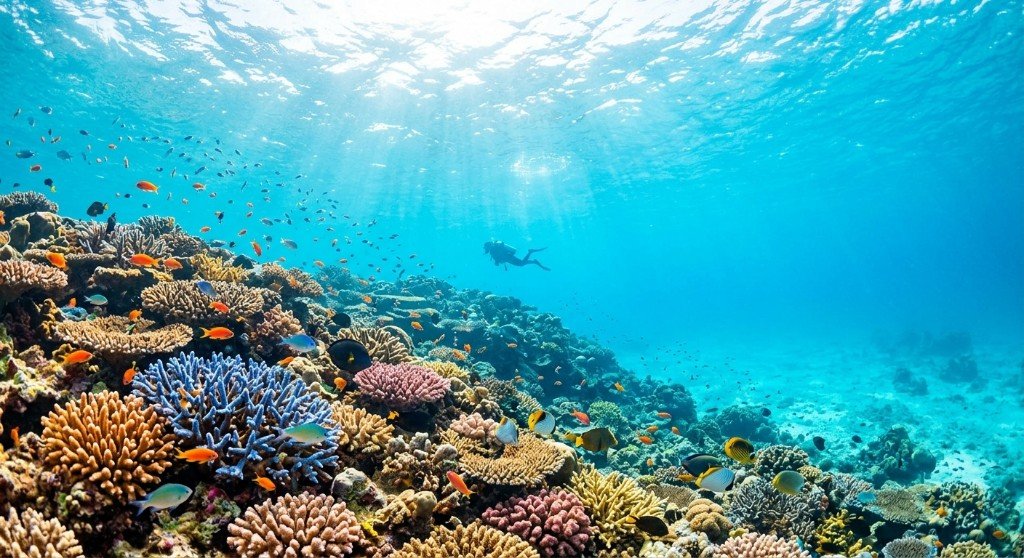
Introduction: Japan's Subtropical Dive Frontier
Mention scuba diving in Japan and most people picture cold-water wrecks off Izu or kelp forests near Hokkaido. Okinawa breaks that stereotype entirely. Sitting closer to Taipei than to Tokyo, this string of subtropical islands — Okinawa Honto, the Kerama Islands, Miyako, Ishigaki, and the remote Yaeyama chain — sits inside the Kuroshio Current, a warm oceanic river that sweeps up from the Philippine Sea and bathes the reefs in clear, blue, current-fed water for most of the year. This is precisely why the okinawa scuba season is one of the longest and most forgiving in the Asia-Pacific region, and why understanding water temperature and visibility patterns month by month is the single most useful piece of planning you can do before booking flights and boats.
Unlike destinations with one brutally short weather window, Okinawa gives divers a real choice. You can dive here in January in a 5mm wetsuit and still see 20-meter visibility on a good day, or dive in August in board shorts with visibility pushing 30 meters on the outer reefs. But "diveable" and "optimal" are different things, and the difference comes down to three variables that shift throughout the year: sea temperature, typhoon frequency, and plankton bloom timing, all of which directly affect what you'll see and how comfortable you'll be seeing it. This guide breaks the year into practical windows, explains the oceanography behind the numbers, and gives you concrete advice on where to go and when, whether your priority is manta rays, hammerhead schools, coral spawning, or simply the clearest water Japan has to offer.
Why Okinawa's Waters Behave This Way: Currents, Coral, and Monsoon Timing
Okinawa's underwater climate is shaped by geography most visitors never think about. The islands sit at roughly 24–26°N latitude, technically within the Tropic of Cancer's influence, which is why the reef-building coral here — some of the healthiest and most extensive in Japanese waters — rivals parts of Southeast Asia despite being administratively part of Japan. Historically, the Ryukyu Kingdom that once governed these islands built its trade economy around exactly this ocean, and today's dive culture inherits a deep, working relationship with the sea: local dive shops are often family businesses passed down for generations, and many boat captains can read reef conditions from cloud patterns and swell direction the way farmers read soil.
The Kuroshio Current is the real engine behind the diving conditions. It flows northeast past the Yaeyama and Kerama Islands, carrying nutrient-poor, exceptionally clear oceanic water that gives Okinawa its famous visibility — often 20 to 40 meters on the outer walls, a figure that rivals or beats many tropical destinations further south. This same current also keeps winter water temperatures milder than Okinawa's latitude would suggest, rarely dropping below 20°C even in the coldest months.
Two seasonal forces complicate the picture. First, the East Asian monsoon pushes strong northeast winds across the islands from December through March, which can churn nearshore water and make boat crossings choppy even when underwater visibility stays decent. Second, typhoon season, roughly July through October, brings the risk of multi-day dive cancellations and can temporarily crash visibility near shore due to runoff and swell, even though it doesn't affect the offshore water temperature at all. Understanding these two systems is the key to interpreting any month-by-month breakdown of okinawa scuba season conditions.
How-To: Reading the Calendar and Choosing Your Dive Window
Winter (December–March): 20–24°C, hammerheads and manta season This is the coldest window, with water temperature dipping to around 20–21°C at its lowest in February. A 5mm full wetsuit or a semi-dry suit is standard; some divers add a hood and gloves for repetitive days. The payoff is scalloped hammerhead shark season, particularly around Yonaguni Island, where divers descend to deeper, current-swept plateaus for a chance at passing schools from December through March. Visibility during this stretch is often excellent, frequently 25–30 meters, since plankton density is low and there's less shore runoff, though wind chop can make surface conditions rougher and cancel boat trips more often than in summer.
Spring (April–May): 22–25°C, the sweet spot before peak season Water warms steadily through spring, and by May a 3mm wetsuit is usually sufficient. This is widely considered by local instructors to be one of the best-kept-secret windows: pre-typhoon calm seas, visibility regularly in the 25–35 meter range, and none of the summer crowds or premium pricing. Manta ray sightings around the Kerama Islands and Ishigaki's Kabira Bay area remain strong into early spring before tapering as water warms further.
Early summer (June–early July): 26–28°C, coral spawning and warm, calm water June is arguably the single best all-around month for many divers. Water temperature climbs into shirt-sleeve comfort (a 3mm or even shorty wetsuit works for most people), the rainy season (tsuyu) typically wraps up by late June, and mass coral spawning events — synchronized reef-wide releases of coral eggs and sperm timed to the full moon — occur here as they do throughout the wider Ryukyu-Coral Triangle region, drawing specialist dive trips. Visibility is strong, generally 20–30 meters, before summer plankton blooms thicken the water later in the season.
Peak summer (Late July–September): 28–30°C, warmest water, typhoon risk This is when water temperature peaks, often reaching a bathwater-like 29–30°C, comfortable in just a rash guard for many divers, though reef-safe sun protection becomes essential given the strong UV exposure at the surface. Visibility can still be excellent on offshore sites (25–30+ meters near Yaeyama and Kerama), but this is also peak typhoon season, and storms can force multi-day itinerary changes with little notice. Book flexible dates and travel insurance if diving in this window, and always confirm boat operators' cancellation policies before paying deposits.
Autumn (October–November): 25–27°C, the shoulder-season insider's pick Water is still warm, typhoon frequency drops off by late October, and visibility often rebounds to its clearest as summer plankton blooms settle. Many experienced Okinawa divers consider November the year's most underrated month: comfortable 3mm wetsuit temperatures, thinning crowds, and visibility frequently exceeding 30 meters on outer reef walls.
Expert Recommendations for Matching Sites to Season
Local dive operators consistently steer trips by matching site exposure to seasonal current strength and swell direction rather than by calendar month alone, and it's worth asking your shop directly which reef faces are protected on a given day. For hammerhead encounters, prioritize Yonaguni between January and March and dive early morning boats, when shark activity and water clarity both tend to be best before wind picks up. For manta rays, the Kerama Islands' cleaning stations are productive nearly year-round but peak from spring through early summer. If coral spawning is your goal, work directly with a shop that tracks the lunar calendar precisely, since the exact date shifts each year and only a narrow window around the full moon in June (sometimes July) produces the event.
Experienced instructors also flag two often-overlooked practical points. First, water temperature and air temperature are not the same story: Okinawa's air stays humid and warm into November, so surface intervals feel pleasant even when the water itself has cooled into the mid-20s, meaning you shouldn't judge wetsuit needs by how the weather looks from your hotel window. Second, visibility on any single day is also driven by very local, short-term factors — recent rainfall, boat traffic, and tidal exchange — so even in an objectively "good" month, a site can have an off day, and a flexible, multi-site itinerary across three or four days evens out the variance far better than a single day trip.
Conclusion: Picking Your Personal Best Month
There is no single "best" month for scuba in Okinawa — there's a best month for your priorities. Cold-tolerant divers chasing hammerhead schools should target January through March despite the 20°C water and choppier seas. Anyone prioritizing warm water, easy comfort, and strong all-around visibility should look at June or November, both of which combine settled seas with excellent clarity and manageable crowds. Divers building a trip around peak warmth and long surface intervals in a swimsuit should accept the typhoon-season trade-off and travel with flexible dates in August. Whichever window you choose, Okinawa's combination of Kuroshio-fed clarity, healthy reef structure, and a genuinely long dive season makes it one of the most reliable subtropical diving destinations anywhere in Japan, and increasingly, in the wider region.
Was this page helpful?
Your feedback helps us improve our guides