
Flying to Japan with Ski Bags: Airline Rules, Fees, and Smart Packing
📅 2026-09-22
Who This Guide Is For
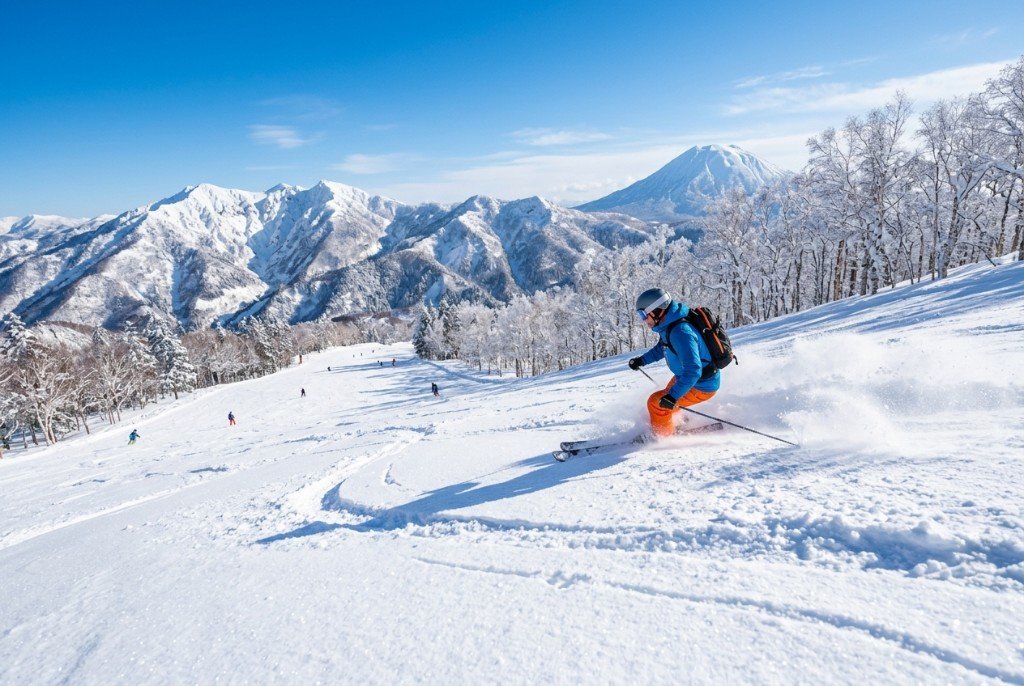
If you're planning a ski or snowboard trip to Japan — whether it's the deep powder of Niseko, the tree runs of Nozawa Onsen, or a lesser-known field like Chino Ski Area or Ohmachi Ski Area — the first logistical hurdle isn't the lift ticket or the rental car. It's getting your ski bag onto the plane without a nasty fee shock at check-in. This guide is for travelers flying internationally into Japan with skis, snowboards, or boot bags, especially those connecting through a major Japanese hub before heading onward to regional snow resorts. It's written for anyone comparing airlines, weighing checked-bag costs against renting gear locally, or trying to figure out how ski bag policies interact with Japan's excellent but bag-space-limited train network. What makes flying with ski gear into Japan distinct is the layered logistics: an international flight with its own sporting-equipment rules, a possible domestic connection with different (often stricter) baggage allowances, and then a final leg by train, bus, or rental car that has its own space constraints for bulky items.
Airline Sporting Equipment Rules and Fee Structures
Every airline treats ski and snowboard bags differently, and the difference between a free checked item and a $150 oversize fee often comes down to details most travelers miss until they're standing at the counter.
How airlines classify ski bags: Most full-service international carriers (ANA, Japan Airlines, United, Air Canada, Qantas, Cathay Pacific) treat a single ski bag containing skis, poles, and boots — or a snowboard bag with boots — as one piece of checked baggage, provided it's within standard weight limits (usually 23kg/50lb in economy, sometimes 32kg/70lb in premium cabins). The key distinction is whether the airline counts it against your standard baggage allowance or requires a separate "sporting equipment" fee regardless of your ticket's included bags.
Airlines that typically waive extra fees for one ski/board bag:
- ANA and JAL (Japan's own carriers) generally allow one ski or snowboard set as part of the normal checked allowance on international routes, which is a strong argument for booking with them directly if your itinerary allows it.
- Air Canada and United often permit ski equipment as one of your included checked bags rather than charging a separate sporting fee, though this varies by fare class.
Airlines that charge separately regardless of ticket type:
- Many US low-cost and some full-service carriers (American, Delta on certain fare buckets) classify ski bags as "special items" with a flat fee ($30–$200+) on top of your checked baggage allowance, even in premium economy or business class on lower fare tiers.
- Budget carriers connecting within Asia (Peach, Jetstar Japan, Scoot) almost always charge extra for oversize sporting equipment and often cap total dimensions tightly — check before booking a domestic connector to a regional airport near your resort.
Weight and size limits to watch: Most ski bags fall under the 200–300cm linear dimension caps international carriers use for "long items," but combined ski + boot bags can push you over standard weight limits fast, especially with boots, helmets, and layers stuffed in. Weigh your packed bag at home; airport rebooking rooms rarely have accurate scales that work in your favor.
The registration trick: Many airlines require you to "register" sporting equipment during online check-in or by calling ahead — failing to do so can trigger a walk-up fee that's 2–3x the pre-booked rate. Always check the specific airline's sporting equipment policy page and register your ski bag when you book or at least 48 hours before departure.
Season, Access, and the Domestic Connection Problem
When to go: Japan's ski season generally runs from late November through early April, with peak powder conditions from January through mid-February in Hokkaido and the Japan Alps. Early and late season (late November, March) can offer thinner crowds and cheaper flights, though snow reliability is more variable outside Hokkaido.
Getting into Japan: The two major international gateways for ski travelers are Narita (NRT) and Haneda (HND) in Tokyo, and Chitose Airport (CTS) near Sapporo for direct Hokkaido access. If your resort is in Hokkaido (Niseko, Rusutsu), flying directly into Chitose eliminates a domestic connection entirely — a major advantage for ski bag logistics, since you avoid a second airline's baggage rules and a second round of oversize fees.
The domestic connection reality: If you're headed to a Honshu resort — Nagano-area fields like Chino Ski Area or Ohmachi Ski Area, or backcountry zones like Okutone Snow Ridge — you'll likely land in Tokyo and either take a domestic flight, the Shinkansen, or a rental car onward. Domestic Japanese carriers (ANA, JAL) tend to mirror their international sporting equipment policies, but low-cost domestic options can be stricter and less accommodating of bulky ski bags in overhead or gate-check scenarios.
Shinkansen and train alternatives: Japan's bullet trains do not have dedicated ski storage like European trains sometimes do. Oversized luggage (including ski bags) technically requires advance reservation of an "oversized baggage" seat on some Shinkansen lines, with fines for unreserved oversized items. If your route from Tokyo to a Nagano or Niigata resort involves the Shinkansen, reserve your oversized luggage space when you book train tickets, not as an afterthought.
Time from hub to slope: From Haneda or Narita, expect roughly 2–3.5 hours by Shinkansen plus local transfer to reach Nagano-area resorts, and 1–1.5 hours by direct flight plus a 1–2 hour bus or shuttle to reach most Hokkaido resorts from Chitose.
Practical Tips: Booking, Packing, and the Rent-vs-Fly Decision
Book the ski bag fee at the same time as your flight. Airlines rarely offer discounts for adding sporting equipment after the fact, and pre-registered bags almost always cost less than walk-up fees. If you're using an online travel agent, call the airline directly to confirm the sporting equipment policy actually applied to your fare class — OTAs frequently misquote these fees.
Consider renting or shipping gear instead. Japan has excellent, affordable ski and snowboard rental shops at nearly every resort, including full setups for advanced skiers. If your total round-trip ski bag fees exceed roughly $150–$200, renting locally often wins on both cost and convenience, especially if you're also carrying scuba, surf, or camping gear on the same trip and want to minimize checked-bag chaos. Some travelers also use door-to-door luggage forwarding services (takkyubin) within Japan to send ski bags ahead from the airport directly to their hotel, skipping the train/bus leg with bulky equipment entirely — this is a genuinely underused trick for anyone routing through Tokyo with a long onward train journey.
Pack boots separately if weight is tight. Ski boots are often the heaviest single item; putting them in a separate carry-on backpack can keep your ski bag under weight thresholds and avoid triggering overweight fees, which are usually charged independently from oversize fees.
Protect your gear and label clearly. Padded ski bags reduce damage claims, and a name/phone tag survives baggage handling better than a paper tag alone. Photograph your gear before departure in case you need to file a damage or loss claim with the airline.
Mind connection minimum times. Oversized sporting equipment is more likely to be mishandled or delayed on tight international-to-domestic connections in Japan. Build in at least 90 minutes at Narita or Haneda if you have a same-day domestic connector, since ski bags are sometimes routed through oversize baggage handling that takes longer than standard bags.
Etiquette on Japanese trains and buses: Space is tight, and ski bags are bulky. Use the designated oversized luggage racks where available, avoid blocking aisles, and consider off-peak trains if you're hauling a full ski bag plus a duffel — rush-hour trains in Tokyo are not built for gear-heavy travelers.
Whether you're flying direct into Chitose for Hokkaido powder or connecting through Tokyo toward the Nagano backcountry, the difference between a smooth trip and an expensive, stressful one usually comes down to confirming your airline's sporting equipment fee structure before you book — and having a backup plan (rental, forwarding service, or checked boots-only) if the numbers don't add up.
Was this page helpful?
Your feedback helps us improve our guides