
Ski Rental Japan vs Packing Your Own Boots: The Complete Gear Guide
📅 2026-08-22
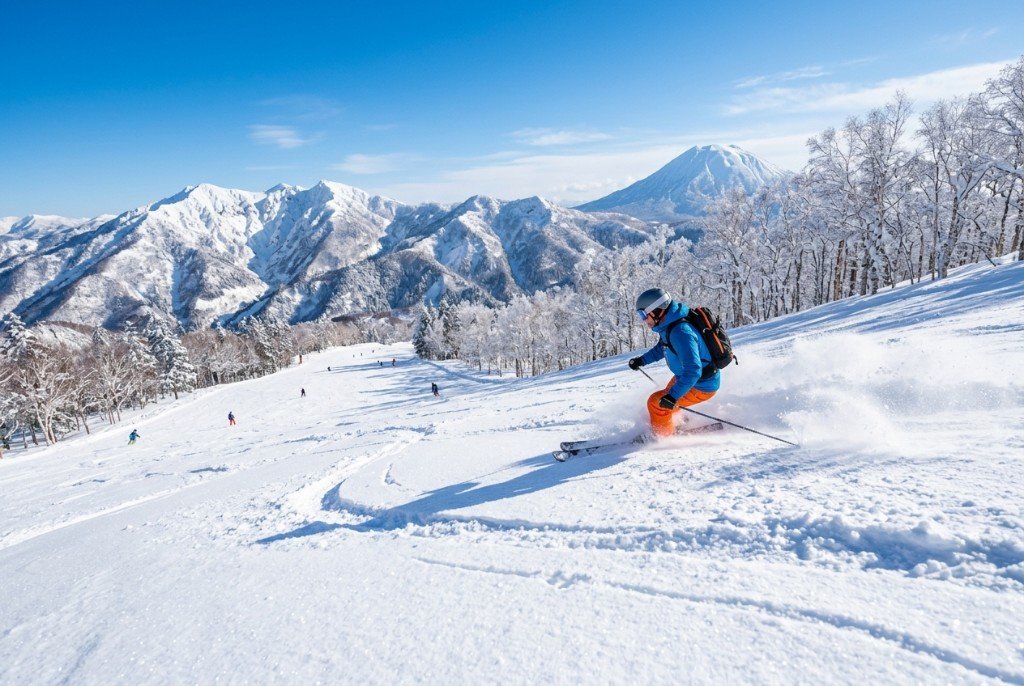
Introduction: The Baggage Fee vs. Backcountry Comfort Dilemma
Every winter, thousands of skiers and snowboarders touch down in Chitose, Narita, or Komatsu wrestling with the same question: do you check two bulky ski bags through customs and train connections, or do you land light and rent everything from boots to poles once you arrive? Japan's powder — the legendary "Japow" of Niseko, Hakuba, Nozawa Onsen, and Myoko — draws visitors from Australia, North America, and Europe every season, and gear logistics are consistently one of the most-searched practical questions among them. There is no single right answer. The decision hinges on your trip length, your foot shape, your budget, how many resorts you're hitting, and whether you're flying budget carriers with strict baggage allowances or a full-service airline that treats ski equipment kindly. This guide walks through the real trade-offs of ski rental in Japan versus bringing your own gear, with a particular focus on the one piece of equipment that causes the most anxiety: boots.
Japan's ski culture is unusual in a global context because it combines world-class infrastructure with a still-strong domestic rental economy, meaning rental shops are everywhere, well-stocked, and used to serving international visitors of all shoe sizes — a claim that wasn't always true a decade ago. Understanding how that rental market evolved helps explain why the calculus has shifted for many travelers.
From Domestic-Only Fleets to International-Ready Rental Counters
Japan's ski industry boomed domestically from the 1970s through the 1990s, when resorts like Niseko and Hakuba served an almost entirely Japanese clientele. Rental fleets during that era were sized for Japanese feet and builds, and international visitors — a small minority — often struggled to find boots above a men's US size 10 or women's US size 8. This is part of why the stereotype of "bring your own boots to Japan" became so entrenched in ski forums and travel guides: it was genuinely good advice in 2005.
The Niseko boom of the 2000s, driven heavily by Australian visitors seeking reliable snowfall during their own off-season, forced a rapid transformation. Rental shops in Hokkaido and Nagano began importing wider size ranges, plus-size boot lasts, and higher-flex options to match a more diverse, often larger-framed international customer base. By the 2010s, shops in major resort towns had genuinely global inventories, including performance-level demo skis from Rossignol, Salomon, Atomic, and Japanese brand Ogasaka, alongside boot-fitting services that rival what you'd find in Colorado or the Alps. Smaller, more remote resorts (Myoko's backcountry-adjacent zones, parts of Tohoku) still carry more limited stock, which is a key variable in the decision below.
How-To: Choosing Between Renting and Packing, Step by Step
Step 1: Audit your airline's sports equipment policy. Full-service carriers like ANA, JAL, Qantas, and Air Canada typically allow one ski/snowboard bag as part of standard checked baggage at no extra charge, or for a modest fixed fee (often 3,000–8,000 yen equivalent). Budget and low-cost carriers (Jetstar, Scoot, AirAsia) charge steep per-kilo overweight and oversize fees that can exceed 15,000–25,000 yen each way. Calculate this cost before deciding — it's the single biggest variable.
Step 2: Decide on skis and boards separately from boots. For most travelers, this is the real fork in the road. Japan's resort rental shops (Niseko, Hakuba, Nozawa, Furano, Zao) stock excellent demo-quality skis and boards, often refreshed each season, at roughly 4,000–7,000 yen per day for a mid-to-high performance package (skis/board, poles, boots). If you're not deeply attached to a specific ski's flex pattern, renting skis is almost always the more practical call — you skip baggage fees, avoid dragging equipment through train stations and taxi trunks, and get to try Japan-tuned powder skis (wider waist, softer flex) that perform better in the deep, light snow than your all-mountain skis from back home.
Step 3: Treat boots as the exception. This is where the keyword "packing boots" earns its keep. Boots are the one item where bringing your own is frequently the smarter move, for three reasons: (1) a properly fitted boot with molded liners or custom footbeds is difficult to replicate with a same-day rental; (2) boots pack relatively small and light compared to skis, so the baggage-fee penalty is much lower; (3) ill-fitting rental boots are the leading cause of ruined ski days, from blisters to numb toes to knee pain from poor forward flex alignment. If you have wide feet, high volume feet, custom orthotics, or any history of boot-fit problems, pack your own boots even if you rent everything else.
Step 4: Reserve ahead if renting, especially for larger sizes. During peak season (late December through February, and again in March for spring corn snow), rental inventory in Niseko and Hakuba runs tight. Book online through resort-affiliated shops or rental chains like Rhythm Japan, Ski Base, or Hakuba Rental Station at least two to three weeks ahead, and specify your boot size, ski ability level, and preferred ski width. Walk-in rentals are still possible but limit your selection, particularly for boots above US men's 11.5 or women's 10.5.
Step 5: Consider delivery services for a middle path. Companies operating in major resort areas will deliver rental skis, boards, and boots directly to your hotel or vacation rental before you arrive and pick them up after checkout. This removes the need to carry gear through Tokyo or New Chitose Airport transit at all, effectively giving you the convenience of renting with the comfort of gear waiting exactly when you need it.
Step 6: For multi-resort trips, weigh cumulative rental costs. If you're skiing more than 10–12 days across a single base resort, renting daily can approach or exceed the cost of a budget ski package, at which point buying (or bringing) becomes financially competitive — but this rarely applies to boots, which remain cheap and light enough to always justify packing if fit matters to you.
Expert Recommendations
Seasoned Japan skiers and snowboard guides consistently repeat a few pieces of advice worth internalizing:
- Bring boots, rent everything else, unless you're a specialist. This is the dominant recommendation across ski touring guides in Hakuba and Niseko backcountry operators. Powder-specific skis rented locally (Japan-tuned, often 100mm+ underfoot) will usually outperform a narrower all-mountain ski shipped from home.
- Pack a thin pair of ski socks and your own footbeds even if you rent boots. A well-fitted liner does most of the work, but your own moisture-wicking socks and aftermarket footbeds meaningfully improve comfort in rental shells.
- Scuba divers and surfers visiting Okinawa or Shonan after a ski trip should apply the same logic to wetsuits and fins: rent bulky, low-fit-sensitivity gear like BCDs and tanks locally, but bring your own mask, boots (dive boots), and fins if you have fit or comfort issues, exactly as with ski boots. The same principle — rent volume items, pack fit-sensitive items — holds across ski, dive, surf, and even camp gear (rent a tent, pack your own sleeping bag liner).
- If backcountry touring, bring your own boots and skins regardless. Touring bindings, boot-to-binding compatibility, and skin trim are too specialized for reliable day-of rental in most Japanese resort towns outside a handful of specialist shops in Hakuba and Niseko.
- Check resort-specific size charts before booking. Niseko United, Hakuba Valley, and Nozawa Onsen rental affiliates publish size availability online; confirming before you fly avoids a frustrating scramble on day one.
- Factor in JR rail and shinkansen luggage rules if your itinerary includes bullet trains between Tokyo and Nagano-area resorts — oversized ski bags may require reserved oversized-baggage seating, another reason renting skis locally simplifies transit-heavy trips.
Conclusion: Pack Smart, Rent Smart
The rent-versus-pack decision for a Japan ski trip isn't binary, and the best-informed travelers treat it as an item-by-item calculation rather than an all-or-nothing choice. Renting skis and snowboards in Japan has become genuinely excellent — well-tuned, powder-appropriate, and inexpensive relative to baggage fees — making it the default recommendation for most visitors. Boots remain the clear exception: if you know your foot shape, have any history of fit issues, or simply value the confidence of a boot molded to your feet, packing your own boots is worth the extra suitcase weight. Apply the same rent-the-bulk, pack-the-fit-sensitive logic whether you're chasing Hokkaido powder, diving Okinawa's reefs, surfing Shonan's breaks, or camping in the Japanese Alps, and you'll spend less time managing gear and more time enjoying exactly why you flew to Japan in the first place.
Was this page helpful?
Your feedback helps us improve our guides