
Typhoon Swell Surfing in Japan: The Safety Checklist Every Surfer Needs
📅 2026-09-22
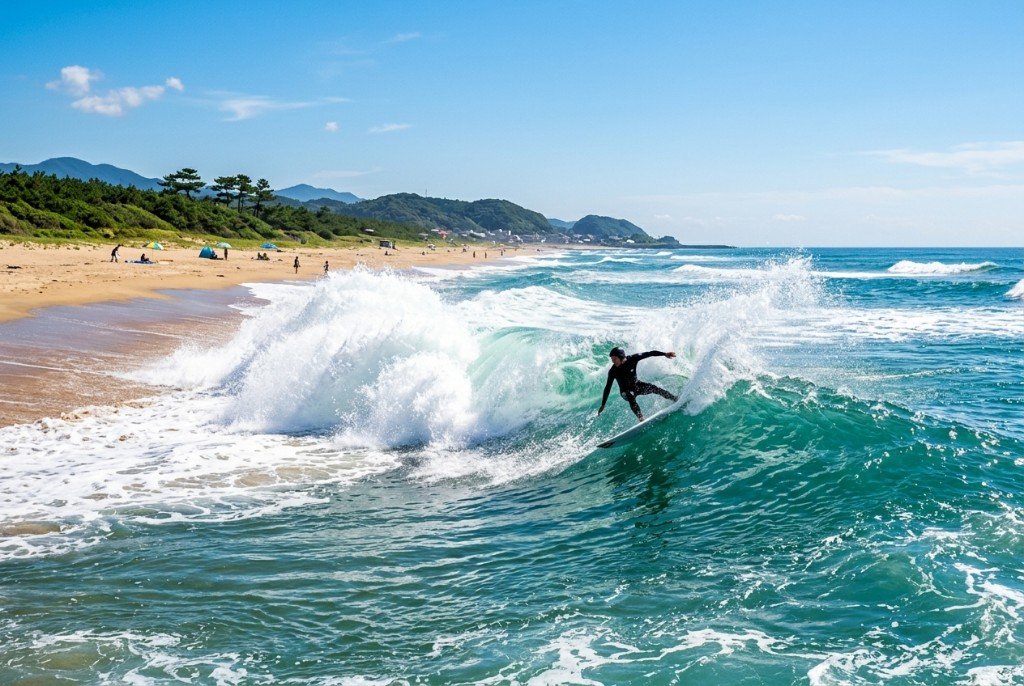
Why Typhoon Swell Is Different From Any Other Surf in Japan
Japan's coastline is mostly a wind-swell and small-groundswell environment for ten months of the year. Then, from roughly July through October, typhoons spinning up in the tropical Pacific send long-period groundswell up through Chiba, Shikoku, Kyushu, and Okinawa, and for a few days the country turns into one of the more exciting — and dangerous — surf zones in Asia. This guide is for intermediate-to-advanced surfers who already have paddle fitness and wave judgment in windswell conditions and want a structured way to think about typhoon swell surf in Japan safety, not a beginner's first-time-in-the-ocean primer.
Typhoon swell surfing in Japan sits in a strange cultural space. Local surf communities in places like Ichinomiya (Chiba), Shonan, and Miyazaki have generations of experience reading typhoon charts, and many break spots have informal networks — surf shop owners, lifeguard associations (raifu-sēbā), and fishing cooperatives — who post flag warnings or close beach access when a storm track gets too close. Respecting these local systems is not optional. Japan's beach culture leans heavily on collective safety norms; a foreign surfer paddling out past a red-flagged closure is not just risking their own life, it's straining the volunteer lifeguard and coast guard resources that locals rely on, and it can sour relations for the whole visiting surf community.
What makes this genuinely different from typhoon surfing elsewhere is the geography: Japan's continental shelf drops off quickly in places (parts of Shikoku's Pacific coast, the Miyazaki coastline, and Chiba's Kujukuri) so long-period swell can jump from flat to overhead within 12–18 hours, and the same low-pressure system bringing the swell often arrives onshore with the surf, meaning wind quality degrades fast. You're not just chasing swell — you're racing a closing weather window.
Reading Conditions: Swell, Wind, and the Storm Track
The core skill in typhoon swell surfing is separating "swell" from "storm." The wave energy from a typhoon radiates outward well ahead of the storm center, so the best days are usually 24–72 hours before the typhoon's closest approach, while the storm is still 500–1,000 km offshore and the sky is still mostly clear. Once the storm track brings the eye within a couple hundred kilometers, wind chop, rain squalls, and onshore gale conditions ruin the surface and the danger profile changes from "big but clean" to "big and violent."
Practical steps to check before every session:
- Track the Japan Meteorological Agency (JMA) typhoon bulletins and cross-reference with a swell model (Windy, Surfline, or Magicseaweed-style charts) to see when peak swell period arrives relative to the storm's forecast landfall or closest approach.
- Check swell period, not just height. A 1.5 m wave at 16 seconds carries vastly more power and produces far stronger rips and shorebreak than a 1.5 m wave at 8 seconds. Typhoon groundswell frequently runs 14–20 seconds.
- Watch the tide. Many of Japan's typhoon-swell beach breaks (Kujukuri, Shonan, Miyazaki's Kisakihama) get dangerously shallow and close-out prone at low tide when swell is large; mid-to-high tide is usually safer for paddling out and getting picked off by rips.
- Identify rip current formation. Typhoon swell creates strong channel rips next to jetties, river mouths, and sandbar breaks. Local lifeguards often mark these with flags in July–August but staffing drops sharply after the official beach season ends in late August, exactly when the best typhoon swells of September and October arrive — meaning the most exciting swells often come with zero lifeguard coverage.
- Know your exit strategy before paddling out. In typhoon-sized surf, currents and shifting peaks can pull you far down the beach. Pick a landmark exit point and communicate it to whoever you're surfing with.
- Never surf alone in typhoon swell. Point breaks like Shikoku's Ikumi or the reef and point setups around Miyazaki can produce serious hold-downs on bigger sets; a surf partner who can flag down help is a baseline safety requirement, not an extra.
Typhoon Season Timing and How to Get to Japan's Swell Coasts
Season window: Japan's typhoon season runs roughly June through November, with the most consistent and surfable groundswell activity from late August through October. Early-season (June–July) typhoons tend to track further south and produce smaller, shorter-period swell; peak season (September) typically delivers the most reliable long-period groundswell to Chiba, Shikoku, and Kyushu simultaneously. By November, water temperatures start dropping and storm frequency tapers off.
Chiba (Kujukuri / Ichinomiya) — closest hub to Tokyo: Fly into Narita or Haneda, then it's about 60–90 minutes by car or a combination of the JR Sobu/Togane Line to Ichinomiya or Mobara Station, followed by a short taxi or bus to the beach. This is the most accessible typhoon-swell coast for anyone based in or transiting through Tokyo, and it's the spot the Japanese pro surf circuit uses for exactly this reason — Kujukuri's exposed, sand-bottomed coastline picks up typhoon groundswell efficiently.
Shonan (Kanagawa) — Tokyo day-trip option: About 60 minutes from central Tokyo via the JR Tokaido or Odakyu lines to Fujisawa or Enoshima. More sheltered than Chiba in some swell directions, but convenient if you're staying in Tokyo and want to check conditions without committing to an overnight trip.
Shikoku (Ikumi, Tokushima / Kochi coasts) — for bigger, cleaner point surf: Fly into Tokushima Awaodori Airport (from Haneda, ~80 minutes) or Kochi Ryoma Airport, then rent a car — the good typhoon-swell points here are spread along the coast and public transit won't get you to the breaks at dawn when conditions are cleanest. Budget a full travel day either side of your swell window.
Miyazaki (Kyushu) — Japan's most typhoon-exposed coast: Fly directly into Miyazaki Airport (about 90 minutes from Haneda or Osaka). Miyazaki sits closest to the typical typhoon approach paths from the Philippine Sea, so it often sees swell first and biggest. Car rental is strongly recommended since the best breaks are scattered along 30–40 km of coastline south and north of the city.
Because typhoon tracks can shift 24–48 hours before landfall, book flexible flights or trains where possible, and treat any Kyushu or Shikoku typhoon-chasing trip as a 4–5 day window rather than a fixed single day, so you have buffer to reposition if the storm track moves.
Booking, Gear, and Etiquette for a Safe Typhoon Swell Trip
Booking: Accommodation near Japan's better typhoon-swell breaks (Ichinomiya, Ikumi, Miyazaki) is often run by small family-owned surf guesthouses that fill up fast once a promising storm appears on the forecast — many international surfers now watch the same JMA and swell models you are. If you see a typhoon track developing 5–7 days out, book refundable accommodation immediately and cancel if the swell window doesn't materialize; last-minute typhoon-chasing accommodation in Miyazaki or Shikoku is very limited.
Gear checklist specific to typhoon conditions:
- A step-up board (1–2 sizes larger volume than your everyday shortboard) for the added power and period of typhoon groundswell.
- A leash rated for bigger surf — typhoon swell power breaks standard leashes more often than everyday conditions.
- A 3/2mm or 2mm wetsuit for September–October water temps (still warm, roughly 24–27°C, but long sessions in powerful surf drain body heat faster).
- Reef booties if you're surfing Shikoku or Miyazaki's reef and rock-shelf setups.
- A whistle or waterproof phone case — cell coverage is generally strong along Japan's coast, and being able to call for help or signal a partner matters when conditions deteriorate quickly.
Etiquette and local respect: Always check with local surf shops or lifeguard stations (where still staffed) before paddling out in visibly building swell — they will often tell you directly if a spot is currently too dangerous, and this local knowledge is more current than any app. Many Japanese surf communities operate an unspoken seniority and localism at popular breaks; a friendly greeting, patience in the lineup, and deferring waves to locals who surf the spot daily goes a long way, especially as a visiting surfer showing up specifically because a big swell is forecast. If a beach has a red flag, a rope barrier, or a closure sign posted by the town or Japan Coast Guard, that closure is enforced with real fines in some prefectures and should be treated as absolute, not a suggestion.
Food and recovery: After demanding typhoon-swell sessions, coastal towns like Ichinomiya and Miyazaki have strong surf-cafe cultures — expect fresh seafood donburi, onigiri from convenience stores for a quick pre-dawn check, and craft coffee shops that open early specifically for the surf crowd. Refueling properly matters more than usual here: typhoon sessions burn far more energy than typical Japan wind-swell days due to the added paddling against current and bigger wave faces.
The single most important safety principle in typhoon swell surfing in Japan is this: the best day is rarely the biggest day. Target the window 1–2 days ahead of peak typhoon approach, respect every local closure signal, surf with a partner, and always have a plan for what happens if the swell outgrows your ability mid-session.
Was this page helpful?
Your feedback helps us improve our guides