
Tanegashima surfing trip: ferry, reefs, and wind windows
📅 2026-10-11
Why Tanegashima Is Worth the Ferry Ride
Most surfers planning a Japan trip default to Shikoku, Chiba, or Miyazaki. Tanegashima — a long, narrow island off the southern tip of Kyushu, best known internationally for the Japan Aerospace Exploration Agency's rocket launch site — gets skipped because it takes an extra travel leg to reach. That's exactly why it's worth it. The island faces open Pacific swell with almost none of the crowd pressure you'd find at a mainland break of similar quality, and its east-facing reef and point setups hold shape at sizes that would be unsurfable mush closer to Tokyo or Osaka.
Tanegashima surf culture is small, local, and friendly rather than clique-y — there's no lineup politics to navigate because there usually isn't a lineup. The island's other claim to fame, the Tanegashima Space Center, means you may genuinely watch a rocket contrail over the horizon while waiting for a set, which is a strange and memorable bonus nowhere else in Japan's surf map offers. Culturally, the island has long functioned as a maritime waypoint — it's historically significant as the site where Portuguese traders first introduced firearms to Japan in 1543, and that seafaring, outward-facing identity still shapes the pace of life: fishing boats, ferry schedules, and tide tables matter more here than train timetables.
This guide is for intermediate-to-advanced surfers comfortable reading reef bathymetry and willing to be flexible with ferry-dependent logistics, not beginners looking for a soft beginner beach with a surf school on every corner.
Reading the Reefs and the Wind Windows
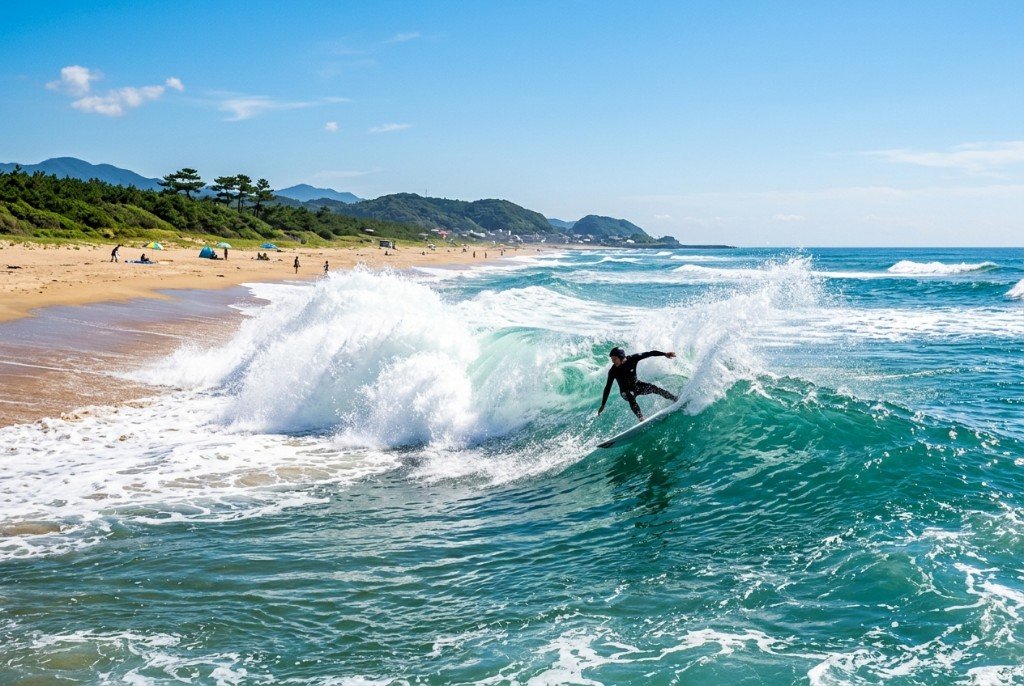
Tanegashima's surf is split between the east coast, which catches raw Pacific swell directly, and more sheltered pockets on the west and south that work when wind or swell direction makes the east coast blown out. The east-facing reef passes produce the island's best waves — hollow, reef-bottom rights and lefts that need a clean groundswell (typically generated by distant typhoon activity or winter North Pacific low-pressure systems) rather than short-period windswell to show their real shape. On a clean swell with light morning wind, these reefs can hold solid, punchy faces well overhead; on a disorganized swell they turn into closeout chop fast, so swell period matters more here than raw height.
Wind is the variable that makes or breaks a Tanegashima session. The island sits exposed enough that afternoon onshore sea breeze is a near-daily pattern much of the year, which means dawn patrol isn't just a nice-to-have — it's often the only clean window of the day. Check wind forecasts the night before and plan to be in the water within an hour of first light; by mid-morning, glassy reef faces routinely turn to chopped-up wind swell. During typhoon season, watch for the pattern where offshore or light wind precedes an approaching system — that pre-typhoon window can deliver the best, groomed swell of the season, but requires watching storm tracks closely and backing off well before conditions turn dangerous.
Because breaks are spread along both coasts, having a car and a local wind-and-swell read (or a local surf shop's advice) matters more than chasing a single named spot. Treat the island as a rotation: check the east reefs at dawn, and if wind has already turned onshore, pivot to a west or south-facing pocket that's now sheltered.
Season and Access: Getting to Tanegashima From a Real Hub
The practical gateway hub is Kagoshima, on the southern tip of Kyushu. From Kagoshima you have two realistic routes to Tanegashima:
- High-speed ferry (Toppy/Rocket jetfoil): around 1.5 hours from Kagoshima port to Nishinoomote, Tanegashima's main port town. This is the standard choice for surfers hauling boards, though board bags on jetfoils require checking with the ferry operator in advance for size allowances and extra fees.
- Flight: roughly 35–40 minutes from Kagoshima Airport to Tanegashima Airport, faster but pricier and less practical with multiple board bags.
To reach Kagoshima itself from Tokyo or Osaka, fly directly into Kagoshima Airport (around 2 hours from Tokyo, under 1.5 hours from Osaka), or take the Kyushu Shinkansen down from Hakata (Fukuoka) in about 1.5–2 hours, then transfer to the ferry terminal.
Seasonally, Tanegashima's most consistent swell window runs from late summer through autumn (roughly August through October), when typhoon-generated groundswell tracks through the region — this is peak season for experienced surfers chasing size and power, but also the window requiring the most caution around storm timing. Winter (December–February) brings more consistent North Pacific swell with cooler water and wind, good for surfers who prioritize wave quality over warmth. Spring and early summer tend to be the flattest, most beginner-friendly stretch, with smaller, gentler waves and the calmest overall conditions — a better fit if you're bringing a non-surfing travel partner or want to pair surf mornings with diving or beach time.
Rent a car on arrival in Nishinoomote — public transit on the island is sparse, and checking multiple breaks across coasts in one morning is only realistic with your own vehicle.
Booking, Gear, and Local Etiquette
Book your Kagoshima–Tanegashima ferry crossing in advance during typhoon season and peak summer, since sailings can be limited or cancelled with a few hours' notice when swell and wind pick up — build a buffer day into your itinerary rather than a same-day return. Confirm board bag policies with the ferry operator directly; jetfoil cargo space is limited, and some sailings cap the number of oversized bags per crossing.
Gear-wise, bring a reef-capable board setup (a bit more volume than you'd run on a beach break, given the punchy reef takeoffs) along with reef booties if you're not confident about your foot placement on shallow sections — many of the east coast passes have exposed rock and coral-adjacent reef at lower tides. A spring suit or shorty covers most of the warm season; a fuller wetsuit is worth packing for winter sessions when water temperatures drop noticeably compared to mainland Kyushu's southern beaches.
Etiquette-wise, the local surf community is small enough that visitors are noticed quickly — a friendly greeting, patience in the water, and not crowding the one or two other surfers out at a reef pass goes a long way. Ask at the one or two surf shops in Nishinoomote about current conditions and which breaks are firing; locals are generally open with directions once they see you're respectful rather than scoring-obsessed.
For food and stay, Nishinoomote town has simple guesthouses and minshuku (family-run inns) rather than resort-style hotels — book these directly or through a Japanese booking site, since English-language availability is limited. Fresh seafood, particularly flying fish (tobiuo) dishes, is a local specialty worth building a post-surf lunch around. Given the island's rocket-launch tourism, checking the Tanegashima Space Center's public launch schedule before you go is worth doing even if you're not planning to visit — launch days bring a noticeable but temporary spike in island traffic and lodging demand.
Was this page helpful?
Your feedback helps us improve our guides