
Shirahama and Wakayama surf for Kansai weekenders
📅 2026-10-11
Who This Is For: Kansai Surfers Without a Shikoku Budget
If you live in Osaka, Kyoto, Kobe, or anywhere else in the Kansai region and you've been eyeing the long drive to Shikoku or Kyushu every time you want a real surf weekend, Shirahama and the Wakayama coastline solve a problem you probably didn't realize had such a simple fix. This stretch of the Kii Peninsula sits close enough to Osaka for a Friday-night train and a Sunday-evening return, yet it holds enough variety in its beach breaks and points to keep an intermediate surfer busy for years.
Shirahama specifically is not a surf-only destination — it's one of Japan's oldest hot spring resort towns, with records of imperial visits dating back to the Nara period and mentions in the Manyoshu, Japan's earliest poetry anthology. That history matters for a weekend trip because it means the infrastructure around the beach — ryokan, public bathhouses, seafood restaurants — was built for leisure travelers centuries before surfing existed. You get the laid-back pace of an onsen town layered on top of a legitimate surf destination, which is a rare combination in Japan. This is squarely a shirahama wakayama surf kansai weekend trip: compact, doable without a car if needed, and forgiving if the swell doesn't cooperate, since the town itself is worth the trip.
The crowd here splits into two groups: Kansai locals doing weekly dawn patrol runs on weekdays off, and weekend visitors from further afield combining a surf session with sightseeing — Shirahama's Sandanbeki cliffs, Senjojiki rock shelf, and the famous white-sand Shirarahama Beach are all a short walk or taxi ride from the main surf breaks. If you want a trip that works even when the ocean is flat, this is it.
Conditions: Breaks, Sandbars, and What the Swell Actually Does Here
Wakayama's coast faces the Pacific directly, which means it picks up swell that larger landmasses to the west and south often block from the Seto Inland Sea side of Japan. The main breaks worth knowing:
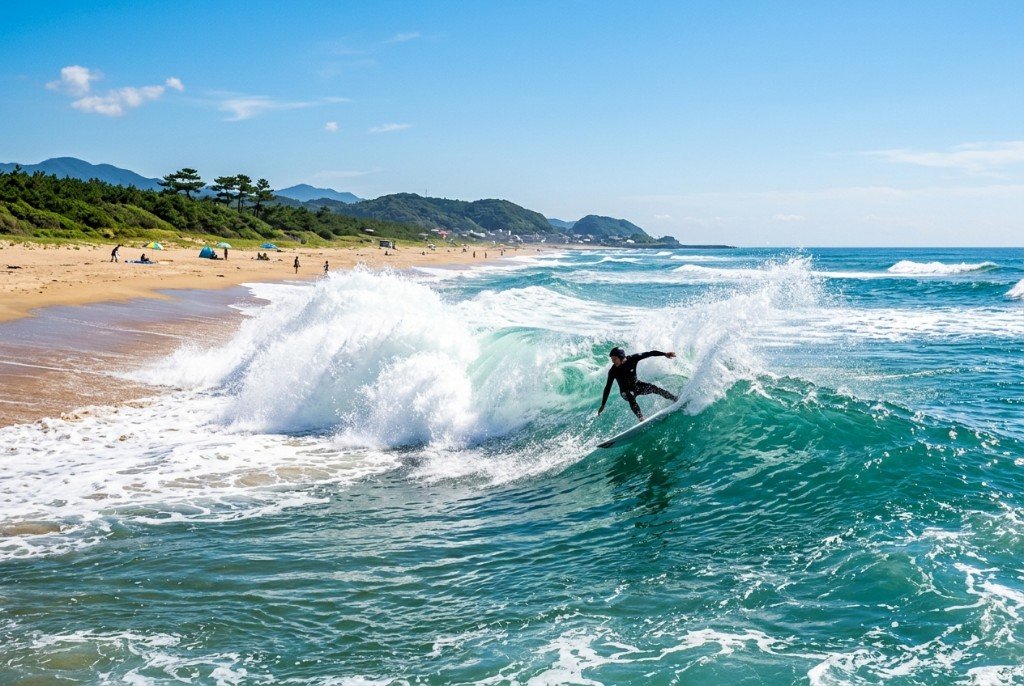
Shirahama area beach breaks — Sandy bottom, beginner-to-intermediate friendly, with peaks that shift depending on sandbar formation after typhoon season. Best on a mid-size south or southeast swell with light morning wind. Crowds are manageable outside of August weekends.
Kada and the Kii Channel points — Closer to Wakayama City, these spots pick up more consistent wind swell and work well when the bigger south-facing beaches are blown out. More locals, slightly more territorial on good days, but workable if you're respectful.
Susami and the southern Kii coast — A bit further south and less convenient for a strict weekend timeline, but worth knowing about if you have a car and the forecast shows a solid swell window with favorable wind. These beaches get less crowd pressure simply because of the extra drive time.
The water here runs warmer than most of Japan's surf coastline thanks to the Kuroshio Current, which also explains why Shirahama supports some of the northernmost coral growth in the world — a fact local dive shops are proud of and will happily mention if you ask about conditions. Expect a 3/2 or spring suit comfortable range from June through October, stepping up to a full suit by December. Swell is typically wind-driven groundswell from passing low-pressure systems in winter and typhoon-generated swell from July through October — the latter requires real caution, since typhoon swell can arrive with dangerous currents and onshore chop that make it look worse than it surfs, or occasionally the reverse.
Season and Access: When to Go and the Fastest Route from Osaka
Best season window: Late September through November gives the most reliable combination of clean typhoon-leftover swell, lighter crowds, and water that's still warm enough for a spring suit. Early summer (June) is a solid secondary window with smaller, more forgiving surf — good if you're newer to the sport. Deep winter (January–February) has swell but requires a full wetsuit and boots, and the onsen afterward becomes less optional and more essential.
Typhoon season caveat: July through September brings the biggest swell but also the biggest risk. Check the Japan Meteorological Agency typhoon tracker before committing to a weekend, and never paddle out during an active typhoon warning regardless of how good the waves look from the beach.
Getting there from Osaka (the real hub for this trip):
- By train: JR Kuroshio limited express from Shin-Osaka or Tennoji to Shirahama Station, roughly 2 hours to 2.5 hours depending on the run. This is genuinely a train-only trip if you're willing to rent a bodyboard or soft-top locally and stick to the main Shirahama beach breaks.
- By car: Via the Hanwa Expressway and Route 42, roughly 2 to 2.5 hours from central Osaka depending on traffic, longer during Obon or New Year's holiday traffic. A car opens up Kada, Susami, and other points that aren't realistic by train.
- From Kansai International Airport (KIX): If you're flying in from elsewhere in Japan or abroad, KIX to Shirahama is about 2 hours by car or a combination of train/bus — making this a genuinely feasible add-on to a Kansai itinerary even for visitors not based locally.
- Shirahama also has its own small airport (Nanki-Shirahama Airport) with flights from Haneda, useful if you're coming from Tokyo rather than starting in Kansai.
For a true weekend format: take an early Saturday train or drive down, surf Saturday afternoon and Sunday morning, soak in an onsen Saturday night, and be back in Osaka by Sunday evening. This is the rhythm most regular Kansai weekenders settle into.
Practical Tips: Booking, Gear, Onsen Etiquette, and Where to Eat
Booking: Shirahama gets busy during Japanese holiday weeks (Golden Week, Obon, New Year's) and summer weekends when it's as much a beach-vacation town as a surf destination. Book ryokan or business hotels at least a few weeks ahead for those windows; off-peak weekends can usually be booked within a few days. If you want board rental or lesson time with a local surf shop, a quick call or line message ahead of arrival avoids disappointment, especially since many shops are small, family-run operations without large online booking systems.
Gear: Bring your own board if you're intermediate or better — rental quality varies and selection for anything beyond soft-tops and beginner shortboards is limited. A 3/2 wetsuit covers most of the year; add booties for winter sessions. Reef shoes aren't necessary at the main Shirahama beach breaks (sand bottom) but are worth packing if you're exploring the rockier points further south.
Onsen etiquette (non-negotiable if you're staying in Shirahama): Wash thoroughly before entering the communal bath, no swimwear in the bath itself, and know that many public bathhouses — including some of Shirahama's famous seaside outdoor baths — still restrict visible tattoos. Check ahead or look for tattoo-friendly options if this applies to you; it's a real consideration here given how central onsen culture is to the town's identity.
Food: Wakayama's coast is known for fresh tuna and the local specialty Wakayama ramen, plus mandarin oranges in season if you're visiting in winter. Post-surf, a bowl of ramen and a soak is the standard local combo, and it's hard to overstate how well that rhythm works after a few hours in the water.
Local etiquette in the water: Lineups here are generally relaxed compared to more famous Japanese surf towns, but basic respect still applies — wait your turn, don't snake locals who surf here daily, and if you're unsure of a break's rules, watch for a session before paddling out. Wakayama surfers are generally welcoming to visitors who show the same courtesy they'd expect at home.
For a weekend trip that blends real surf, real onsen history, and a short train ride from one of Japan's biggest cities, Shirahama and the surrounding Wakayama coast is hard to beat for anyone based in Kansai.
Was this page helpful?
Your feedback helps us improve our guides