
Hakuba Ski Concierge: Your Insider Guide to Japan's Powder Capital
📅 2026-09-30
Who a Hakuba Ski Concierge Is Really For
Hakuba Valley is not one ski resort — it's a cluster of nine distinct areas (Happo-One, Hakuba 47, Goryu, Cortina, Tsugaike, Norikura, Iwatake, Sanosaka, and Kashimayari) spread across a long valley in Nagano Prefecture. That scale is exactly why a Hakuba ski concierge service exists and why it's worth using rather than winging it. First-timers to Japan powder skiing routinely burn a full day figuring out which lift pass covers which mountain, where the tree runs are actually open, and which village has the onsen they want to soak in after. A concierge — whether a human contact through your ryokan, a English-speaking guide outfit, or a valley-wide booking desk — collapses that research into a single conversation.
This matters most for three kinds of travelers. Intermediate-to-advanced skiers chasing deep, dry Japan Powder (JP-POW) want someone who knows which resort got dumped on that morning, since snowfall varies noticeably between Happo-One at the valley's north end and Goryu-Hakuba47 to the south. Families want a concierge who can line up ski school in English, rental sizing for kids, and a base village with a walkable onsen and grocery store. And backcountry-curious skiers need a concierge who can connect them with certified guides for sidecountry access near Tsugaike or Cortina, since ungated backcountry terrain in Japan carries real avalanche risk and local guiding knowledge is not optional.
Hakuba's cultural backdrop adds texture: this valley hosted the 1998 Nagano Winter Olympics downhill and jumping events, and Happo-One's Olympic-grade slopes still draw racers today. The valley has been a domestic ski destination since the 1980s, but the past decade has seen a wave of Australian, Southeast Asian, and now broader international visitors, which is why English-language concierge services have expanded so quickly — menus, signage, and lift staff are far more bilingual here than in most of rural Japan.
Reading the Mountain: Slopes, Snow, and Terrain Across the Valley
A good Hakuba ski concierge earns their keep by translating conditions across nine areas that don't share a single lift ticket by default (though the Hakuba Valley multi-resort pass covers most of them). Rough terrain personalities:
- Happo-One — the valley's marquee resort, steep upper pitches, Olympic downhill course, best views of the Northern Alps, and the most crowded on weekends.
- Hakuba 47 & Goryu — linked by gondola, strong for freestyle (park laps, natural hits) and long groomers; popular with a younger, board-heavy crowd.
- Cortina — the powder-hunter's favorite, tree skiing, less traffic, often the first area locals mention when a big system rolls through.
- Tsugaike Kogen — wide-open beginner and intermediate terrain plus legitimate backcountry gates for guided tours.
- Iwatake — family-friendly, gondola access, night skiing, and a mellower learning curve.
- Norikura, Sanosaka, Kashimayari — smaller, quieter, good for a low-key day or avoiding holiday crowds.
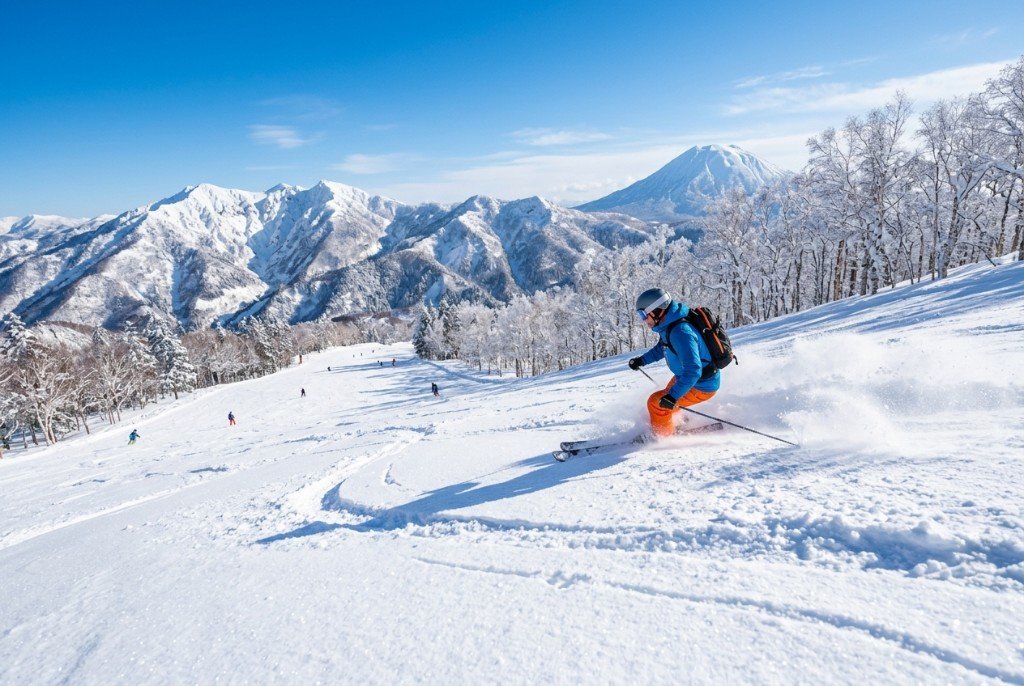
Snow quality is the valley's calling card: the combination of Siberian cold fronts crossing the Sea of Japan and Hakuba's elevation produces frequent, light, dry snowfall — often multiple 20cm-plus days per week in a good January. A concierge who tracks the Japan Meteorological Agency snow reports and talks to lift operators daily can tell you, on any given morning, whether Cortina's trees are firing or whether Happo's upper mountain is wind-loaded and better skied lower down. That local, same-day read is the single hardest thing to replicate from home, and it's the core value of the concierge model — not just logistics, but tactical terrain choice.
Season Windows and Getting to the Valley
Best season: Mid-December through early March is the core powder window, with January typically the snowiest and coldest month. Late November and early December can open early but with thin base coverage; late March into April brings spring corn snow, longer daylight, and thinner crowds — good for a mellower trip but not for deep powder.
Getting there from Tokyo (the real hub):
- Shinkansen + bus — take the Hokuriku Shinkansen from Tokyo Station to Nagano Station (about 80–100 minutes), then a direct shuttle bus to Hakuba (roughly 70–90 minutes depending on village). This is the most reliable option in snow and doesn't require a Japan driver's license.
- Direct highway bus — overnight or daytime buses run straight from Shinjuku or Tokyo Station to Hakuba, around 5–6 hours, cheaper but slower and weather-dependent.
- Rental car — doable from Nagano Station in under 90 minutes, but winter tires and chains are mandatory and mountain driving in a snowstorm is genuinely stressful for visitors unused to it; only recommended if you're comfortable driving in heavy snow or your concierge arranges a driver.
- From Narita/Haneda airports, factor in the transfer into central Tokyo first, then the Shinkansen leg — budget a full travel day if you're arriving internationally and heading straight to Hakuba.
A concierge service typically handles the shuttle booking end-to-end, which is worth it during peak Christmas/New Year and Lunar New Year weeks when seats sell out days in advance.
Booking, Gear, and On-the-Ground Etiquette
Book early for: lift passes (the Hakuba Valley pass is best purchased in advance online for a discount), accommodation in Hakuba Happo or Echoland (the two most walkable base areas), and any English-speaking ski or snowboard instructor — the good ones fill up over New Year and late-January powder weekends.
Gear notes: Rental shops throughout the valley stock wide, powder-oriented skis, which locals and repeat visitors specifically request over standard groomer skis — ask your concierge or rental shop for "powder rocker" or fat skis if you're chasing fresh snow days. Bring or rent good goggles with a low-light lens; storm days are common and flat light is a real hazard on unfamiliar terrain. Layering matters more than raw warmth — Hakuba's temperatures hover in a fairly moderate range compared to Hokkaido, so a good mid-layer system beats one heavy parka.
Etiquette and practical stay tips:
- Onsen (hot spring) etiquette is strict: wash thoroughly before entering the communal bath, no swimsuits, tie long hair up, and tattoos may require a cover sticker (many Hakuba onsens are now tattoo-friendly given the international clientele, but ask ahead).
- Lift lines respect a queue — don't push in, and let faster skiers merge at gondola stations.
- Many small izakayas and ramen shops in Happo and Echoland are cash-only or IC-card-only; carry some yen.
- If backcountry or sidecountry terrain is on your list, a concierge-arranged certified guide is the responsible call — avalanche conditions near Cortina and Tsugaike change fast and are not something to assess solo on a first visit.
- Dinner reservations at the valley's better restaurants (wagyu grills, sushi counters) fill up fast in peak week; have your concierge or ryokan call ahead rather than walking in.
Used well, a Hakuba ski concierge turns a sprawling nine-resort valley into a single, coherent trip — matching your ability level and powder appetite to the right mountain each morning, and handling the transit and reservation friction that otherwise eats into ski time.
Was this page helpful?
Your feedback helps us improve our guides