
Japan Ski Season Guide for Beginners: When, Where, and How to Start
📅 2026-10-27
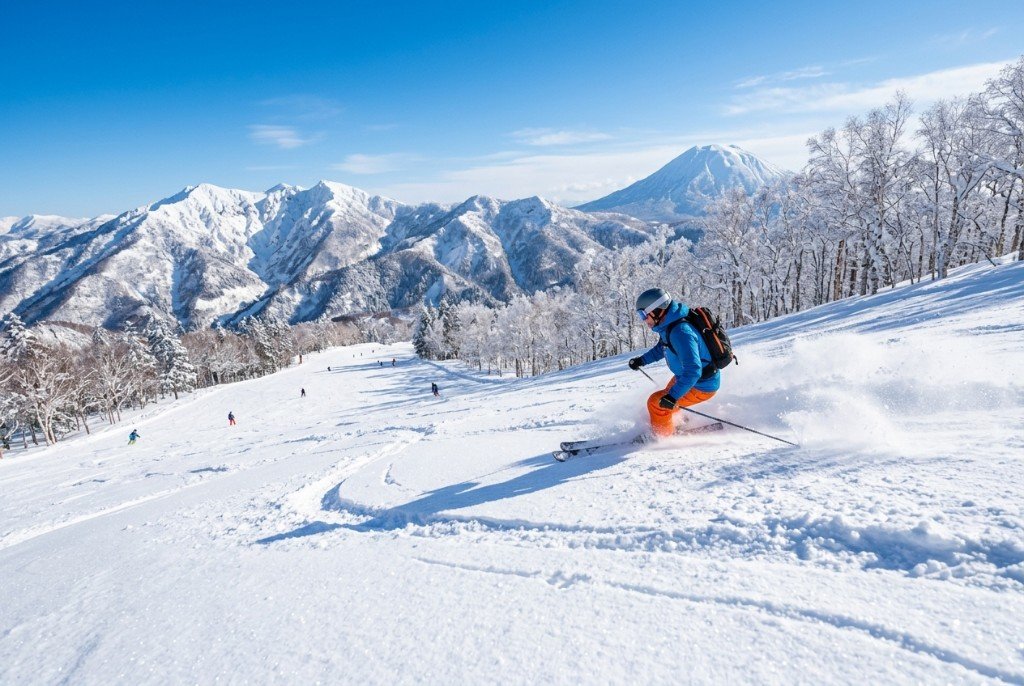
Why Japan Is a Beginner's Dream, Not Just a Powder Chaser's Paradise
Japan has a reputation as a bucket-list destination for expert powder hounds chasing the legendary "Japow" of Hokkaido and Nagano. What gets lost in that reputation is that Japan's ski culture was built, from the start, around accessibility. Skiing arrived in Japan in the early 1900s through Austrian military instructors teaching alpine techniques to the Japanese army, and by the postwar boom of the 1960s–80s, resorts had sprung up specifically to serve domestic families and office workers taking weekend trips by train. That history matters for beginners today: Japanese resorts are built with wide, well-groomed beginner runs, extensive rental systems, and ski schools that assume you've never clipped into a binding in your life.
This is different from the European or North American model, where beginner terrain is often an afterthought carved out at the base of an expert-oriented mountain. In Japan, entire resorts — like Rusutsu's lower slopes, Nozawa Onsen's gentle lower courses, or the whole of Shiga Kogen's connected-but-mellow sectors — are engineered around the learning curve. Add in onsen (hot spring) culture for soothing sore first-timer muscles, konbini food at the base, and a low-key, non-judgmental etiquette around falling down a lot, and Japan becomes one of the most forgiving countries on earth to learn to ski or snowboard.
What Beginner Conditions Actually Look Like on the Snow
Understanding Japanese slope conditions will help you choose the right beginner ski spots in Japan and set expectations before you book.
Snow quality: Japan's snow is famously light and dry, especially in Hokkaido and the Sea of Japan-facing ranges of Niigata, Nagano, and Tohoku. Cold Siberian winds pick up moisture over the Sea of Japan and dump it as fine, low-density powder on the mountains. For beginners this is a mixed blessing — powder is forgiving to fall in, but it's also slower and heavier to ski through if you haven't built basic edge control yet. Most beginner courses are machine-groomed daily, so you'll typically be learning on packed, corduroy-style runs rather than deep powder, which is exactly what you want for your first week.
Course grading: Japanese resorts grade runs on signs using color and sometimes kanji: 初級 (shokyu, beginner), 中級 (chukyu, intermediate), and 上級 (jokyu, advanced), often alongside green/blue/black coloring similar to Western resorts. Beginner courses are usually long, wide, gentle-gradient runs served by their own dedicated lifts — not merged in with faster traffic.
Ski schools: Nearly every major resort has an English-speaking (or at least English-signed) ski school, and some — Niseko, Hakuba, Myoko — have dedicated international instructor teams because of heavy Australian and Western tourist traffic. A two-hour beginner group lesson typically costs ¥5,000–8,000, and private lessons run ¥15,000–25,000 for a half day. Booking a lesson on day one is the single best investment a new skier can make in Japan.
Rental systems: Full rental packages (skis or board, boots, poles, helmet, and often jacket/pants) are available at almost every resort and in nearby towns, often for ¥4,000–7,000 per day. Staff are used to fitting complete beginners and will usually ask your height, weight, and skill level in simple English or via a form.
When to Ski in Japan and How to Get to the Mountain
Timing is everything for a good beginner trip, and access routes differ a lot by region.
Best ski season in Japan: The core season runs mid-December through late March, with peak snow conditions in Hokkaido from late December through February, and in Honshu resorts (Nagano, Niigata, Tohoku) from January through mid-March. Early season (early-to-mid December) can have thin base coverage, especially at lower-elevation resorts, so beginners should ideally target mid-January through February for the most reliable, consistently groomed conditions. Golden Week and New Year's week bring crowds and higher prices — avoid these if you want quieter beginner slopes and shorter lift lines.
Hokkaido hub — Niseko and Rusutsu: Fly into New Chitose Airport (CTS) near Sapporo. From there, Niseko is about 2.5–3 hours by resort shuttle bus or rental car, and Rusutsu is roughly 1.5–2 hours. Direct ski-season shuttle buses run from the airport to major Niseko villages (Hirafu, Annupuri) during peak months — book these in advance, as they fill up. Rusutsu, in particular, is excellent for beginners thanks to its wide, tree-lined lower slopes and lower overall crowd density than Niseko.
Honshu hub — Hakuba and Nozawa Onsen: Fly into Tokyo (Haneda or Narita), then take the Hokuriku Shinkansen from Tokyo Station to Nagano Station (about 1.5 hours), followed by a resort bus (Hakuba: ~70 minutes; Nozawa Onsen: ~1 hour). This route is ideal for beginners staying in Tokyo first, since it requires no car and minimal transfers. Nozawa Onsen is especially beginner-friendly, with a historic onsen village atmosphere dating back over 1,000 years and long, mellow lower courses perfect for first turns.
Tohoku hub — Zao Onsen: Fly or shinkansen into Yamagata via Tokyo (about 2.5–3 hours total by train), then a short bus to the resort. Zao is known for its "snow monsters" (juhyo) — trees encrusted in wind-blown ice — and offers gentler, less touristy beginner terrain than the big international resorts.
For most first-time visitors, the Tokyo–Nagano–Hakuba or Nozawa Onsen corridor is the easiest combination of beginner-friendly slopes and simple train access without needing to rent a car.
Practical Tips for Booking, Gear, and Mountain Etiquette
A little preparation goes a long way toward a stress-free first trip.
Book early for peak weeks. Lodging in Niseko and Hakuba during late December through mid-February fills up months ahead, especially ski-in/ski-out accommodation. Book lift passes, lessons, and rentals online in advance where possible — many resorts now offer discounted multi-day passes if purchased ahead of arrival.
Layer for variable cold. Japanese resort temperatures typically range from -10°C to 0°C, with Hokkaido running colder and drier than Honshu. Base layers, a mid-layer fleece, waterproof-breathable outerwear, and good gloves matter more than heavy bulk. Goggles are essential — flat light and snowfall are common during storm cycles.
Mind lift line and slope etiquette. Japanese ski culture emphasizes quiet, orderly queueing and yielding to downhill skiers. Avoid stopping in the middle of a run where you're not visible to others above you, and keep to the sides when regrouping with friends.
Fuel at the right spots. On-mountain restaurants serve excellent, affordable food — ramen, curry rice, and oden are common lift-side staples, usually ¥800–1,500 per meal. Konbini (convenience stores) near resort bases are reliable for quick breakfasts and are open very early.
End the day in an onsen. Many beginner-friendly resorts, especially Nozawa Onsen, Zao Onsen, and parts of Hakuba, have public or ryokan-attached hot springs within walking distance of the slopes. Soaking after a day of falling down is both a practical recovery tool and one of the most memorable parts of a Japanese ski trip. Note basic onsen etiquette: wash thoroughly before entering the communal bath, and most traditional onsens still restrict visible tattoos, so check ahead if this applies to you.
With the right timing, the right beginner-oriented resort, and a lesson booked on day one, Japan offers one of the gentlest and most rewarding learning curves in skiing anywhere in the world.
Was this page helpful?
Your feedback helps us improve our guides